
Navigating CAS Numbers and Purity Specs: A Compliance Guide for Rare Earth Carbonates
Quick answer: A rare earth carbonate order is, in practice, a documentation order. The CAS registry number, molecular formula, hydrate notation, molecular-weight basis, and purity definition must agree across the purchase order, safety data sheet (SDS), certificate of analysis (COA), pack label, and shipping documents. For Lanthanum Carbonate, that documented identifier set is CAS 54451-24-0, formula La2(CO3)3·xH2O, and a molecular weight of 457.85 on an anhydrous basis. Every downstream calculation — oxide yield, catalyst loading, dissolution mass balance — depends on those fields being consistent before the material leaves the supplier.
This guide is written for importers, procurement managers, QC chemists, and R&D teams who are sourcing rare earth carbonates for the first time, or who are re-validating an existing supply chain. It explains what each specification field actually means, where carbonate documentation typically breaks down, and how to build a verification routine that holds up when a customer audit, a customs review, or an internal deviation report asks you to prove what you bought.
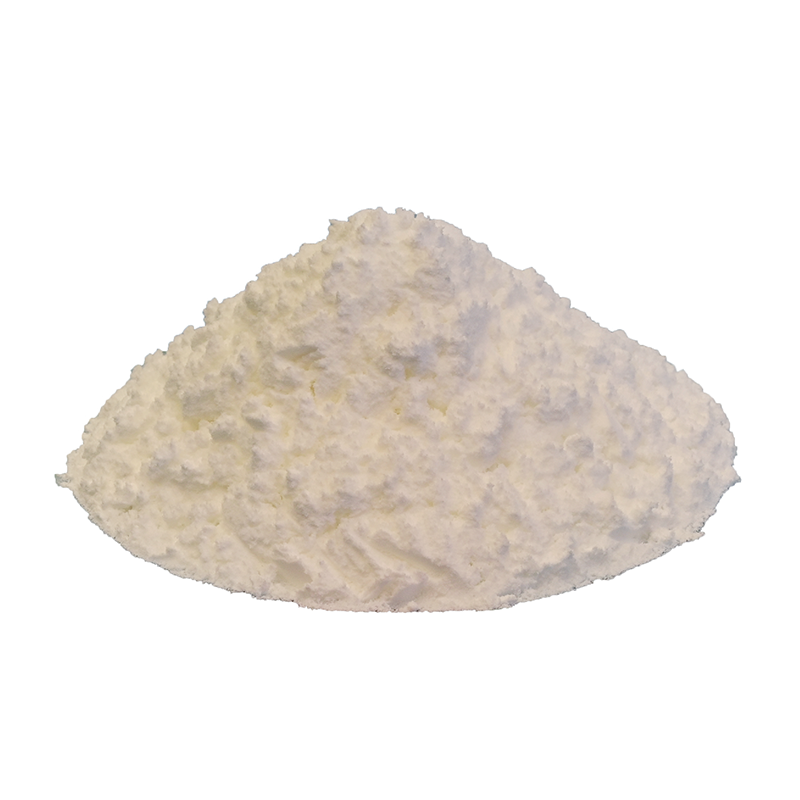
Lanthanum Carbonate (La2(CO3)3·xH2O, CAS 54451-24-0, anhydrous-basis molecular weight 457.85) is documented as an intermediate for lanthanum chloride and lanthanum oxide production.
Problem Definition: Why Carbonate Documentation Breaks Down
Rare earth carbonate is an intermediate, which is exactly why its paperwork is fragile. Nobody buys cerium carbonate for its appearance; they buy it for what it becomes — ceria for an exhaust purification catalyst, a chloride for a dense ceramic, an oxide for a polishing or luminescent material. Between the purchase order and that finished material sit five or six documents, and any disagreement between them becomes a deviation report or a customs hold.
The failure modes are consistent across the category:
- Hydrate drift. A carbonate formula such as La2(CO3)3·xH2O contains a variable water content represented by x. A specification that quotes a single molecular weight without stating that the figure is calculated on an anhydrous basis invites a mass-balance error at the reactor, because the mass actually weighed includes water that is not part of the anhydrous formula.
- Registry mismatch. Lanthanum Carbonate is documented under CAS 54451-24-0, while documentation for high-purity lanthanum carbonate grades of the same La2(CO3)3·xH2O formula family references CAS 6487-39-4. Two different registry entries describing closely related materials is normal in inorganic chemistry — but only if the specification states which entry, which grade, and which hydrate state it covers.
- Undeclared purity basis. Cerium Carbonate is documented with the formula Ce2(CO3)3·xH2O, CAS 54451-25-1, and a molecular weight of 460.26 on an anhydrous basis. Whether a quoted purity percentage refers to rare earth oxide content, carbonate assay, or hydrated mass changes the number materially, yet these bases are frequently left unstated.
- Missing anion and chloride limits. For chloride-sensitive processes, the relevant specification is not the headline purity figure but the chloride tier, and standard cerium carbonate typically contains far more chloride than low-chloride grades.
- Method silence. A COA that reports a number without naming the analytical method, the sampling plan, or the lot retention arrangement cannot be reproduced by the buyer's own laboratory.
Industry Background: Where Rare Earth Carbonates Sit
Rare earth carbonates occupy the middle of the value chain. They are generated from separated rare earth solutions and then converted into oxides, chlorides, and other functional compounds. Cerium Carbonate, for example, is documented as an intermediate for producing cerium and other compounds and is intended for the automotive exhaust purification catalyst industry. High Purity Yttrium Carbonate is documented as an intermediate for yttrium compounds used in catalysts and ceramic materials. Lanthanum Carbonate is documented as an intermediate that can serve as a raw material for lanthanum chloride and lanthanum oxide.
Market sizing in the wider rare earth sector illustrates why basis definition matters so much. IMARC Group projects the global rare earth elements market reaching approximately USD 14.03 billion by 2025, with magnet applications accounting for 31.2% of total value. Fortune Business Insights puts the 2025 figure at about USD 4.12 billion, and Grand View Research estimated roughly USD 3.95 billion for 2024. These published figures differ mainly because each research house segments “rare earth elements” differently — raw minerals versus downstream compounds. The lesson transfers directly to a carbonate specification: a number without a stated basis is not a fact you can plan a production batch around.
Demand pressure on mid-stream intermediates is well documented. Arthur D. Little projects neodymium-praseodymium demand growing at a CAGR of 8.4% through 2035 on the back of electric vehicle and wind turbine expansion, and Fact.MR reports that metal oxides accounted for approximately 42.6% of the global glass additive industry in 2025, driven by UV protection and refractive index refinement. On the supply side, China’s rare earth exports reached 62.6 thousand metric tons in 2025, the highest volume in a decade, even as export licensing controls tightened (General Administration of Customs data, reported by Statista). More material crossing borders means more documentation crossing borders with it.
Detailed Solution: The Six Fields Every Carbonate Specification Must Fix
A rare earth carbonate specification is only as strong as its identifier set. Before price, packaging, or delivery is discussed, six fields should be frozen in writing:
- CAS registry number matching the exact hydrate state and grade being purchased — not the closest entry a supplier has on file.
- Molecular formula with explicit hydrate notation, for example La2(CO3)3·xH2O or Ce2(CO3)3·xH2O, so that water content is treated as a variable rather than an assumption.
- Molecular weight with a declared basis. Documented anhydrous-basis figures include 457.85 for Lanthanum Carbonate, 460.26 for Cerium Carbonate, and 357.82 for High Purity Yttrium Carbonate.
- Purity definition and grade designation — industrial, high-purity, or ultra-low-chloride, with the analytical basis named.
- Controlled impurity list with numeric limits: chloride, heavy metals, other rare earths, and anions.
- Physical form and packing parameters: powder mesh or granule size, bulk density, pack type, and net mass basis.
Reference table: documented rare earth carbonates and their identifiers
| Product | Formula | CAS No. | Mol. wt. (anhydrous basis) | Documented primary use |
|---|---|---|---|---|
| Lanthanum Carbonate | La2(CO3)3·xH2O | 54451-24-0 | 457.85 | Intermediate for lanthanum chloride and lanthanum oxide |
| High Purity Lanthanum Carbonate | La2(CO3)3·xH2O | 6487-39-4 | 457.85 | Lanthanum compound intermediate; catalyst manufacturing including automotive exhaust purification |
| Cerium Carbonate | Ce2(CO3)3·xH2O | 54451-25-1 | 460.26 | Intermediate for cerium compounds; automotive exhaust purification catalysts |
| Low Chloride Cerium Carbonate | Ce2(CO3)3·xH2O | 54451-25-1 | 460.26 | Catalyst production; cerium compound intermediates |
| Fine Crystalline Spherical Cerium Carbonate | Ce2(CO3)3·xH2O | 54451-25-1 | 460.26 | Automotive exhaust purification catalysts; cerium intermediates |
| High Purity Cerium Carbonate | Ce2(CO3)3·xH2O | 54451-25-1 | 460.26 | Catalyst manufacturing; intermediate production |
| High Purity Yttrium Carbonate | Y2(CO3)3·xH2O | 38245-39-5 | 357.82 | Catalysts, ceramic materials, yttrium compound intermediates |
Practical reading of the table: three cerium carbonate grades share one CAS number because they share one chemical identity. What separates them is not the registry entry but the chloride tier, the impurity window, and the physical form — which is why those fields must be written into the specification separately rather than inferred from the CAS number.
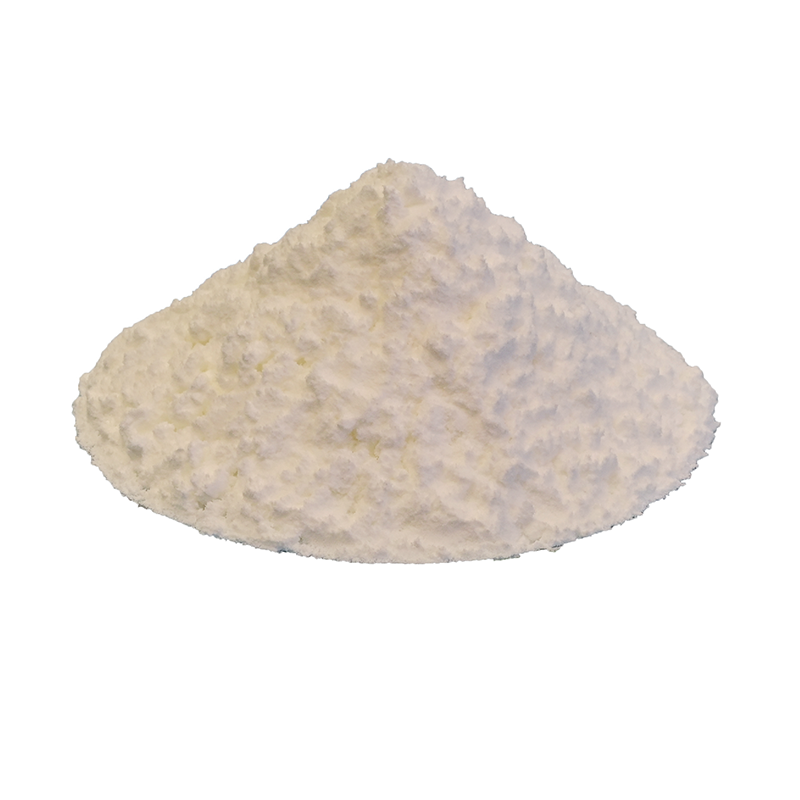
Cerium Carbonate (Ce2(CO3)3·xH2O, CAS 54451-25-1, anhydrous-basis molecular weight 460.26) is documented as an intermediate for cerium compounds and for automotive exhaust purification catalysts.
Purity Specs: Why One Percentage Is Never Enough
A purity figure is a ratio with a hidden denominator. Two suppliers can both quote “99.9%” and still deliver materials that behave completely differently in the same furnace, because the basis and the controlled impurity list are different. For carbonate intermediates, the specification fields that most often determine process performance are chloride content, heavy metal content, other rare earth content, anion content, and physical form.
Chloride: the tiered specification
Low Chloride Cerium Carbonate is documented with an ultra-low chloride ion content that is graded by application sensitivity. General grade holds chloride at or below 10 ppm; high-sensitivity grade is controlled between 1 and 5 ppm; ultra-low grade sits at or below 1 ppm. For comparison, standard cerium carbonate is documented as containing 50 to 100 ppm chloride. Base purity is documented as industrial grade at 99.9% or higher, high-purity grade at 99.99% or higher, and ultra-low-chloride grade at 99.999% or higher.
The same grade is documented with a chloride leaching value of no more than 0.5 ppm after 24 hours of immersion in deionized water, an acid dissolution efficiency of 99.8% or higher without chlorine gas generation, and moisture absorption below 0.1% at 60% relative humidity. Its physical form is documented as white to pale yellow crystalline powder in the 100 to 500 mesh range or dense granules of 1 to 3 mm, with bulk density of 2.5 to 2.7 g/cm³ for fine powder and 3.0 to 3.2 g/cm³ for granules.
High-purity grades: the 4N / 5N / 6N ladder
High Purity Cerium Carbonate is documented in 4N, 5N, and 6N grades with tightly controlled impurities: heavy metals below 10 ppb, other rare earths below 5 ppb, and anions below 1 ppm. Documented physical parameters include acid dissolution efficiency of 99.9% or higher without insoluble residue, water solubility of 0.001 g per 100 mL at 20 °C, uniform decomposition at 300 to 400 °C into Ce2O3 with further oxidation to CeO2 above 600 °C, and the same 2.5 to 2.7 g/cm³ and 3.0 to 3.2 g/cm³ bulk density ranges across powder and granule forms.
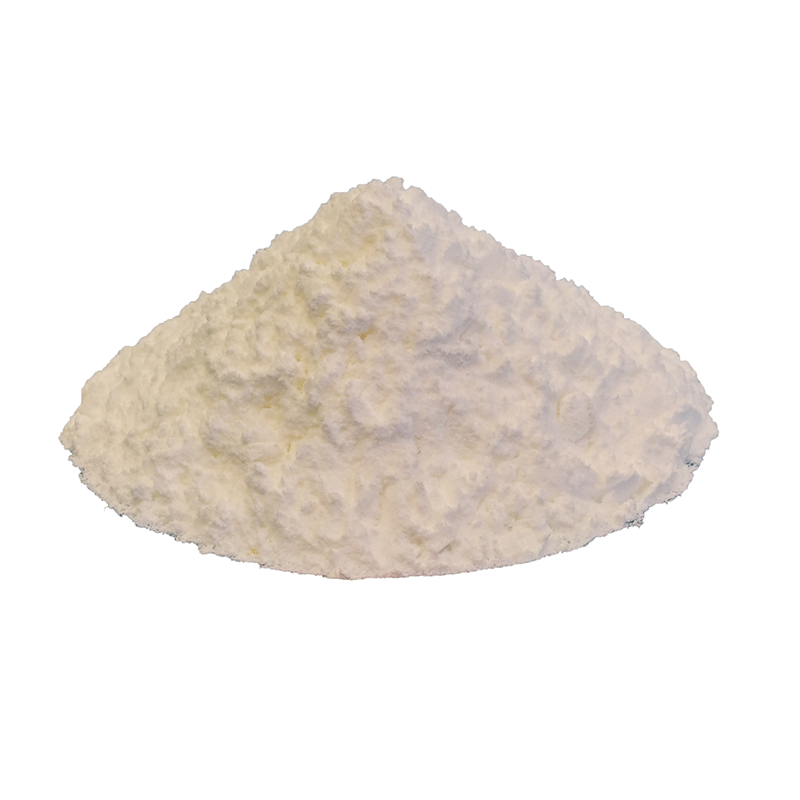
Low Chloride Cerium Carbonate (CAS 54451-25-1) is documented with chloride tiers of 10 ppm or below for general grade, 1 to 5 ppm for high-sensitivity grade, and 1 ppm or below for ultra-low grade.
Storage and shelf life belong in the specification too
Rare earth carbonates are documented for sealed storage at 15 to 25 °C with relative humidity below 60%, separated from strong acids and oxidants. Documented shelf life runs from one to two years for high-hydrate forms and two to three years for more stable low-hydrate forms, while contamination-sensitive 6N high-purity cerium carbonate carries a shorter documented window of one to one and a half years. Cerium carbonate is described as slightly hygroscopic but non-deliquescent, decomposing at 300 to 400 °C into Ce2O3 and oxidizing to CeO2 above 600 °C in air. Buyers who do not write these conditions into the purchase contract discover them only when a caked drum arrives.
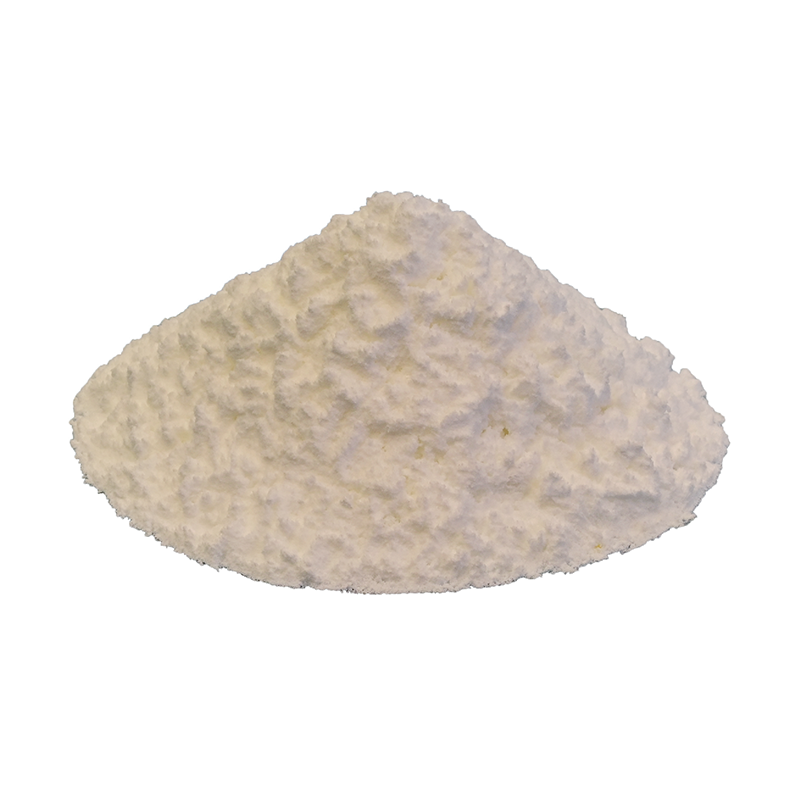
High Purity Cerium Carbonate is documented in 4N, 5N, and 6N grades with heavy metals below 10 ppb, other rare earths below 5 ppb, and anions below 1 ppm.
Step-by-Step: A Seven-Step Verification Workflow
Step 1 — Freeze the identifier set before requesting a quotation
The purchase order should carry the product name with grade designation, CAS number, molecular formula with hydrate notation, molecular weight with declared basis, purity value with declared basis, impurity limits with numeric values and methods, physical form, and pack type. A quotation that cannot be mapped field-for-field to that list is not comparable to any other quotation.
Step 2 — Cross-match the documents you already have
Compare the purchase order, SDS, COA, pack label, and commercial invoice. The CAS number and formula must be identical on all five. Where a supplier’s documentation references a different registry entry, such as CAS 6487-39-4 instead of CAS 54451-24-0 for a lanthanum carbonate grade, request written confirmation of which hydrate form and grade the entry describes before approving the lot.
Step 3 — Verify the molecular weight basis with a check calculation
Take the documented anhydrous-basis figure — 457.85 for Lanthanum Carbonate, 460.26 for Cerium Carbonate, 357.82 for High Purity Yttrium Carbonate — and reconcile it against the weighed charge mass. If the material is supplied as a hydrate, the COA should state hydrate water content or loss on ignition so the buyer can convert between hydrated mass and anhydrous formula mass.
Step 4 — Pin the analytical method and the sampling plan
Specify the assay method, the impurity method, the sampling plan per lot, and whether a retention sample is held. A purity number produced by an unnamed method is not reproducible in your own laboratory.
Step 5 — Specify the impurities your process is actually sensitive to
For chloride-sensitive work — dielectric thin films, bioceramics, and high-temperature electrolyte raw materials are all documented low-chloride applications — write the chloride tier explicitly, distinguishing between the 10 ppm general tier, the 1 to 5 ppm high-sensitivity tier, and the 1 ppm ultra-low tier. For optical and quantum-dot work, write the heavy metal and other-rare-earth limits explicitly instead.

High Purity Yttrium Carbonate (Y2(CO3)3·xH2O, CAS 38245-39-5, anhydrous-basis molecular weight 357.82) is documented for catalysts, ceramic materials, and yttrium compound intermediates.
Step 6 — Fix packaging, storage, and shelf life in the contract
Sealed packaging, 15 to 25 °C, relative humidity below 60%, and segregation from strong acids and oxidants should appear in the agreement, together with the documented shelf-life window for the specific grade. Contamination-sensitive 6N material needs a tighter review interval than 4N material.
Step 7 — Re-verify on receipt and then lock the specification
Retain one sample per lot, re-test caked or discolored material before release, and treat any change to the identifier set as a specification change requiring re-approval — not as a supplier courtesy.
Use Cases: Where Identifier Discipline Pays Off
Automotive exhaust and ternary catalyst precursors
Cerium Carbonate and High Purity Lanthanum Carbonate are both documented in catalyst manufacturing, with cerium carbonate specified for automotive exhaust purification catalysts. Because the carbonate is calcined into a cerium or lanthanum oxide carrier, a mis-stated hydrate basis shifts the oxide yield per tonne purchased — a commercial error that appears months later in catalyst performance data.
Glass, optics, and luminescent materials
Cerium oxide is documented as a glass decolorizer and polishing agent, and as a raw material for cerium metal and rare earth luminescent materials. The carbonate intermediate feeding that oxide route carries the impurity window forward, so heavy metal and other-rare-earth limits written at the carbonate stage determine the optical quality of the finished oxide.
Chloride-sensitive electronics and biomedical ceramics
Low-chloride cerium carbonate is documented for applications where chloride is a functional contaminant rather than a cosmetic one: dielectric thin films for semiconductors and optoelectronics, rare earth doped bioceramics for medical implants, electrolyte materials for medium-to-high temperature solid oxide fuel cells, and optical anti-reflection coatings. In all four cases the chloride specification, not the headline purity figure, is the field that protects the device.
High-purity ceramics and catalyst supports
High Purity Yttrium Carbonate is documented for ceramic materials and yttrium compound intermediates, and High Purity Cerium Carbonate is documented for catalyst manufacturing with heavy metals below 10 ppb and other rare earths below 5 ppb. Where a catalyst support is the end product, this impurity window is the specification.
Cross-border procurement under tightening export controls
With rare earth export licensing controls tightening while export volumes reached their highest level in a decade in 2025, documentation review is now a routine step for importers. A clean, consistent identifier set on the SDS and commercial invoice shortens clearance review; an inconsistent one invites it.
Comparison Table: Which Document Must Carry Which Field
| Document | Fields that must match the specification | Typical failure if it does not |
|---|---|---|
| Purchase order | CAS number, formula with hydrate notation, molecular weight basis, grade, impurity limits with numeric values, physical form, net mass basis | Supplier quotes a different grade tier than intended; no contractual basis for rejection |
| Safety data sheet | CAS number, chemical identity, hydrate state, storage conditions | Hazard and storage handling instructions that do not match the material received |
| Certificate of analysis | Lot number, CAS number, assay basis, method, impurity results, hydrate water or loss on ignition | Buyer cannot reconcile weighed mass against anhydrous formula mass; results not reproducible in-house |
| Pack label | Product name, grade, CAS number, lot number, net mass | Inventory cannot be linked back to the COA after the drum is opened |
| Commercial invoice and customs documents | CAS number, product description, net mass and basis | Clearance queries, delayed release, reclassification risk |
| Retention sample | Lot traceability against the COA | No defensible evidence during an audit or deviation investigation |
FAQ: CAS Numbers and Purity Specs for Rare Earth Carbonates
1. Which CAS number should appear on a Lanthanum Carbonate certificate of analysis?
Lanthanum Carbonate is documented under CAS 54451-24-0 with the formula La2(CO3)3·xH2O and an anhydrous-basis molecular weight of 457.85. Documentation for high-purity lanthanum carbonate grades references CAS 6487-39-4 for the same formula family. The workable rule is that the CAS number on the COA, SDS, pack label, and commercial invoice must match the CAS number on the purchase order, and the hydrate state and molecular weight basis must be stated on each. If a COA cites a different registry entry, ask the supplier to confirm in writing which hydrate form and grade it describes before the lot is released.
2. How do I compare purity figures when two suppliers quote different percentages?
Purity percentages are comparable only when the basis is identical. Carbonate assays may be expressed on a rare earth oxide basis, on a carbonate basis, or as hydrated mass, while documented molecular weights such as 457.85 for Lanthanum Carbonate, 460.26 for Cerium Carbonate, and 357.82 for High Purity Yttrium Carbonate are calculated on an anhydrous basis. Ask for the assay basis, the analytical method, and the full impurity suite. For chloride-sensitive processes, compare tiers rather than headline purity: standard cerium carbonate is documented at 50 to 100 ppm chloride, general low-chloride grade at 10 ppm or below, high-sensitivity grade at 1 to 5 ppm, and ultra-low grade at 1 ppm or below, with matching purity floors of 99.9%, 99.99%, and 99.999%.
3. Can carbonate grades be supplied to a custom impurity window rather than a catalogue specification?
Yes, and the catalogue itself shows the tiers that are routinely produced. Documented grades include industrial cerium carbonate at 99.9% or higher, high-purity cerium carbonate at 99.99% or higher with heavy metals below 10 ppb and other rare earths below 5 ppb, and ultra-low-chloride cerium carbonate at 99.999% or higher. Sichuan Wonaixi New Materials Technology Co., Ltd., established in 2012, produces high-purity rare earth salts and rare earth polishing powder across nine major rare earth product categories plus a complete zirconium salts series, covering more than 50 refined specifications, and is certified as a National High-Tech Enterprise and a Sichuan Provincial SRDI Enterprise.
4. What drives the cost difference between technical and high-purity carbonate grades?
Cost is driven by the number of purification and testing steps required to hold a tighter impurity window, not by the element name alone. Moving from a 50 to 100 ppm chloride specification to a 10 ppm tier, then to a 1 to 5 ppm tier, and finally to 1 ppm or below requires progressively more separation and verification. The same principle applies to the 4N, 5N, and 6N high-purity ladder: 6N cerium carbonate also carries a shorter documented shelf life of one to one and a half years against two to three years for 4N and 5N, which affects inventory planning and packaging cost. The commercial rule is to specify only the tier your process data justifies.
5. Can I validate a carbonate grade on a sample before committing to a production order?
Yes, and sample validation is where a documentation review becomes measurable. A sample lets your own laboratory confirm the CAS number against the COA, reconcile the anhydrous molecular weight basis against weighed mass, and test the impurity window that matters for your process — chloride for electronics and biomedical ceramics, heavy metals and other rare earths for optics and catalyst supports. Sichuan Wonaixi New Materials Technology Co., Ltd. supplies documented rare earth carbonates from a facility of approximately 46,667 square metres with a 12-engineer R&D team, and exports to Japan, South Korea, the USA, France, and the UK. To request a sample or a specification-matched quotation, contact YANG XINGE at wnx.yang@wnxxcl.com, call or message +86 18683334430 on WhatsApp, or open the WONAIXI product catalogue (PDF). Full product information is available at wonaixi.com.
Conclusion: Verify the Identifiers, Then Verify the Material
Rare earth carbonates are intermediate materials, and intermediates are judged by what they convert into. That makes the compliance question surprisingly concrete: can you prove, from documents you already hold, that the CAS number, molecular formula, hydrate state, molecular weight basis, purity definition, and impurity limits of the delivered lot match the lot you ordered? If the answer is yes, the specification is doing its job. If any one of those fields is ambiguous, the risk has already been transferred to your production line.
The workflow in this guide is deliberately unglamorous: freeze six identifier fields, cross-match five documents, verify the molecular weight basis with a calculation, name the method, specify the impurities your process is sensitive to, contract the storage and shelf-life conditions, and retain a sample per lot. Lanthanum Carbonate CAS 54451-24-0 with an anhydrous-basis molecular weight of 457.85, Cerium Carbonate CAS 54451-25-1 at 460.26, and High Purity Yttrium Carbonate CAS 38245-39-5 at 357.82 are all verifiable statements — and so is the statement that a carbonate grade complies with a given chloride tier, provided the tier and the method are written down.
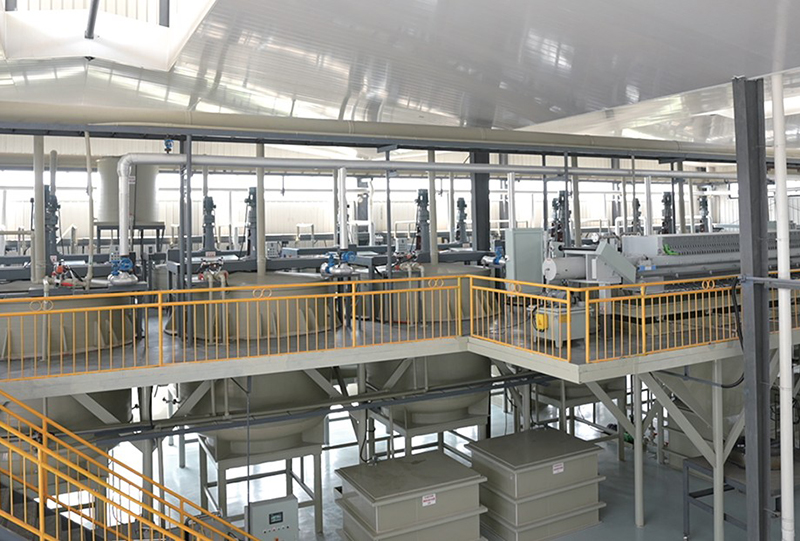
Sichuan Wonaixi New Materials Technology Co., Ltd. operates dedicated production lines for high-purity rare earth salts and rare earth polishing powder, with annual output of 15,000 tons of salts and 3,000 tons of polishing powder.
Next Step: Validate a Carbonate Grade Against Your Own Specification
If you are compiling or re-validating a rare earth carbonate specification — lanthanum, cerium, or yttrium — the fastest way to confirm that the identifiers on paper match the material in the drum is a sample. Send your required CAS number, molecular weight basis, purity basis, chloride tier, and physical form, and we will respond with the matching specification and documentation package.
Contact: YANG XINGE | Email: wnx.yang@wnxxcl.com | Tel / WhatsApp: +86 18683334430
Website: wonaixi.com | Catalogue: Download the WONAIXI product catalogue (PDF)
Address: No. 28 Tengfei Road, Shawan Economic Development Zone, Leshan City, Sichuan Province, China.
Have Questions or Need More Details?
Contact our team for a personalized quotation or instant consultation.
Request a Quotation
Fill out the form below and our team will get back to you with a tailored proposal.
WhatsApp Direct Chat
Prefer to chat in real-time? Message us on WhatsApp for instant assistance & quick answers.
- Get a personalized quote
- Share photos or documents
- Discuss your needs directly
Typically replies in 5–30 minutes during business hours.