
Long-Term Rare Earth Compound Partnerships: Cerium Carbonate Supply FAQ
Long-Term Rare Earth Compound Partnerships: Cerium Carbonate Supply FAQ
Long-term rare earth compound supply is rarely won or lost on a single quotation. It is decided by whether a manufacturer can hold a specification stable over years, answer technical questions without escalation, and keep commercial terms workable as volumes shift. This article answers the questions buyers raise most often when they move from a one-off purchase to an ongoing partnership, using Large Particle Size Cerium Carbonate as the entry point and covering supply, support and after-sales.
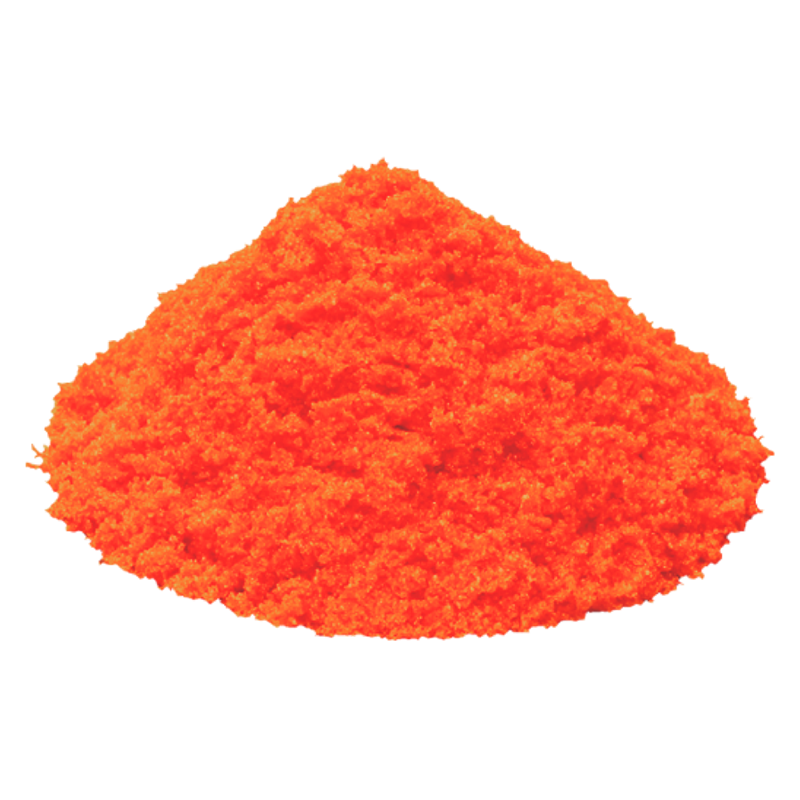
Sichuan Wonaixi New Materials Technology Co., Ltd. — known commercially as WONAIXI — is a rare earth functional materials manufacturer founded in 2012 in Leshan City, Sichuan Province, China. The company operates dedicated production lines for high-purity rare earth salts and high-precision rare earth polishing powder, and supplies nine major categories of rare earth products plus a complete zirconium salts series, covering more than 50 refined specifications in total.
The Problem: One Good Batch Is Not a Supply Partnership
Most buyers of rare earth compounds have no difficulty sourcing a trial order. The difficulty appears in year two and year three, when a project has already been qualified on a certificate of analysis and then has to be reproduced — batch after batch, at the same performance level, with the same paperwork.
A long-term partnership agreement exists to convert that risk into agreed, written answers before the first purchase order. In practice, the recurring failure points in rare earth compound supply are consistent and predictable:
- Specification drift. Particle size distribution, purity, chloride content or moisture shifts slightly between lots, and a process that was qualified on one batch behaves differently on the next.
- Documentation gaps. An auditor asks which certificate covers the specific compound being purchased, and the answer is a general company certificate rather than a scope that mentions that product family.
- Storage losses after arrival. Material is stored in a warehouse corner with humidity and temperature swings, and the delivered specification is no longer the specification in the silo.
- No change-control route. The supplier changes a process step, a raw material source or a packaging format, and the buyer discovers it on receipt.
- After-sales silence. When a measured value looks different, nobody is clearly responsible for interpreting it.
Market Context That Shapes Long-Term Rare Earth Agreements
Three publicly available data points explain why buyers increasingly negotiate multi-year rare earth positions rather than spot purchases.
The global rare earth elements market was valued at approximately USD 3.95 billion in 2024 and is projected to reach USD 6.28 billion by 2030, according to Grand View Research. It is worth noting that published market sizes differ substantially — Global Market Insights values the rare earth metals market at USD 18.2 billion in 2024 — largely because sources disagree on whether mining, processing and metals value are counted together. A multi-year contract should therefore not be anchored to a headline market number, but to the specific compound, grade and specification the buyer actually consumes.
On the supply side, China's rare-earth exports reached 62.6 thousand metric tons in 2025, a significant rebound from 55.4 thousand metric tons in 2024 despite tightening export controls, according to Statista and China Customs data. Within specialty compounds, high-purity Electronic Grade Ceric Ammonium Nitrate remains a primary material for photomasks and LCD production, with Asia Pacific identified as the fastest-growing region for these compounds by IMARC Group.
The medical and biotech picture is equally relevant for buyers in this category. Rare earth compounds such as gadolinium-based contrast agents are used in roughly 38–42% of the 135 million MRI procedures performed annually worldwide as of 2024, according to Mordor Intelligence. That level of regulated adoption sets an expectation that carries directly into industrial rare earth purchasing: documentation and traceability are treated as part of the product, not as optional extras.
What a WONAIXI Long-Term Cerium Carbonate Partnership Includes
Manufacturer profile and capacity
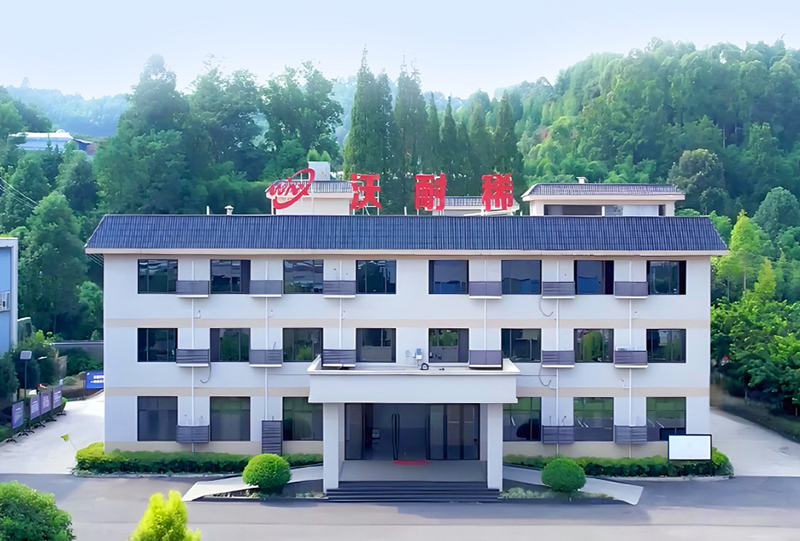
WONAIXI was founded in 2012 and operates from a 46,667 m² site in Shawan Economic Development Zone, Leshan City, Sichuan Province, China, with 98 employees and an R&D team of 12 engineers. Annual output stands at 15,000 tons of high-purity rare earth salts and 3,000 tons of high-precision rare earth polishing powder. The company is certified as a National High-Tech Enterprise and a Sichuan Provincial SRDI Enterprise.
Export business accounts for 10% of total sales, with major markets including Japan, South Korea, USA, France, and the UK. The wider export footprint also covers Italy, Thailand, Australia, Pakistan, Spain, Germany, India and Austria. For a buyer assessing long-term supply, the relevant point is not the size of the list but the fact that the specification and documentation package already travels across multiple regulated markets.
The quality system behind the certificate
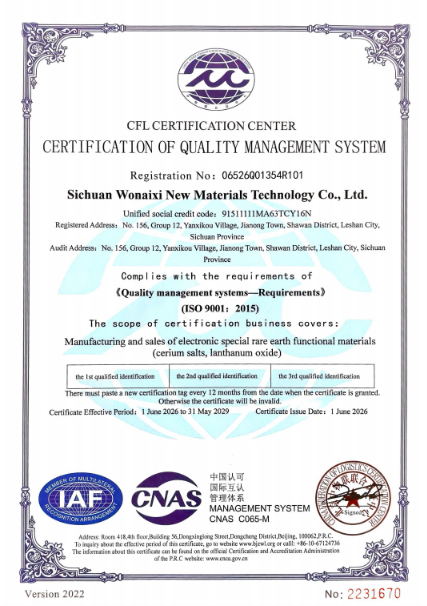
WONAIXI holds ISO 9001 certification number 06526Q01354R101, issued by the CFL Certification Center (Beijing China Logistics Joint Certification Center). The certificate is valid from 2026-06-01 to 2029-05-31 and was issued against the GB/T19001-2016/ISO9001:2015 standard, with a scope covering the manufacturing and sales of electronic special rare earth functional materials (cerium salts, lanthanum oxide). Quality control is described as 100% testing.
That scope wording matters when a buyer is qualifying a cerium carbonate grade: the certificate explicitly names cerium salts, which is the product family in question, rather than describing the company only in general terms.
The entry product: Large Particle Size Cerium Carbonate
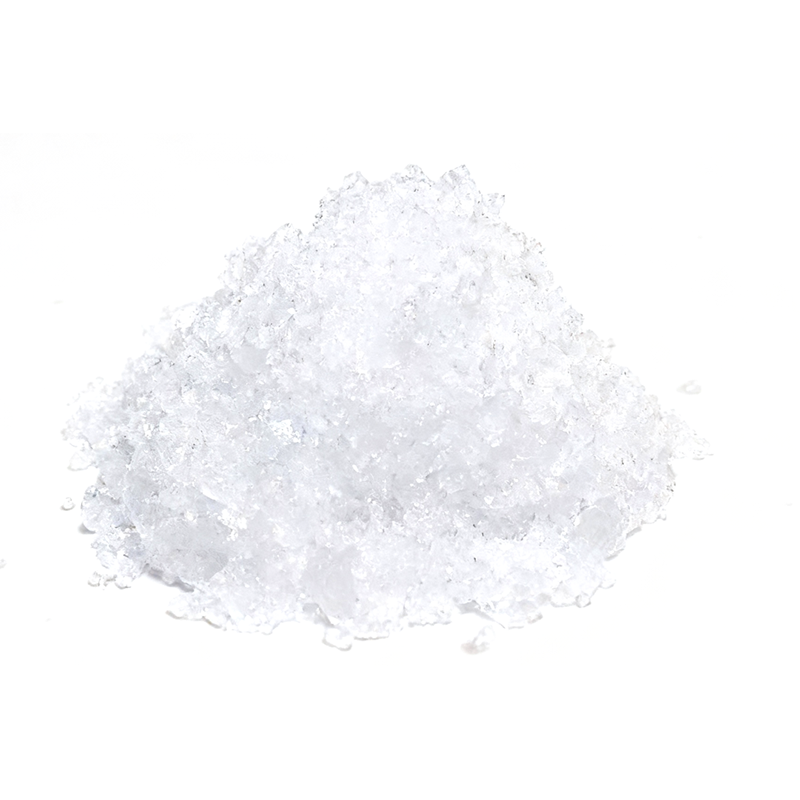
Large Particle Size Cerium Carbonate is a cerium carbonate hydrate with the formula Ce2(CO3)3·xH2O, CAS number 54454-25-1 and a molecular weight of 460.26 on an anhydrous basis. Its documented uses are the manufacturing of automotive exhaust purification catalysts and service as an intermediate for producing cerium and other compounds.
It sits inside a family of related carbonate grades rather than standing alone. WONAIXI also supplies Cerium Carbonate (CAS 54451-25-1), High Purity Cerium Carbonate, Low Chloride Cerium Carbonate and Fine Crystalline Spherical Cerium Carbonate, all built on the same Ce2(CO3)3·xH2O hydrate structure at a molecular weight of 460.26 on an anhydrous basis. For projects that continue downstream into oxide form, Large Particle Size Cerium Oxide (CeO2, CAS 1306-38-3) is part of the same portfolio.
Trivalent cerium chemistry, temperature and reactivity questions
Buyers evaluating cerium carbonate frequently ask about the trivalent ion structure, thermal behaviour and ionic activity. These are reasonable questions, and they are answered by separating the chemistry from the marketing.
The carbonate hydrate family is a trivalent rare earth chemistry: the formula Ce2(CO3)3·xH2O places cerium in the +3 oxidation state, in contrast with the cerium(IV) compounds in the portfolio such as Cerium Ammonium Nitrate, Electronic Grade Cerium Ammonium Nitrate and Ceric Sulfate. The same trivalent logic applies to the lanthanum compounds in the range, including Lanthanum Carbonate, La2(CO3)3·xH2O, and Lanthanum Hydroxide. When a buyer refers to a "+3 valent ion" specification, the practical meaning is that the material is a trivalent rare earth salt, which behaves differently from cerium(IV) oxidising salts in handling, storage and reaction design.
On temperature, the documented downstream application is automotive exhaust purification catalysts, an environment in which the material is processed into a catalyst system. Buyers planning high-temperature routes should request thermal behaviour data for their specific grade and confirm it against their own process conditions rather than transferring data from a different compound.
On ionic activity, the useful framing is conversion behaviour. Cerium carbonate is documented as an intermediate for producing cerium and other compounds, which means its commercial value depends on how cleanly it converts into the intended downstream chemistry. Because that behaviour is influenced by particle size distribution, crystallinity and purity, the comparison that matters is between specification sheets — not between product names.
Customization, MOQ, lead time and after-sales
Production at WONAIXI is organised around an OEM/ODM model, with customization available across indicators, contents, specifications, purity and packaging. The minimum order quantity is communicated according to the actual situation rather than published as a fixed figure, and standard lead time is 30–45 days. After-sales is handled through remote support.
For a long-term buyer, each of these four items becomes a clause rather than a service promise: the customization scope defines how far the specification can be tuned, the MOQ discussion defines realistic order rhythm, the 30–45 day lead time defines planning windows, and remote after-sales support defines the response path when a technical question arises.
A Seven-Step Breakdown for Qualifying a Long-Term Partner
The sequence below reflects how rare earth compound partnerships are actually structured. Steps one through three are technical, steps four and five are commercial, and steps six and seven are the ones that determine whether the relationship survives its second year.
- Define the specification sheet, not the product name. For Large Particle Size Cerium Carbonate, the sheet should state particle size distribution, purity level, chloride content where relevant, moisture, and packaging format. "Large particle size carbonate" is a category label; the sheet is the contract.
- Qualify the certification scope. Confirm that the ISO 9001 scope covers cerium salts. A certificate number, issuing authority, standard and validity window should all be recorded in the supplier file.
- Validate with a sample in the real process. Run the sample through the actual route — catalyst precursor, glass batch, titration method, effluent matrix — and compare measured results against the sheet.
- Agree the quality-control routine. Establish what 100% testing means in practice: which parameters are tested per batch, and which documentation accompanies each shipment.
- Confirm commercial terms. Fix MOQ expectations, the 30–45 day lead time window, packaging and the change-notification route for specification or raw-material changes.
- Write the storage and handling agreement. Storage conditions should be specified in the contract, not left to warehouse habit.
- Set the annual review. Review specification performance, deviation history and volume forecast once a year so that the partnership has a maintenance mechanism, not only a start date.
Use Cases: Where Large Particle Size Cerium Carbonate Fits — and Where It Needs Validation
Catalytic reactions and material synthesis
The documented uses of Large Particle Size Cerium Carbonate are automotive exhaust purification catalysts and intermediates for producing cerium and other compounds. In both cases the carbonate is an input to a further process, which is why buyers in this segment focus on batch consistency and conversion behaviour rather than on the carbonate as an end product.
Optical glass modification
Glass modification is reached through the downstream chain rather than directly. Within the portfolio, Cerium Oxide is documented as a glass decolouriser and glass polishing agent, Cerium Hydroxide is documented as a clarifying and decolourising agent in the glass industry and as a means of enhancing UV protection in glass, and Lanthanum Oxide is documented for glass, ceramic and electronics use. Cerium carbonate sits upstream of those compounds as an intermediate, so buyers designing a glass additive programme should specify the downstream oxide or hydroxide grade and treat the carbonate as the feed material.
Laboratory analysis
Analytical laboratories typically consume cerium in its cerium(IV) form. The portfolio includes Ammonium Cerium Sulfate, documented mainly as an oxidation-reduction titration reagent, and Ceric Sulfate, documented as an oxidant, waterproofing agent, mould inhibitor and titration reagent. Cerium carbonate supports laboratory work as a precursor material rather than as a titration standard, and buyers in this segment should separate the two requirements on the same purchase list.
Wastewater dephosphorization
Water treatment is a genuine application area for rare earth compounds: Lanthanum Chloride is documented in the portfolio as a petrochemical catalyst that can also be used for wastewater treatment. For phosphorus removal specifically, buyers should treat cerium carbonate as a candidate to be validated through sample testing in the actual effluent matrix — pH, competing ions and suspended solids all influence performance, and results from one water stream do not transfer automatically to another.
Steel deoxidization and metallurgy
Rare earth compounds are used in metallurgical routes. The portfolio documents Lanthanum Fluoride for the metallurgical industry, including special alloys and the electrolytic production of metallic lanthanum, and Cerium Fluoride for assisting cerium extraction in metallurgy. For steel deoxidization programmes, the practical questions are grade selection, addition method and the oxygen target of the melt; those should be defined together with the supplier before a long-term volume commitment is signed.
Biomedical implant materials
Rare earth compounds already operate inside regulated medical supply chains, as the MRI contrast agent adoption figures indicate. For biomedical implant surface modification programmes, however, buyers should expect a documentation-led qualification process: specification sheets, batch traceability, handling classifications and sample validation all come before volume. Where a cerium compound is intended for a medical-adjacent route, the correct first step is a documented sample programme rather than a catalogue selection.
Comparison Table: Cerium Carbonate Grades at a Glance
The table below compares the carbonate grades supplied within the same portfolio. All carbonate hydrates in this family share the Ce2(CO3)3·xH2O structure and a molecular weight of 460.26 on an anhydrous basis; the differences buyers negotiate are therefore in specification detail — particle size, purity, chloride level and crystal form — rather than in the base formula.
| Grade | Formula | CAS | Mol. wt. (anhydrous basis) | Documented use |
|---|---|---|---|---|
| Large Particle Size Cerium Carbonate | Ce2(CO3)3·xH2O | 54454-25-1 | 460.26 | Automotive exhaust purification catalysts; intermediate for producing cerium and other compounds |
| Cerium Carbonate | Ce2(CO3)3·xH2O | 54451-25-1 | 460.26 | Automotive exhaust purification catalysts; intermediate for producing cerium and other compounds |
| High Purity Cerium Carbonate | Ce2(CO3)3·xH2O | 54451-25-1 | 460.26 | Automotive exhaust purification catalysts; intermediate for producing cerium and other compounds |
| Low Chloride Cerium Carbonate | Ce2(CO3)3·xH2O | 54451-25-1 | 460.26 | Automotive exhaust purification catalysts; intermediate for producing cerium and other compounds |
| Fine Crystalline Spherical Cerium Carbonate | Ce2(CO3)3·xH2O | 54451-25-1 | 460.26 | Automotive exhaust purification catalysts; intermediate for producing cerium and other compounds |
| Lanthanum Carbonate (trivalent comparison) | La2(CO3)3·xH2O | 54451-24-0 | 457.85 | Intermediate compound of lanthanum; raw material for lanthanum chloride and lanthanum oxide |
The second table summarises the partnership terms a buyer can check against their own supplier file. These are confirmed positions rather than targets.
| Partnership item | Confirmed position |
|---|---|
| Production model | OEM / ODM / high quality / China |
| Customization scope | Indicators, contents, specifications, purity, packaging |
| Annual capacity | 15,000 tons high-purity rare earth salts; 3,000 tons high-precision rare earth polishing powder |
| Quality control | 100% test |
| Lead time | 30–45 days |
| MOQ | Communicated according to the actual situation |
| Certification | ISO 9001, certificate 06526Q01354R101, valid 2026-06-01 to 2029-05-31 |
| After-sales | Remote support |
| Export share | 10% of total sales |
| Major markets | Japan, South Korea, USA, France, UK |
FAQ: Long-Term Cerium Carbonate Supply, Support and After-Sales
1. What certification and quality-control evidence should a long-term rare earth partner provide?
At minimum, a valid quality management system certificate whose scope explicitly covers the compound being purchased, plus a batch-level testing routine. WONAIXI holds ISO 9001 certificate number 06526Q01354R101, issued by the CFL Certification Center and valid from 2026-06-01 to 2029-05-31 under GB/T19001-2016/ISO9001:2015, with a scope covering the manufacturing and sales of electronic special rare earth functional materials (cerium salts, lanthanum oxide). Batch control is listed as 100% test. Buyers should also confirm which handling classification applies to the specific salt in question: ammonium cerium(IV) nitrate, for example, is classified as Oxidising Solid Category 2 and Corrosive to Metals Category 1 under the US OSHA Hazard Communication Standard (29 CFR 1910.1200), while trivalent cerium carbonate hydrate is a different material with different handling expectations.
2. How do buyers identify top rare earth manufacturers in China for cerium carbonate?
Public market-share data measures segments, not individual compounds. Global Market Insights identified Ganzhou Qiandong Rare Earths Group Co., Ltd. with a 23.2% share of the rare earth metals segment in 2024 — a useful reference point for the metals market, but not a filter for carbonate supply. For cerium carbonate specifically, the credible filters are narrower: a certification scope that names cerium salts, documented capacity, an ability to customize indicators, purity and packaging, a stated lead time (30–45 days at WONAIXI), and a defined testing routine (100% test). Buyers who rank suppliers on compound-level evidence rather than on headline share figures make better long-term selections.
3. Which applications can Large Particle Size Cerium Carbonate realistically support?
The documented uses are automotive exhaust purification catalysts and service as an intermediate for producing cerium and other compounds. Downstream, the portfolio supports several adjacent routes: Cerium Oxide is documented as a glass decolouriser and polishing agent; Cerium Hydroxide is documented as a clarifying and decolourising agent in glass and for UV protection enhancement; Lanthanum Oxide is documented for glass, ceramic and electronics; Ammonium Cerium Sulfate and Ceric Sulfate are documented as oxidation-reduction titration reagents for laboratory analysis; and Lanthanum Chloride is documented for wastewater treatment. For wastewater dephosphorization and steel deoxidization programmes, cerium carbonate should be treated as a candidate feed material that requires sample validation against the actual process conditions before it is written into a specification.
4. How are MOQ, lead time and commercial terms handled in an ongoing supply agreement?
WONAIXI communicates minimum order quantity according to the actual situation rather than publishing a single fixed figure, which allows the order rhythm to be aligned with a buyer's real consumption. Standard lead time is 30–45 days, and customization is available across indicators, contents, specifications, purity and packaging. In an ongoing agreement, the commercial terms that protect both sides are the ones written down: the specification sheet version, the packaging format, the change-notification route, and the annual volume review. Unit price alone is the weakest single clause in a rare earth contract.
5. Can a buyer validate the grade with a sample before committing to a long-term contract?
Sample validation is the standard route and should precede any volume commitment. The useful sequence is: agree the specification sheet first, request the sample against that sheet, run it through the real process, and compare measured results — particle size distribution, purity, conversion behaviour or treatment performance — against the agreed values. A sample that is tested without a written specification proves very little; a sample tested against a documented sheet becomes the baseline for every subsequent batch.
6. How should the material be stored, and how does after-sales communication work when particle size or purity matters?
Cerium carbonate hydrate should be stored in a dry, ventilated environment, typically in the 15–25 °C range, with packaging kept closed between use so that moisture uptake does not change the delivered specification. On after-sales, WONAIXI provides remote support. When a particle size or purity question arises, the fastest resolution comes from sending four items together: the batch number, the specification sheet version, the measured value, and the test method used to obtain it. That package lets a technical conversation start at the data rather than at the complaint, which is the practical difference between a transactional supplier and a long-term partner. Sample and quotation requests, along with specification questions, can be sent directly to the WONAIXI team.
Conclusion: Partnership Is a Written Agreement, Not a Slogan
Long-term supply of rare earth compounds works when the technical and commercial framework is defined before volume begins. For Large Particle Size Cerium Carbonate, that framework includes the Ce2(CO3)3·xH2O specification sheet, the ISO 9001 certificate scope that names cerium salts, a 100% test routine, a 30–45 day lead time, customization across indicators, contents, specifications, purity and packaging, defined storage conditions, and a clear remote after-sales route.
WONAIXI supplies these compounds from a 46,667 m² facility in Leshan City, Sichuan Province, with annual output of 15,000 tons of high-purity rare earth salts and 3,000 tons of high-precision rare earth polishing powder, 12 R&D engineers, and export sales representing 10% of total business across major markets including Japan, South Korea, USA, France, and the UK. Buyers evaluating a multi-year rare earth position are welcome to review the full product range before the first specification discussion.
Next Step: Specification, Sample and Quotation
Send your target specification — grade, particle size, purity, packaging — and the intended application. The WONAIXI team will confirm fit, lead time and sample availability.
Download the product catalogue: WONAIXI Product Catalogue (PDF)
Website: wonaixi.com
Email: wnx.yang@wnxxcl.com
Tel / WhatsApp: +86 18683334430
Sichuan Wonaixi New Materials Technology Co., Ltd. — No. 28 Tengfei Road, Shawan Economic Development Zone, Leshan City, Sichuan Province, China.
Have Questions or Need More Details?
Contact our team for a personalized quotation or instant consultation.
Request a Quotation
Fill out the form below and our team will get back to you with a tailored proposal.
WhatsApp Direct Chat
Prefer to chat in real-time? Message us on WhatsApp for instant assistance & quick answers.
- Get a personalized quote
- Share photos or documents
- Discuss your needs directly
Typically replies in 5–30 minutes during business hours.