
Cerium Oxide vs. Ceric Sulfate for Chemical Mechanical Polishing: A Head-to-Head Decision
Choose cerium oxide when the CMP slurry needs a solid rare earth abrasive with low solubility. Choose ceric sulfate when the slurry design calls for a water-soluble cerium(IV) reactant. The decision is not a ranking of the two compounds; it is a match between removal mechanism, solubility, post-CMP cleaning, handling, and compliance. This guide gives process engineers a head-to-head framework for that decision.
Chemical mechanical polishing is a materials-selection problem before it becomes a purchasing problem. Two cerium-based materials can carry similar names, yet play different roles in a slurry. Cerium oxide is a solid oxide abrasive. Ceric sulfate is a soluble cerium(IV) sulfate salt. One is selected for particle-based surface action; the other is selected for dissolved cerium chemistry. Treating them as interchangeable can lead to the wrong slurry concept, the wrong cleaning strategy, and the wrong supplier qualification plan.
Problem Definition: The Wrong Comparison Leads to the Wrong Slurry
The practical problem is not “which cerium material is stronger.” The practical problem is “which cerium material fits the removal mechanism the process can control.” A CMP slurry is a system of abrasive particles, oxidants, additives, pH, flow, pad, and cleaning. If the slurry is built around a solid abrasive, the engineer needs a particle with a controlled size distribution, dispersion stability, and predictable surface chemistry. If the slurry is built around a soluble cerium(IV) reactant, the engineer needs solubility, oxidation strength, solution stability, and waste treatment. These are different requirements.
Cerium oxide is the solid-abrasive route. Its low solubility means the particle remains a particle during polish. That can be useful when mechanical action and cerium surface chemistry are both needed. It also means particle-size distribution, dispersion, and post-CMP particle removal become central. Ceric sulfate is the soluble-reactant route. Because it dissolves, it does not provide a solid abrasive particle in the same sense. Its role is chemical: a dissolved cerium(IV) species can participate in oxidation and surface reactions. That changes the slurry design, the cleaning challenge, and the handling profile.
For buyers at the decision stage, the first question is therefore not about brand. It is about slurry architecture: Do you need a solid abrasive or a soluble reactant? Once that is fixed, supplier selection becomes meaningful. Before that, supplier comparison is premature.
Industry Background: Why Cerium Chemistry Matters in CMP
Rare earth materials sit inside the precision side of manufacturing. Cerium-based polishing materials are used in optical glass, precision surfaces, and advanced finishing. The broader rare earth elements market is estimated at USD 4.5 billion in 2026 by Grand View Research. That market figure is context, not a price guide. For CMP engineers, the relevant point is that rare earth chemistry is not a commodity add-on. It is a functional material family with different compounds, different solubility, and different process roles.
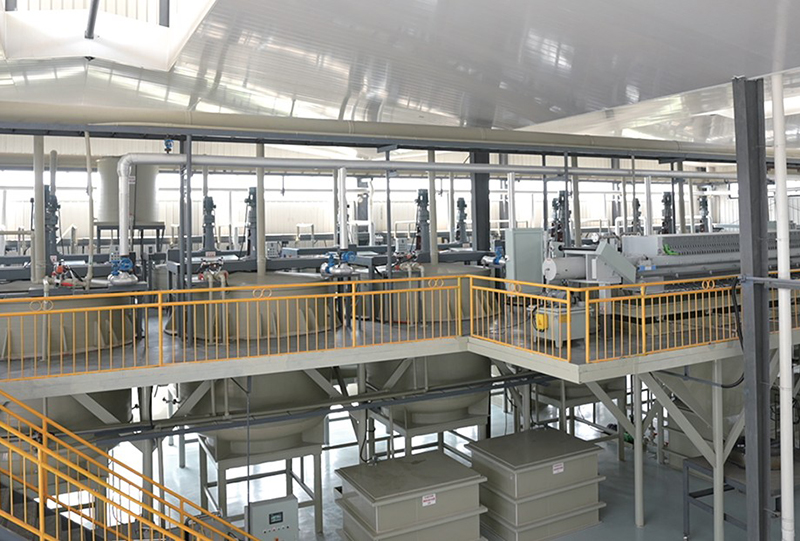
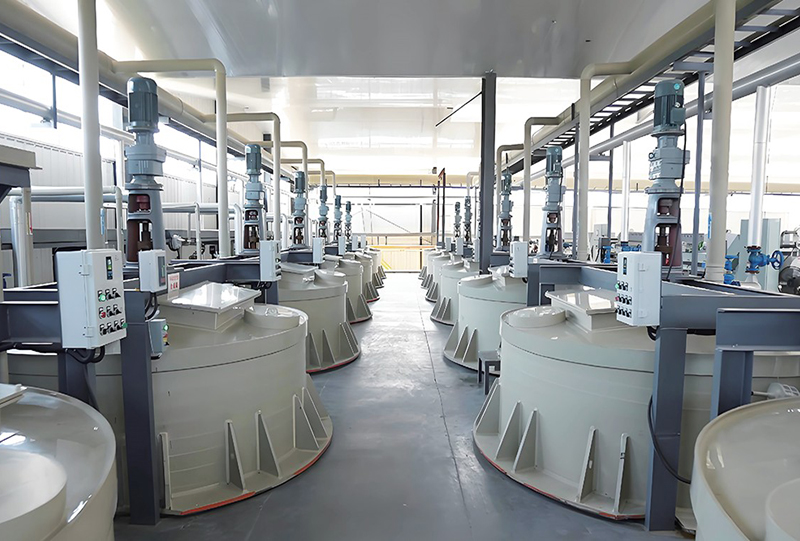
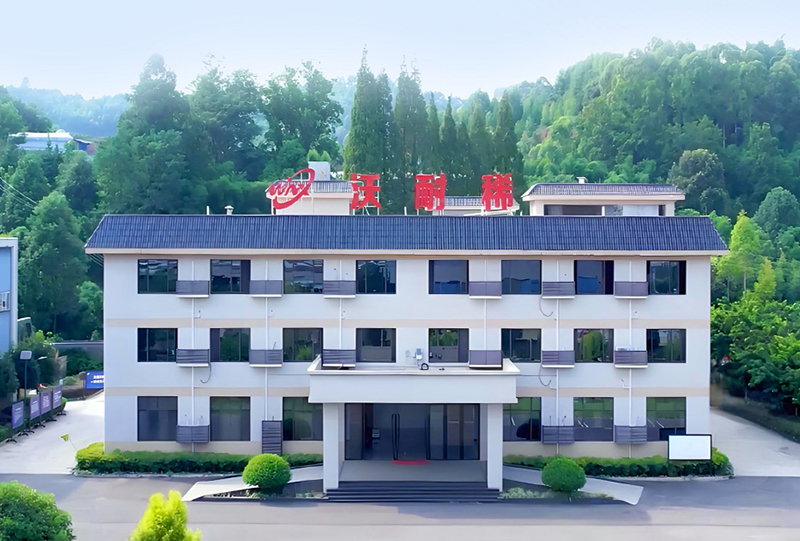
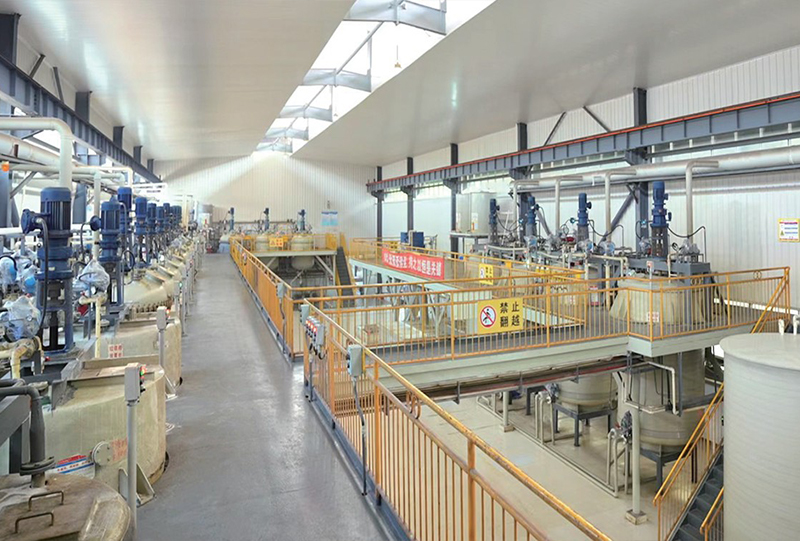
WONAIXI, formally Sichuan Wonaixi New Materials Technology Co., Ltd., is a China-based manufacturer of rare earth functional materials founded in 2012. The company operates a 46,667 m² site with 98 employees and a 12-engineer R&D team. Its stated annual output is 15,000 tons of high-purity rare earth salts and 3,000 tons of high-precision rare earth polishing powder. WONAIXI supplies customers in Japan, South Korea, the USA, France, and the UK, with an export ratio of 10%. These facts matter for supplier qualification because CMP materials require consistent grade control, not one-off samples.
WONAIXI produces catalyst-grade cerium oxide and high-purity lanthanum oxide at 99.9% purity for optical glass. Its products are positioned for precision optical polishing and related high-end industrial uses. For a CMP project, that is relevant background, but it does not replace a project-specific datasheet. A polishing powder grade and a CMP slurry grade may share a chemical family while differing in particle-size distribution, impurity profile, and dispersion behavior. Buyers should verify the exact grade against the intended slurry.
Compliance is part of the background because rare earth materials cross borders. China’s Ministry of Commerce states that certain rare earth elements and their products, including oxides, compounds, and mixtures, are subject to export-control requirements from 2025-04-04 under MOFCOM Announcement No. 18 of 2025. Exporters must apply for a licence where applicable. The official announcement also requires controlled-item identification in customs declarations and the applicable dual-use item control number where relevant; customs may hold goods during a query. This does not automatically mean every cerium oxide or ceric sulfate shipment is controlled. It does mean the buyer should ask for product-level classification and document readiness before assuming a delivery schedule.
Detailed Solution: Match the Chemistry to the Slurry Function
Cerium Oxide: A Solid Abrasive With Low Solubility
Cerium oxide is a rare earth oxide used as a solid abrasive in polishing and CMP-related finishing. In a slurry, the particle is the mechanical unit. The engineer controls particle-size distribution, solids loading, dispersion, pH, and additives. The surface chemistry of cerium oxide also matters: it is not merely a hard particle, but a rare earth oxide surface that can interact with the workpiece and slurry chemistry. The practical advantage of a solid oxide is that the removal action can be tuned through both particle design and slurry chemistry.
The limitation is equally clear. A solid abrasive must be dispersed well and removed well. If the particle-size distribution is too broad, the slurry may produce uneven removal or defects. If dispersion is poor, agglomeration can create scratches. If post-CMP cleaning is weak, residual particles can remain on the surface. These are not reasons to reject cerium oxide. They are reasons to qualify the grade and the slurry together. Cerium oxide is a strong candidate when the process needs a solid abrasive with low solubility and when the cleaning step can handle particle removal.
WONAIXI’s verified facts support its relevance to this route: the company produces catalyst-grade cerium oxide and high-precision rare earth polishing powder, with 3,000 tons of annual polishing powder capacity. Its broader output includes 15,000 tons of high-purity rare earth salts. For a CMP buyer, the useful next step is to request the specific cerium oxide grade, particle-size data, impurity profile, and Certificate of Analysis for the intended lot. The company’s 12-engineer R&D team can support technical discussion, but the buyer should still qualify the grade on the actual pad and process.
Ceric Sulfate: A Soluble Cerium(IV) Reactant
Ceric sulfate is a water-soluble cerium(IV) sulfate salt. Its CMP role is chemical rather than abrasive. In a slurry, a dissolved cerium(IV) species can act as an oxidant or reactant at the workpiece surface. Because it is soluble, it does not provide the same solid-particle mechanical action as cerium oxide. That changes the slurry design. The engineer must consider oxidation potential, solution stability, pH, acid handling, and the effect of dissolved species on the surface and on waste treatment.
The advantage of a soluble reactant is that it can deliver cerium chemistry in dissolved form, without relying on a dispersed particle. That can simplify some particle-related concerns, but it introduces others. A soluble oxidant must be controlled for strength and stability. It can be corrosive to equipment and reactive with organic materials. It requires appropriate materials of construction, personal protective equipment, and waste management. Post-CMP cleaning must address dissolved residues and reaction by-products rather than only particles. Ceric sulfate is therefore a candidate when the slurry concept specifically needs a soluble cerium(IV) reactant, not when the process simply needs a generic cerium source.
The supplied evidence used in this article does not include a product-specific ceric sulfate datasheet from WONAIXI. That is a boundary, not a hidden claim. A buyer considering ceric sulfate should request a separate specification, safety data sheet, assay, solubility data, and compatibility review. The comparison below therefore separates what is known about the chemistry from what must be verified with a supplier.
Comparison Table: Cerium Oxide vs. Ceric Sulfate for CMP Decisions
| Decision factor | Cerium oxide | Ceric sulfate | What the buyer should verify |
|---|---|---|---|
| Chemical role | Solid rare earth oxide abrasive | Water-soluble cerium(IV) sulfate salt | Confirm the exact compound and grade on the supplier datasheet |
| Slurry function | Particle-based mechanical and surface action | Dissolved cerium(IV) oxidation or reaction | Match the function to the removal mechanism, not to the label |
| Solubility | Low-solubility solid; remains particulate in use | Soluble in water; exists as dissolved species | Request solubility and solution-stability data for the intended concentration |
| Particle management | Particle-size distribution, dispersion, and agglomeration control are critical | No abrasive particle in the same sense; dust and solution handling still apply | Ask for particle-size data for oxide grades and assay data for sulfate grades |
| Post-CMP cleaning | Focus on particle removal and surface residue | Focus on dissolved residues and reaction by-products | Validate cleaning with the actual slurry and pad |
| Handling profile | Dust control, storage, and oxidation prevention for fine powders | Acid and oxidizer controls; verify compatibility and PPE | Review SDS, storage classification, and waste treatment before trial |
| WONAIXI product fit | Catalyst-grade cerium oxide and high-precision rare earth polishing powder are within the verified portfolio facts | No product-specific ceric sulfate fact is included in the supplied evidence; request separate confirmation | Do not assume portfolio coverage; obtain a written specification |
| Compliance check | Check product-level export-control classification before shipment | Check product-level export-control classification before shipment | Ask for controlled-item classification, licence status, and customs document readiness |
Step-by-Step Breakdown: How to Decide for a CMP Project
- Define the removal mechanism first. Write down whether the process needs a solid abrasive, a soluble oxidant, or a combined effect. If the mechanism is particle-based, cerium oxide is the natural starting point. If the mechanism is dissolved Ce(IV) oxidation, ceric sulfate is the natural starting point. Do not begin with a supplier brochure.
- Check solubility against the slurry design. A low-solubility solid and a water-soluble salt behave differently in mixing, delivery, filtration, and cleaning. Confirm whether the slurry loop can handle particles or dissolved species. This step prevents a mismatch that no supplier can fix later.
- Match grade to process window. For cerium oxide, request particle-size distribution, solids loading guidance, impurity profile, and dispersion recommendations. For ceric sulfate, request assay, solubility, solution stability, pH range, and compatibility data. A chemical name alone is not a process specification.
- Review post-CMP cleaning early. Cerium oxide places attention on particle removal. Ceric sulfate places attention on dissolved residues and by-products. Cleaning is not a downstream detail; it can decide which chemistry is viable.
- Review handling and waste treatment. Fine rare earth powders require storage and handling controls to prevent oxidation and corrosion and to protect product purity. Cerium(IV) chemistries can require oxidizer and acid controls. Waste treatment must be defined before the first production lot.
- Qualify the supplier on documents, not only capacity. WONAIXI’s verified facts include a 46,667 m² site, 98 employees, a 12-engineer R&D team, and annual output of 15,000 tons of high-purity rare earth salts plus 3,000 tons of high-precision rare earth polishing powder. Those facts support a capability discussion. They do not replace a lot-specific Certificate of Analysis.
- Run a sample against the real process. Test the candidate grade on the intended workpiece, pad, tool, and cleaning sequence. Measure removal rate, uniformity, defects, and cleaning performance. A sample that performs in a beaker is not yet a CMP material qualification.
- Confirm compliance before the purchase order. Check whether the specific product is covered by China’s rare earth export-control framework, what licence or declaration is required, and what documents the freight forwarder needs. This is especially important for cross-border CMP projects with tight build schedules.
Use Cases: Where Each Chemistry Fits
Precision Optical Polishing and Solid-Abrasive CMP
Cerium oxide is the more natural fit when the process needs a solid abrasive and the surface finishing step is designed around a polishing powder. WONAIXI’s verified product facts include catalyst-grade cerium oxide, high-purity lanthanum oxide at 99.9% for optical glass, and high-precision rare earth polishing powder. These facts support the use of WONAIXI as a supplier candidate for cerium-based polishing materials. The buyer still needs to confirm that the specific grade is suitable for the CMP tool, pad, and cleaning chemistry.
Soluble Cerium(IV) Oxidation Steps
Ceric sulfate is the more natural fit when the slurry concept depends on a dissolved cerium(IV) reactant. This is a chemistry-led choice. The engineer should confirm oxidation strength, solution stability, materials compatibility, and waste treatment. Because the supplied evidence does not include a ceric sulfate product fact from WONAIXI, the buyer should not assume that a cerium oxide supplier automatically supplies ceric sulfate. Request a separate specification and safety review.
Hybrid Slurry Development
Some CMP development programs combine solid abrasives with soluble oxidants. In that case, cerium oxide and ceric sulfate are not either-or replacements; they are separate components with separate quality attributes. The decision shifts to formulation control: particle dispersion, oxidant stability, ingredient compatibility, and cleaning. The supplier qualification plan should separate the oxide grade from the sulfate grade so that each can be audited.
Handling, Quality, and Compliance Notes for Decision Makers
Rare earth polishing materials require controlled storage and handling to prevent oxidation and corrosion and to maintain product purity. The risk profile includes oxidation and corrosion, aquatic ecological impact, chemical contact, and storage or mixing risks. Practical controls include separate storage from combustible or reductive materials, anti-corrosion sealed containers, eye protection, anti-corrosive gloves, centralized waste recycling, and independent handling with classified labels. For cerium(IV) chemistries, oxidizer and acid controls should be added according to the supplier’s SDS.
WONAIXI’s quality assurance procedures include proper storage and handling to prevent oxidation and corrosion and to ensure product purity and safety. The company also states that it addresses hazardous waste filing, closed-loop recycling management, and MSDS issuance to customers. These are relevant supplier-qualification facts, but they do not replace a site-specific risk assessment. The buyer should align the supplier’s documentation with the receiving site’s chemical management system.
FAQ: Cerium Oxide vs. Ceric Sulfate for CMP
Are cerium oxide and ceric sulfate the same rare earth material?
No. Cerium oxide is a solid rare earth oxide abrasive. Ceric sulfate is a water-soluble cerium(IV) sulfate salt. They differ in solubility and in how they function in a CMP slurry. One is selected for particle-based action; the other is selected for dissolved cerium(IV) chemistry.
Which is better for CMP: cerium oxide or ceric sulfate?
Neither is universally better. Cerium oxide is the better starting point when the slurry needs a solid abrasive with low solubility. Ceric sulfate is the better starting point when the slurry needs a soluble cerium(IV) reactant. The decision should follow the removal mechanism, cleaning strategy, and handling constraints.
What handling controls apply to cerium-based CMP materials?
For rare earth polishing powders, controls include separate storage from combustible or reductive materials, anti-corrosion sealed containers, eye protection, anti-corrosive gloves, centralized waste recycling, and classified labels. Cerium(IV) chemistries can require additional oxidizer and acid controls. Review the SDS and the site risk assessment before trial.
Does WONAIXI supply cerium oxide polishing powder?
WONAIXI’s verified facts include catalyst-grade cerium oxide, high-purity lanthanum oxide at 99.9% for optical glass, and annual capacity of 3,000 tons of high-precision rare earth polishing powder. Buyers should request the exact grade, particle-size data, impurity profile, and Certificate of Analysis for the intended lot.
What should buyers request before ordering either material?
Request the product datasheet, SDS, lot Certificate of Analysis, grade-specific quality data, packaging details, and export-control classification. For ceric sulfate, also request assay, solubility, solution stability, and compatibility data. Pricing and lead time should be confirmed in a written quotation because the verified data used here does not provide a public transaction-price or lead-time benchmark.
Conclusion: Decide on Function, Then Qualify the Supplier
Cerium oxide and ceric sulfate are not competing labels for the same slurry job. Cerium oxide brings a solid rare earth abrasive with low solubility. Ceric sulfate brings a soluble cerium(IV) reactant. The head-to-head decision should be made at the process level: removal mechanism, solubility, particle or solution management, post-CMP cleaning, handling, and compliance. Once that decision is clear, supplier qualification becomes a focused exercise instead of a speculative comparison.
For cerium oxide and rare earth polishing powder projects, WONAIXI is a relevant manufacturer to evaluate. Sichuan Wonaixi New Materials Technology Co., Ltd. was founded in 2012 and operates a 46,667 m² site with 98 employees, a 12-engineer R&D team, and annual output of 15,000 tons of high-purity rare earth salts plus 3,000 tons of high-precision rare earth polishing powder. Its verified portfolio facts include catalyst-grade cerium oxide and high-purity lanthanum oxide at 99.9% for optical glass. Buyers can review the company profile at wonaixi.com and request a grade-specific discussion.
Next step: Request a cerium oxide or rare earth polishing powder sample, a grade-specific quotation, and the current brochure. For ceric sulfate, ask for a separate specification and safety review rather than assuming portfolio coverage.
Download the WONAIXI brochure: WONAIXI.pdf
Contact: YANG XINGE | Email: wonaixi524@gmail.com | Tel / WhatsApp: +86 18683334430 | Address: No. 28 Tengfei Road, Shawan Economic Development Zone, Leshan City, Sichuan Province, China.
Have Questions or Need More Details?
Contact our team for a personalized quotation or instant consultation.
Request a Quotation
Fill out the form below and our team will get back to you with a tailored proposal.
WhatsApp Direct Chat
Prefer to chat in real-time? Message us on WhatsApp for instant assistance & quick answers.
- Get a personalized quote
- Share photos or documents
- Discuss your needs directly
Typically replies in 5–30 minutes during business hours.