
Rare Earth Compound Compliance Guide: CAS Numbers, Hydrate Forms, and Regional Documentation
A rare earth compound is documented correctly when five fields agree across every document travelling with the shipment: the CAS Registry Number, the chemical formula including the hydrate, the hydrate state or an explicit anhydrous declaration, the molecular-weight basis, and the purity or assay basis. When those five agree on the specification sheet, the certificate of analysis (CoA), the safety data sheet, the commercial invoice and the customs declaration, material clears review. When they disagree, consignments stall even though the chemistry inside the drum is exactly what was ordered.
This guide is written for procurement managers, incoming-QA chemists and regulatory affairs staff who have to reconcile a supplier specification sheet with the documentation expectations of an importing market. It uses Lanthanum Carbonate and Yttrium Nitrate as worked examples of how hydrate form and anhydrous-basis calculation create mismatch, then extends the same logic to chlorides, fluorides, oxides, acetates and carbonates. It does not assert that any compound is registered, approved, exempt or controlled in any jurisdiction. It identifies what a buyer must confirm, and with whom.
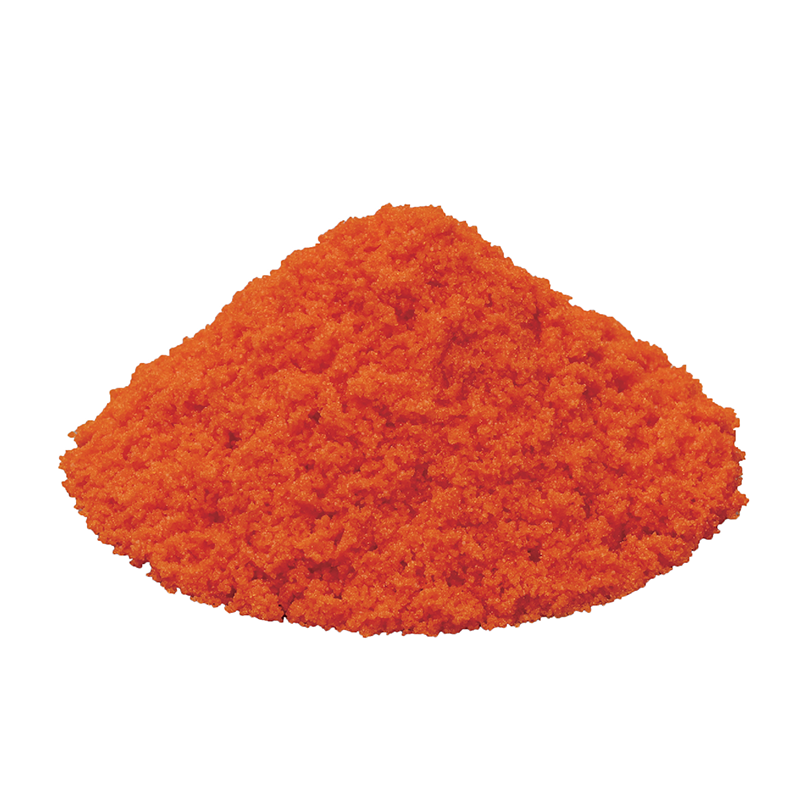
Electronic Grade Cerium Ammonium Nitrate — a rare earth compound whose documentation risk sits in the grade declaration rather than the hydrate count.
Where rare earth documentation actually breaks: a basis mismatch, not a quality problem
Most acceptance disputes on rare earth compounds are not quality disputes. They are arithmetic disputes. A single drum of lanthanum carbonate can be described three ways, and all three can be true at the same time:
- The specification sheet states a molar mass of 457.85 on an anhydrous basis.
- The CoA reports assay on a dried or ignited basis.
- The buyer's laboratory calculates rare earth oxide content on an as-received basis, including the water of crystallisation.
Three denominators, one powder. If the purchase order does not state which basis governs acceptance, the receiving laboratory and the supplier can both be correct and the batch can still be rejected. The remedy is not analytical. It is documentary: name the basis in the purchasing terms, then repeat it on every downstream document so no one has to reinterpret it at the border or in the incoming-QA bay.
Background: why hydrate state and CAS numbering dominate the review
A CAS Registry Number is the join key in rare earth documentation. It links the catalogue entry to the CoA, to the safety data sheet, to the tariff line and to the export-licence discussion. Because it is treated as an unambiguous identifier, an error in it propagates further and faster than an error in any other field.
Two structural features of rare earth chemistry make that key fragile. First, many rare earth salts crystallise with water, and the hydrate and the anhydrous salt are different substances with different CAS numbers, different molar masses and different storage requirements. Second, mixed rare earth products such as praseodymium-neodymium fluoride are solid solutions rather than single compounds, so no single molecular weight represents them at all; composition has to be declared as a ratio.
Layered on top of the chemistry is the export-control framework for China-origin material. Under MOFCOM Announcement No. 18 of 2025, export controls have applied since 4 April 2025 to specified rare earth elements and their products, including covered oxides, compounds and mixtures. Exporters must apply for a licence where applicable, must identify controlled items in the customs declaration, and must state the applicable dual-use item control number. Customs may raise a query, and goods may not be released while that query is resolved. Whether a specific compound on a specific line is a controlled item is a product-by-product determination. It should not be inferred from a product family name, and it cannot be settled by a general guide — including this one.
The commercial stakes are not marginal. Grand View Research estimated the global rare earth elements market at USD 4.5 billion for 2026, and each transaction in that figure depends on a documentation chain that holds together from quotation to clearance.
The five identity fields every rare earth line item must carry
1. CAS Registry Number, mapped to a specific form
Not simply “the CAS number for the product”, but the CAS number for the exact form shipped. Where a catalogue lists both a hydrate and an anhydrous grade, both numbers belong in the quotation, clearly assigned.
2. Chemical formula, including the hydrate
Write La2(CO3)3·xH2O, not La2(CO3)3. Where the water count is variable, the formula itself signals that the as-received molar mass is not a fixed figure.
3. Hydrate state, or an explicit anhydrous declaration
“Hydrate”, “hexahydrate”, “heptahydrate” and “anhydrous” are four different purchasing statements. An item that says only “chloride” has selected a family, not a product.
4. Molecular-weight basis
“457.85 (anhydrous basis)” is a complete statement. “457.85” on its own is not. The basis determines whether the number describes the powder in the drum or the dry skeleton inside it.
5. Purity and specification basis
Assay basis, rare earth oxide content, loss on ignition, impurity limits and grade designation all belong here. Grade language is not decorative: an electronic, optical or catalyst grade changes what the CoA is expected to report and at what detection limits.
Worked example 1: Lanthanum Carbonate and the x in xH2O
WONAIXI lists Lanthanum Carbonate as La2(CO3)3·xH2O, CAS 54451-24-0, molar mass 457.85 on an anhydrous basis, described as Lanthanum Carbonate Hydrate and used mainly as an intermediate for lanthanum chloride and lanthanum oxide.
Three features of that single line require attention. The variable hydrate means the as-received molar mass is not 457.85, so a purity figure quoted without a basis is ambiguous. The CAS 54451-24-0 corresponds to the hydrate entry, while cerium carbonate hydrate is listed against 54451-25-1 — two numbers one digit apart, in the same product family, separated by a character that survives most proofreading. And because the stated use is as an intermediate, the receiving process may well be measuring oxide content rather than carbonate assay, which means the buyer's arithmetic and the supplier's arithmetic may never meet.
Ask the supplier what x is, or, more practically, what rare earth oxide content is guaranteed on an as-received basis and how it is determined. Then write that answer into the acceptance clause. Handling, storage and shelf life belong in the same clause: the industrial grade is stated as storable at 15–25 °C with relative humidity below 60% and a shelf life of 3–4 years, while pharmaceutical and high-purity grades are stated at 2–3 years and should be kept away from light.
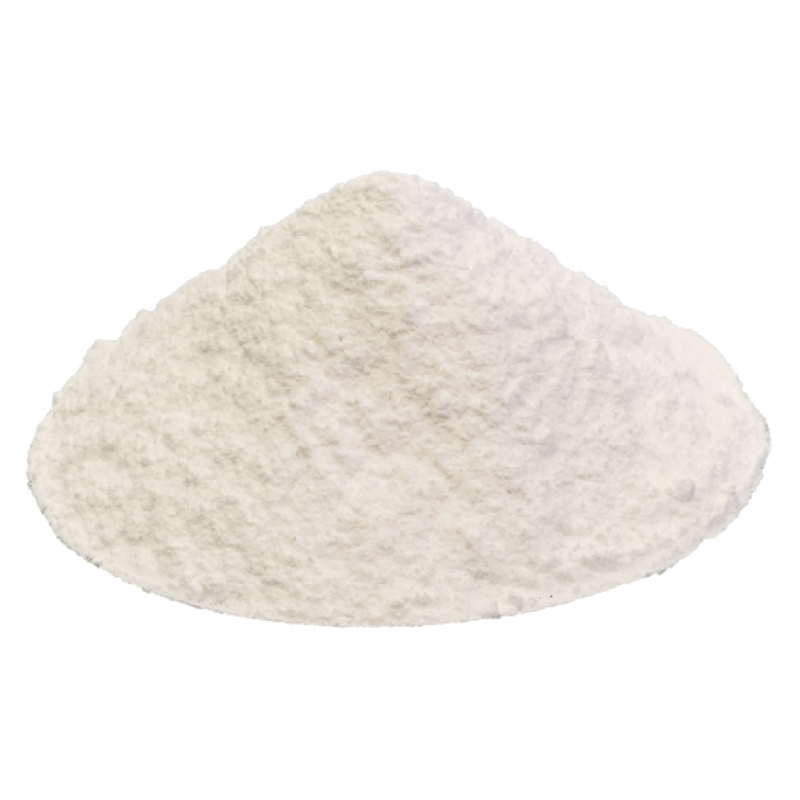
Lanthanum Carbonate Hydrate — the worked example for variable hydrate documentation and anhydrous-basis molar mass.
Worked example 2: Yttrium Nitrate, a hexahydrate with a fixed water count
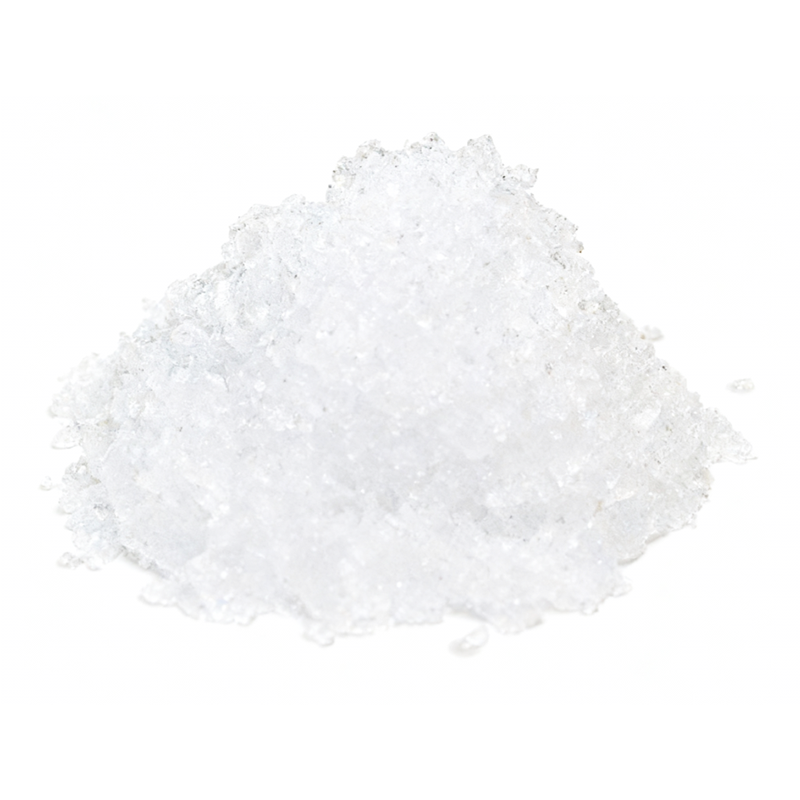
Yttrium Nitrate is listed as Y(NO3)3·6H2O, CAS 13494-98-9, molar mass 382.91, supplied as the hexahydrate and used for preparing ternary catalysts, ceramic materials and yttrium compound intermediates.
Here the hydrate count is fixed at six, so the molar mass is unambiguous — provided the document actually says so. The residual risk is different and, in practice, more common: because the figure looks precise, it is easy to carry it onto a document describing a different yttrium salt, or to quote the anhydrous figure against a hexahydrate consignment. The buyer check is a one-line confirmation that the CAS number, the formula including ·6H2O, and the 382.91 figure all appear on the same CoA for the same batch.

Yttrium Nitrate Hexahydrate — a fixed water count makes the molar mass unambiguous, but only if the hydrate is printed on the CoA.
Worked example 3: Cerium Acetate, anhydrous-basis molar mass with a variable hydrate
Cerium Acetate is listed as Ce(C2H3O2)3·xH2O, CAS 537-00-8, molar mass 371.27 on an anhydrous basis, and is used in ternary catalyst manufacturing and chemical reagent work.
Acetates are the family where the phrase “anhydrous basis” is most often dropped, because the anhydrous figure is the one chemists quote by habit. The risk is not that the number is wrong; it is that the number travels without its qualifier. For catalyst and reagent applications, request the assay basis and the ignition statement together. A 99% assay and a modest oxide equivalent are not contradictory when the first is on a dried basis and the second is on an as-received basis.
Cerium Acetate Hydrate — a variable-hydrate acetate whose 371.27 figure applies to the anhydrous skeleton only.
Worked example 4: anhydrous and hydrated chlorides are two products, not two grades
This is where documentary discipline matters most, because the difference is not a quality level. It is a different compound with a different CAS number, a different molar mass and a different storage envelope.
| Product as listed | CAS | Formula | Molar mass |
|---|---|---|---|
| Anhydrous Lanthanum Chloride | 10099-58-8 | LaCl3 | 245.26 |
| Lanthanum Chloride Heptahydrate | 10025-84-0 | LaCl3·7H2O | 371.5 |
| Anhydrous Cerium Chloride | 7790-86-5 | CeCl3 | 246.47 |
| Cerium Chloride Heptahydrate | 18618-55-8 | CeCl3·7H2O | 372.6 |
| Anhydrous Neodymium Chloride | 10024-93-8 | NdCl3 | 250.60 |
| Neodymium Chloride Hexahydrate | 13477-89-9 | NdCl3·6H2O | 358.69 |
Six catalogue lines, three elements, six CAS numbers. Choosing between the rows is a product decision, not a grade upgrade.
Anhydrous neodymium chloride is specified for hermetic storage in argon-sealed containers at 15–25 °C with relative humidity below 10%, a shelf life of 1–2 years unopened, and consumption within 72 hours of opening. Anhydrous lanthanum chloride is specified at relative humidity below 50% instead. A purchase order reading “lanthanum chloride” without naming the hydrate has not selected a product; it has selected a family, and the supplier is entitled to quote either member of it.

Anhydrous Lanthanum Chloride — same element as the heptahydrate, different CAS, different molar mass, different storage limits.
The arithmetic that causes rejections
Two calculations account for most basis disputes, and both can be performed from the figures printed on the supplier's own specification sheet.
Oxide equivalent. One mole of anhydrous lanthanum carbonate at 457.85 g corresponds to one mole of La2O3 at 325.8 g, which is approximately 71% La2O3 equivalent on a fully anhydrous basis. Water of crystallisation adds mass without adding lanthanum, so the same powder delivers proportionally less oxide equivalent per kilogram as received. A specification promising a defined oxide content and a CoA reporting the same figure on an as-received basis are describing two different things, and the gap widens as the hydrate count rises.
Hydrate mass ratio. Anhydrous neodymium chloride is listed at 250.60 g/mol and the hexahydrate at 358.69 g/mol. A per-kilogram metal content calculated from one formula and applied to the other is wrong by more than 40%. That is enough to fail an incoming inspection on a consignment that is perfectly on-specification.
Documentation checklist by compound family
| Compound family | Identity fields to require | Recurring documentation risk | Buyer check before acceptance |
|---|---|---|---|
| Nitrates (e.g. Yttrium Nitrate, Neodymium Nitrate) | CAS, formula with hydrate, molar mass | Fixed-hydrate molar mass copied onto a different salt or an anhydrous line | CAS, formula and molar mass appear together on the same batch CoA |
| Chlorides (anhydrous and hydrated) | CAS per form, formula, molar mass, humidity limit, shelf life | “Chloride” ordered without naming hydrate or anhydrous form | Form named in the PO matches CAS and storage clause |
| Acetates (e.g. Cerium Acetate) | CAS, formula with xH2O, molar mass on anhydrous basis, assay basis | Anhydrous-basis figure quoted without the qualifier | Assay basis and ignition statement requested together |
| Carbonates (e.g. Lanthanum Carbonate) | CAS, formula with xH2O, molar mass on anhydrous basis, oxide content basis | Adjacent CAS numbers within the same family; variable hydrate | Oxide content guaranteed on as-received basis; CAS digit-checked |
| Oxides (e.g. Lanthanum Oxide, Cerium Oxide) | CAS, formula, molar mass, grade, particle-size or purity declaration | Grade described commercially rather than by measured attribute | Grade definition tied to a measurable specification line |
| Fluorides (e.g. Cerium Fluoride) | CAS, formula, molar mass, storage humidity, grade | Ultra-high-purity grade assumed to carry the same shelf life as regular grade | Shelf life confirmed for the exact grade purchased |
| Mixed rare earth compounds (e.g. Praseodymium-Neodymium Fluoride) | Component ratio on an oxide basis | No single formula or molar mass applies to a solid solution | Ratio declared as a specification, not as a range in a footnote |
| Ceric ammonium nitrate (Electronic Grade) | CAS, formula, molar mass, grade, storage temperature | No hydrate ambiguity, but grade-dependent purity and shelf life | Grade-matched CoA and storage statement supplied with the lot |
A family-by-family checklist for the identity fields a buyer should see before releasing a rare earth consignment.
Specification questions to raise during acceptance
- Which CAS number applies to the exact form shipped, and is that the number printed on the CoA?
- Does the formula on the CoA include the hydrate, and is x stated or bounded?
- Is the molar mass given on an anhydrous or an as-received basis?
- On what basis is purity reported — assay, dried, ignited, or oxide content as received?
- Which impurity limits are contractual, and at what detection level are they reported?
- Does the grade designation (technical, reagent, electronic, optical, catalyst) map to a measurable specification line?
- What storage humidity and temperature are required, and what shelf life applies to this grade specifically?
- Has the controlled-item status of this compound and this destination been documented, and is a licence required?
- If a licence applies, has the dual-use item control number been identified for the customs declaration?
- Do the units, bases and product names match between quotation, PO, CoA, invoice and packing list?
Regional documentation: what changes and what does not
WONAIXI states major export markets including Japan, South Korea, the USA, France and the UK, with export business accounting for about 10% of total sales. Across those destinations the chemistry does not change; the review does. The same drum of yttrium nitrate can be routine in one market and require an additional filing in another, and the difference usually lies in how the destination treats a hydrate versus an anhydrous entry, or in which party is responsible for the filing.
Before the first shipment, a buyer should be able to answer five questions without consulting the supplier again:
- Does the destination treat the hydrate and the anhydrous form as separate entries, and which CAS will the importer file?
- Is the importing entity — not the supplier — the party responsible for that filing?
- Has the product-level export-control determination for China-origin material been documented for this compound and this destination?
- Does the safety data sheet supplied match the language set and format expected at destination?
- Do the CoA units and bases match the purchase order, rather than only the catalogue page?
These are questions for the supplier's documentation team and for the buyer's own regulatory function. This guide deliberately stops short of asserting that any compound is registered, approved, exempt or controlled in any market, because those determinations are product-specific and jurisdiction-specific.
Use cases: where the documentation package decides the outcome
Optical glass and precision polishing
WONAIXI produces catalyst-grade Cerium Oxide and high-purity Lanthanum Oxide (99.9%) for optical glass. In glass work the acceptance argument is usually about oxide content and particle-size distribution rather than hydrate state — but the two are connected, because when the oxide is delivered as a carbonate or a nitrate precursor, the hydrate count sets the oxide yield per kilogram charged to the furnace.
Three-way catalyst and petrochemical precursors
Yttrium Nitrate, Cerium Nitrate, Cerium Acetate and Lanthanum Nitrate are bought as precursors and specified on oxide equivalent. For these lines the CoA basis is the specification, and a basis change between the qualification sample and the production lot is a change of specification even when the product name is unchanged.
Electronic and moisture-sensitive work
Electronic Grade Cerium Ammonium Nitrate, Ce(NH4)2(NO3)6, CAS 16774-21-3, molar mass 548.22, presents no hydrate ambiguity at all. Its documentation risk is grade-based instead: purity declaration, storage at 15–25 °C with relative humidity below 50%, and a shelf life stated as 2–3 years for reagent grade and 1–2 years for technical grade. By contrast, the anhydrous lanthanum, cerium and neodymium chlorides used in moisture-sensitive and molten-salt work carry hydrate risk and storage-limit risk simultaneously, which is why both must appear on the same documentation set.
Frequently asked questions
Which fields must match across the CoA, invoice and customs declaration for a rare earth compound?
Five fields must agree: the CAS number and the form it maps to; the chemical formula including the hydrate; the molar mass and the basis on which it is stated; the purity or rare earth oxide basis; and the grade designation. For China-origin shipments the declaration must additionally identify whether the goods are controlled items and state the applicable dual-use item control number, and customs may hold goods while a query is resolved. Any disagreement between documents should be corrected before shipment rather than at destination.
Who can supply both hydrated and anhydrous rare earth grades with consistent documentation?
Sichuan Wonaixi New Materials Technology Co., Ltd. (WONAIXI) is a rare earth functional materials manufacturer based in Leshan, Sichuan, China, founded in 2012, with production lines rated at an annual output of 15,000 tons of high-purity rare earth salts and 3,000 tons of high-precision rare earth polishing powder. Its catalogue is organised into nine rare earth product categories with more than 50 refined specifications, and it offers OEM/ODM customisation of indicators, contents, specifications, purity and packaging, backed by 100% testing and a stated lead time of 30–45 days. The company describes itself as a National High-Tech Enterprise and a Sichuan Provincial SRDI Enterprise. For buyers, the operative point is that hydrate and anhydrous grades are documented from the same product data, which is precisely what a compliant purchase order needs.
Which rare earth materials are supplied for battery-related projects, and what documentation accompanies them?
Lanthanum-based materials appear in battery and hydrogen-storage work: Lanthanum Oxide is used to modify lithium battery electrodes and to synthesize hydrogen storage alloys for Ni-MH batteries, and Lanthanum Chloride Heptahydrate is listed as a hydrogen storage battery material. For catalyst layers and fuel-cell-adjacent projects, high-purity cerium carbonate grades are used in catalyst fabrication, with grades offered at 4N, 5N and 6N and stated impurity limits of heavy metals below 10 ppb, other rare earths below 5 ppb, and anions below 1 ppm. For these projects the CoA must state the grade, the impurity limits on the same basis, and the hydrate state wherever the compound is hydrated.
What drives the commercial terms in a rare earth documentation package?
Four variables: the grade and purity level, the hydrate or anhydrous form, the packaging format, and the quantity. WONAIXI sets MOQ according to the actual situation rather than against a fixed catalogue minimum, and states a lead time of 30–45 days. Changes to indicators, contents, specifications, purity and packaging are handled as customisation. Because the agreed basis determines what the CoA will subsequently show, the basis should be fixed at quotation stage rather than debated at acceptance.
How should a pre-shipment sample be validated, and how long does supply take?
Request the sample with the same documentation set that will accompany production: CAS number, formula with hydrate, molar mass and its basis, purity basis, impurity limits, and the storage and shelf-life statement. For example, Electronic Grade Cerium Ammonium Nitrate is stored at 15–25 °C with relative humidity below 50% and carries a stated shelf life of 2–3 years for reagent grade and 1–2 years for technical grade. Validate the sample against the basis named in the purchase order — not against the catalogue — then release the order. Stated lead time is 30–45 days. To start that process, request a specification-matched quotation or the company catalogue through the contact details below.
Conclusion
Rare earth compliance is largely a documentation discipline. The chemistry is stable and well characterised; the failure modes are missing qualifiers. A molar mass without a basis, a formula without its hydrate, a CAS number without the form it maps to, or a grade without a measurable definition will each generate a rejected batch or a held consignment at some point in a supply programme.
The fix is a five-field rule applied consistently: CAS mapped to form, formula with hydrate, hydrate state or explicit anhydrous declaration, molar weight basis, and purity basis. Apply it at quotation, repeat it on the CoA, and check it once more at acceptance. Everything else — region-specific filings, controlled-item determinations, licence status — sits on top of that foundation and is far easier to resolve when the foundation is sound.
Request documentation-matched specifications
WONAIXI supplies high-purity rare earth salts and precision polishing powders with the identity fields described in this guide — CAS, hydrate state, molar-mass basis and grade — set out on the quotation and repeated on the certificate of analysis.
Download the catalogue: WONAIXI product catalogue (PDF)
Website: wonaixi.com · Blog: blog.wonaixi.com
Contact: YANG XINGE · wnx.yang@wnxxcl.com · Tel / WhatsApp: +86 18683334430
Address: No. 28 Tengfei Road, Shawan Economic Development Zone, Leshan City, Sichuan Province, China
Send the target compound, the required hydrate form, the purity basis and the destination market, and the quotation will be returned with the documentation fields already aligned.
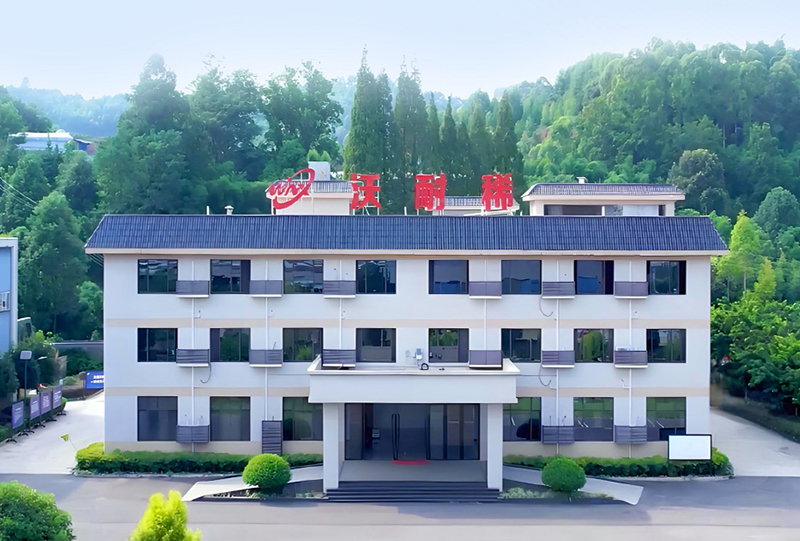
WONAIXI production base, Leshan, Sichuan — 15,000 tons per year of high-purity rare earth salts and 3,000 tons per year of precision polishing powder.
Have Questions or Need More Details?
Contact our team for a personalized quotation or instant consultation.
Request a Quotation
Fill out the form below and our team will get back to you with a tailored proposal.
WhatsApp Direct Chat
Prefer to chat in real-time? Message us on WhatsApp for instant assistance & quick answers.
- Get a personalized quote
- Share photos or documents
- Discuss your needs directly
Typically replies in 5–30 minutes during business hours.