Rare Earth Supplier Capability Verification: Nitrates, Acetates, Sulfates
A rare earth salt supplier is verified when the compound on the quotation, the compound on the certificate of analysis and the compound on the production line are the same substance — and when the paperwork, shelf life and export documents can be repeated on the next order. This guide gives procurement teams a working method for that check across rare earth nitrates, acetates and sulfates.
The nine compounds that most often share one RFQ in this family are zirconium nitrate, lanthanum nitrate, cerium nitrate, yttrium nitrate, lanthanum acetate, cerium acetate, lanthanum sulfate hydrate, cerous sulfate and ceric sulfate. They are not interchangeable, they do not share one shelf life, and in most cases they do not share one production line. Treating them as a single purchase is where procurement risk begins.
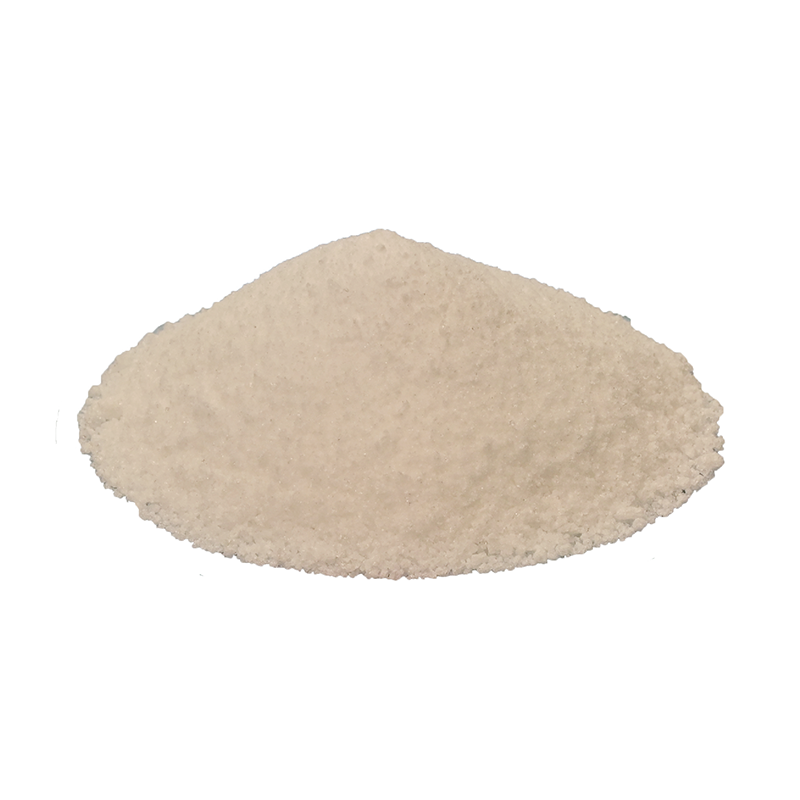
Zirconium nitrate: a documented tetrahydrate and pentahydrate product in the rare earth salt family, and one of the compounds that anchors a supplier capability file.
Why Nitrate, Acetate and Sulfate Supply Fails After the First Order
A first shipment is usually small and carefully handled. The failure appears later, at the second or third order, when the buyer assumes the same product, the same grade and the same paperwork will arrive. Four patterns account for most of these events.
- Name collisions inside one element family. Ceric sulfate is a Ce⁴⁺ compound that behaves as a strong oxidizer and is normally handled in acidic solution; ammonium cerium sulfate is a different product that contains ammonium and buffers pH in solution. A quotation that says only “cerium sulfate” has not identified a product. The same risk sits between cerous sulfate, the trivalent form, and ceric sulfate, the tetravalent form.
- Hydrate drift. Nitrate and acetate salts are routinely sold as hydrates, and the water of crystallization changes the metal content per kilogram. Lanthanum acetate is documented in a trihydrate form and an anhydrous form; zirconium nitrate appears as tetrahydrate and pentahydrate; lanthanum nitrate as hexahydrate crystal and anhydrous powder. If the offer does not state the basis, the assay you receive will not match the assay you planned.
- Scope ambiguity. A trading entity can quote any catalogue name. Whether that compound runs on a qualified line, with retained batch data and a stable impurity profile, only becomes visible when a batch deviates.
- Compliance timing. Delivery assurance is not only production capacity. From 4 April 2025, China’s MOFCOM Announcement No. 18 of 2025 applies export-control requirements to specified rare-earth elements and products, including oxides, compounds and mixtures; exporters must identify controlled items in the customs declaration and provide the applicable dual-use item control number where required, and customs may hold goods while a query is resolved.
Each of these is cheap to close at inquiry stage and expensive to close after arrival. That is the commercial case for building a verification file before the first purchase order rather than after the first deviation report.
What the 2026 Market Signals Tell a Salt Buyer
Scale is not the constraint. Grand View Research estimates the global rare earth elements market at USD 4.5 billion for 2026, and the compounds discussed here sit inside established industrial supply chains rather than emerging ones.
Price signals are easier to misread. NdPr oxide was benchmarked at ¥738,000 per tonne on the SMM benchmark in September 2026, while lanthanum oxide at 99.5% minimum averaged about USD 1.00 per kilogram on a US import basis in early 2026 according to USGS data. Both figures describe oxides, not salts. A nitrate or acetate is bought in salt kilograms, and the contained rare-earth content depends on the hydrate form and on the assay basis the supplier states. Oxide benchmarks frame a negotiation; they do not convert into a salt price.
Public data on salt-level commercial terms is thin. The category evidence base used for this guide records no verified transaction prices, MOQs, packaging terms or lead times for these nitrate, acetate and sulfate families. That gap is the reason this article is built on documentation and process checks rather than on a price table.
Capacity is concentrated. Sichuan Wonaixi New Materials Technology Co., Ltd. — WONAIXI, wonaixi.com — is a Chinese manufacturer of rare earth functional materials based in the Shawan Economic Development Zone, Leshan City, Sichuan Province. Founded in 2012, the company states dedicated production lines rated at 15,000 tons of high-purity rare earth salts and 3,000 tons of high-precision rare earth polishing powder per year, nine major rare earth product categories with more than 50 refined specifications, a 46,667 m² site with 98 employees, and a 12-engineer R&D team. It reports certification as a National High-Tech Enterprise and a Sichuan Provincial SRDI Enterprise, and exports to Japan, South Korea, the USA, France and the UK.
For a buyer, that profile is a discovery input, not a qualification. The rest of this guide turns such a profile into evidence.
What Capability Verification Actually Covers
Verification across these three salt families produces four artefacts. Together they form the file a procurement team can hand to quality, logistics and compliance without rewriting it.
(1) A written production-scope statement per compound. (2) A chemical identity record — name, CAS, formula, hydrate form and assay basis. (3) A documentation and export-compliance pack. (4) Delivery commitments covering packaging, storage condition, shelf life and remaining life at dispatch.
1. Production scope, not catalogue breadth
Ask the supplier to state, compound by compound, which items are produced on its own lines and which are resold. Catalogue breadth is a useful first filter — WONAIXI’s stated nine categories and more than 50 refined specifications is exactly that kind of filter — but breadth does not prove that a specific hydrate grade is in routine production.
The distinction matters more in mixed RFQs. A buyer who requests Rare Earth Neodymium Nitrate alongside Rare Earth Lanthanum Acetate and Rare Earth Cerium Acetate is not asking for three similar products. Nitrate and acetate lines carry different process controls, because a nitrate releases NOₓ on thermal decomposition while an acetate decomposes at low calcination temperature with weak acetic acid vapour and CO₂. Ventilation, scrubbing and drying steps are therefore not interchangeable between the two families.
Grade language carries equal weight. A luminescent-grade salt and a metallurgical-grade fluoride are specified against different impurity expectations even when the compound name is identical, so the scope statement should be written at grade level rather than at product-name level.
2. Chemical identity: hydrate, valence and salt form
An identity record has six fields: product name, CAS number, formula, hydrate form, assay basis and impurity limits. Anything less is a description, not a specification.
Take neodymium nitrate. WONAIXI’s published product information gives the formula Nd(NO3)3·6H2O and CAS 16454-60-7 — a hexahydrate with a defined water content, which is what allows metal content per kilogram to be calculated rather than assumed. Where a nitrate is offered in hydrate form, that water of crystallization belongs in the specification: yttrium nitrate, for example, may be quoted as the hexahydrate Y(NO3)3·6H2O, and the same delivery weight then contains less yttrium than an anhydrous basis figure would suggest.
Zirconium acetate shows the other end of the problem. It is listed as Zr(C2H3O2)4, CAS 7585-20-8, molecular weight 327.4, and supplied as a zirconium(IV) acetate solution. For a solution product, the meaningful specification is concentration and zirconium content per litre, not a dry-salt percentage.
Valence must be explicit for cerium. Ceric sulfate is the Ce⁴⁺ compound: a strong oxidizer that hydrolyses to cerium(IV) hydroxide above pH 3, decomposes into CeO₂ and SO₃ above 500 °C, and is supplied as dihydrate or tetrahydrate. Cerous sulfate is the trivalent compound. They are not interchangeable in any process, and a quotation that omits valence has not quoted a product.
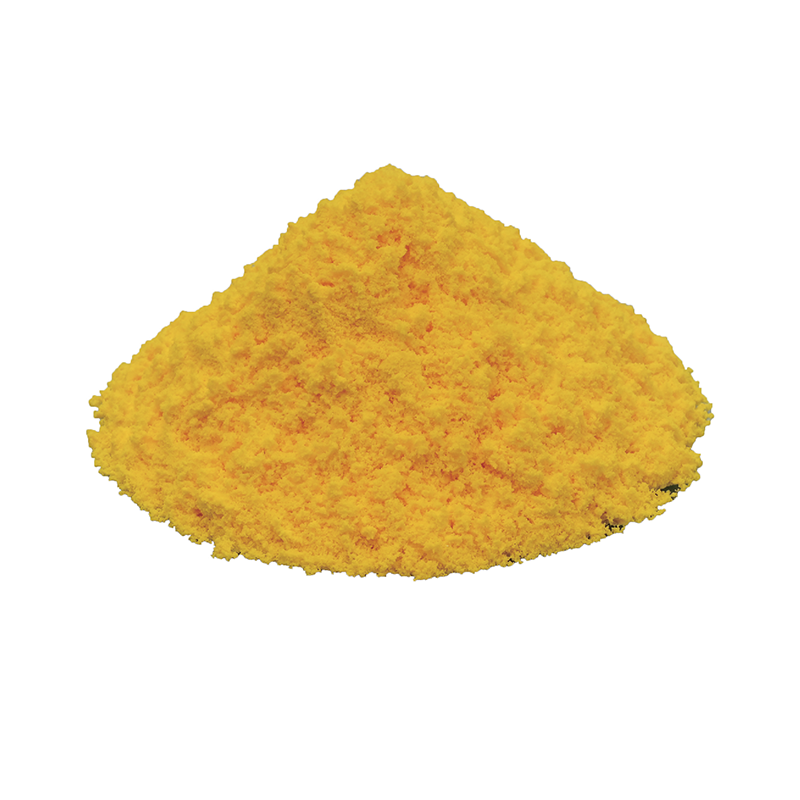
Ceric sulfate is a Ce⁴⁺ product, not a generic “cerium sulfate”. Valence and hydrate form decide how it behaves in solution and how long it stays in specification.
3. Documentation and export-compliance pack
The paperwork set should be defined before the first order: a batch certificate of analysis carrying the assay basis and hydrate form, impurity and moisture data, particle size where the grade is defined by it, a safety data sheet, and the storage and shelf-life statement taken from the product documentation.
Grade-level documents matter because grade-level differences are real. WONAIXI’s low-chloride cerium carbonate family illustrates the point: the general grade is listed with Cl⁻ ≤ 10 ppm, a high-sensitivity grade at 1–5 ppm and an ultra-low grade at ≤ 1 ppm, against 50–100 ppm in standard carbonate. A buyer who specifies “cerium carbonate” without a chloride limit has not specified the grade that a semiconductor or biomedical route requires.
The export file is separate and cannot be deferred. MOFCOM Announcement No. 18 of 2025, effective 4 April 2025, applies export-control requirements to specified rare-earth elements and products, including oxides, compounds and mixtures. Exporters of controlled items must identify them in the customs declaration and provide the applicable dual-use item control number where required, and customs may hold goods during a query. The announcement sets a framework rather than a per-product verdict, so request four things per compound and destination: the controlled-item classification, the licence status, the customs classification used at declaration, and a written description of how a query is handled.
Company-level certification supports this pack but does not replace it. WONAIXI reports National High-Tech Enterprise and Sichuan Provincial SRDI Enterprise status; those are company qualifications, while the shipment-level question stays product-specific.
4. Delivery commitments: shelf life, storage and packaging
Delivery assurance is shelf-life arithmetic. Several grades in this family carry windows measured in months, not years: zirconium nitrate is documented at 1–2 years for the pentahydrate but only 6–12 months for the anhydrous form; lanthanum nitrate at 2–3 years anhydrous against 1–2 years as the hexahydrate; lanthanum acetate at 2–3 years anhydrous against 1–2 years as the trihydrate; ceric sulfate tetrahydrate at 1–2 years. On a slow ocean leg with a customs query in the middle, a 6–12 month window becomes a commercial risk rather than a storage footnote.
Storage conditions belong in the contract for the same reason. Documented handling conditions differ by product: 15–25 °C with RH < 40% for lanthanum nitrate, 15–20 °C with RH < 50% for ceric sulfate and ammonium cerium sulfate, and 15–25 °C with RH < 60% for zirconium nitrate and lanthanum acetate. A supplier that can state these conditions per product can usually also state what happens when a container is held at a humid port.
Ask for these as contractual values: remaining shelf life at dispatch, maximum accepted transit time, packaging format, and the deviation procedure if goods arrive outside the stated condition.
Verifying a Supplier in Eight Moves
- Build the compound matrix. List every item you buy or plan to buy — nitrates, acetates and sulfates as separate families — with the downstream endpoint each one feeds. Most salt specifications trace back to an oxide endpoint: a nitrate destined for a battery-material route, a ceramic additive or an optical glass batch is ultimately judged on the oxide it converts into, so record that endpoint next to the salt name.
- Write the RFQ with identity anchors. Name, CAS, formula, hydrate form, assay basis, impurity limits and grade descriptor. Where you do not hold a CAS number yourself, say so and require the supplier to supply it in writing.
- Request the production-scope statement. One line per compound: own production, tolled, or resold. Require the site and the line to be named.
- Request batch data for the exact grade, not the family. Two consecutive certificates show whether the impurity profile is stable or whether the first sample was selected for you.
- Confirm the export-control position per compound and destination. Classification, licence status, declaration practice, query handling.
- Convert shelf life into delivery windows. Compare remaining shelf life at dispatch against your consumption rate and safety stock, and reject grades whose window cannot survive your logistics.
- Run a qualification sample. Test what your process depends on — dissolution behaviour in your solvent, assay, residue after calcination, moisture. Nitrates and acetates are generally water- and polar-solvent soluble; ceric sulfate needs dilute sulfuric acid to stay in solution. Those differences appear quickly at bench scale.
- Lock the terms. Move the identity record, the acceptance criteria and the shelf-life-at-delivery clause into the purchase contract before volume is released.
Purchase Terms That Survive a Second Order
The following clauses convert a verification exercise into a repeatable commercial relationship.
- Identity clause: product name, CAS, formula, hydrate form, assay basis and grade descriptor written into the contract rather than attached as an appendix.
- Acceptance criteria: assay range on the stated basis, impurity limits, moisture, and appearance or particle size where the grade is defined by it.
- Batch documentation: certificate of analysis per batch with the analytical method named, plus a retention sample held for an agreed period.
- Remaining shelf life at delivery: a minimum share of the documented window at dispatch, with the right to reject below it.
- Storage and transit conditions: the documented temperature and humidity band for that specific product, plus a packaging specification.
- Deviation procedure: notification window, replacement or credit route, and the re-test method used when the parties disagree.
- Change control: no change of line, raw material source or drying route without written notice, because a process change shifts both hydrate and impurity profile.
- Export documentation: the party responsible for licence applications and declaration data, stated explicitly.
Where These Checks Change the Decision
Zirconia ceramics and implant precursors
A zirconium nitrate pentahydrate buyer mixing with yttrium nitrate for spray drying and sintering is buying a precursor, not a reagent. Two checks decide the supplier: whether the grade is confirmed as pentahydrate, kept away from temperatures above 60 °C to prevent dehydration and decomposition; and whether calcination leaves the low silicon and chloride residue that dielectric and implant work requires. A quotation that does not separate pentahydrate from anhydrous has not answered the question.
Optical glass and luminescent batches
In glass work the salt is an intermediate and the oxide is the specification. WONAIXI produces high-purity lanthanum oxide at 99.9% for optical glass and catalyst-grade cerium oxide, and cerium oxide is used as a glass decolorizer and polishing agent. A buyer feeding lanthanum nitrate hexahydrate into that route should require the oxide endpoint — purity, and the impurities that shift colour — to be declared alongside the salt assay.
Catalyst and precursor lines
Lanthanum acetate is a mild Lewis acid precursor: it decomposes at low calcination temperature and leaves La₂O₃ without the chloride or sulfate residues that follow lanthanum chloride. That is why catalyst and electronic thin-film routes often prefer the acetate. The verification question is whether the supplier separates the trihydrate from the anhydrous form, because the two carry different shelf lives and different water content at the point of use.
Analytical oxidation and textile bleaching
Ceric sulfate is bought for its Ce⁴⁺ oxidizing power: cerimetric titration with a colour endpoint that needs no extra indicator, selective oxidation in organic synthesis, and gentle bleaching of protein fibres. Here the compound choice is the whole decision, because ammonium cerium sulfate contains ammonium and buffers the solution, while ceric sulfate is supplied ammonium-free for high-temperature processes. A supplier quoting “cerium sulfate” has left the most important variable open.
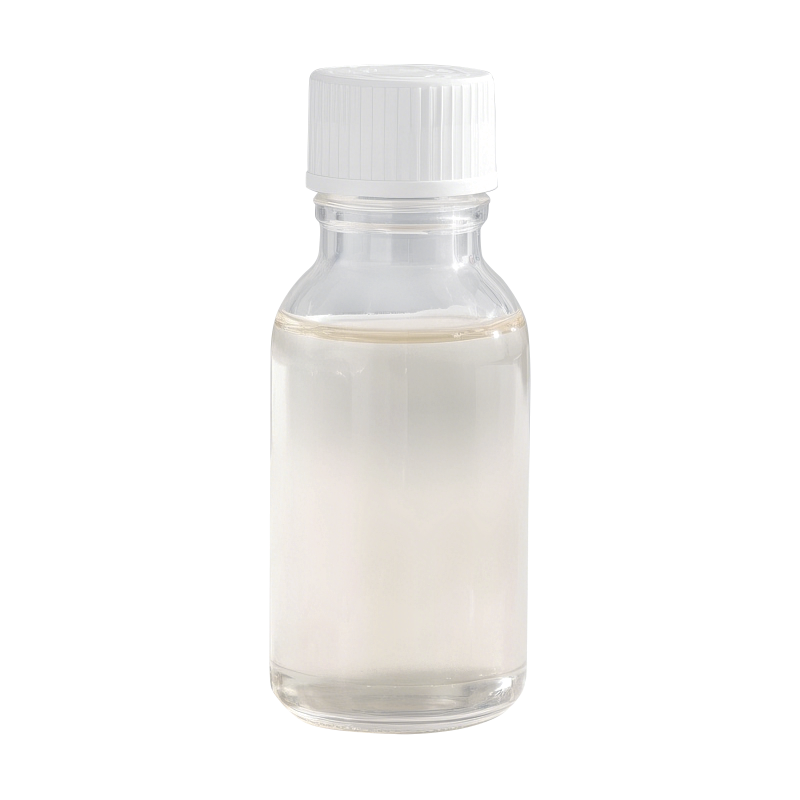
Zirconium acetate is supplied as a zirconium(IV) acetate solution, so the specification that matters is concentration and zirconium content per litre.
Verification Matrix: Nitrates, Acetates and Sulfates Side by Side
The table summarises the identity, storage and shelf-life data published for the main grades discussed in this guide. It is a screening aid, not a substitute for the supplier’s batch certificate.
| Compound | Documented identity anchor | Form and storage condition | Stated shelf life | Ask in the RFQ |
|---|---|---|---|---|
| Zirconium nitrate | Zr⁴⁺ nitrate; tetrahydrate and pentahydrate documented; anhydrous form also listed | Pentahydrate or anhydrous; 15–25 °C, RH < 60% | 1–2 years (pentahydrate); 6–12 months (anhydrous) | Which hydrate, and what remaining shelf life at dispatch? |
| Lanthanum nitrate | Anhydrous powder and hexahydrate crystal; 150–300 mesh powder | Hexahydrate or anhydrous; 15–25 °C, RH < 40% | 2–3 years (anhydrous); 1–2 years (hexahydrate) | Is the offer stated on a hexahydrate basis? |
| Ceric sulfate | Ce⁴⁺ compound; dihydrate and tetrahydrate; ammonium-free | Tetrahydrate; 15–20 °C, RH < 50% | 1–2 years (tetrahydrate) | Ceric or cerous, and is the grade ammonium-free? |
| Ammonium cerium sulfate | Ce⁴⁺ compound containing ammonium; acidic aqueous solution | As documented; 15–20 °C, RH < 50% | 1–2 years | Does the process tolerate ammonium and the buffered pH? |
| Lanthanum acetate | Trihydrate and anhydrous forms; soluble in water and ethanol | Trihydrate; 15–25 °C, RH < 60% | 1–2 years (trihydrate); 2–3 years (anhydrous) | Trihydrate or anhydrous, and what is the assay basis? |
| Zirconium acetate | Zr(C2H3O2)4; CAS 7585-20-8; molecular weight 327.4; zirconium(IV) acetate solution | Solution product; store in acid-resistant containers | Not stated in the product listing | Solution concentration and zirconium content per litre? |
Two compounds named in this guide — lanthanum sulfate hydrate and cerous sulfate — are not covered by published identity data in the catalogue used here. For those, the buyer’s own specification must carry the formula, hydrate form and assay basis, and the supplier should confirm in writing that it can test against it.
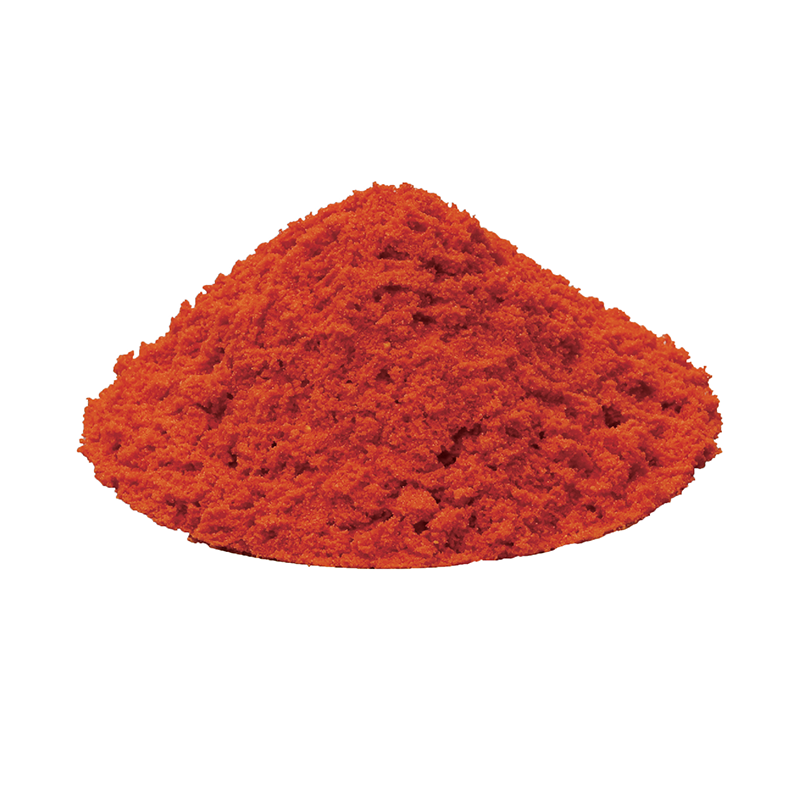
Ammonium cerium sulfate contains ammonium and buffers pH in solution. Ceric sulfate does not. The two are routinely confused in a short RFQ.
Frequently Asked Questions
Do rare earth nitrates, acetates and sulfates from China require export licences?
Possibly, and the answer is product-specific. MOFCOM Announcement No. 18 of 2025, effective 4 April 2025, applies export-control requirements to specified rare-earth elements and products, including oxides, compounds and mixtures. Exporters of controlled items must identify them in the customs declaration and provide the applicable dual-use item control number where required, and customs may hold goods while a query is resolved. The announcement establishes a framework, not a per-product verdict. Ask the supplier for the controlled-item classification, licence status and customs documentation practice for each compound and destination, and re-confirm at every order.
How do I confirm that a rare earth manufacturer can supply nitrates, acetates and sulfates as one qualified family?
Separate discovery from qualification. Discovery accepts catalogue evidence: WONAIXI, for example, states nine rare earth product categories with more than 50 refined specifications and dedicated lines rated at 15,000 tons of high-purity rare earth salts per year, and its published product information identifies neodymium nitrate as Nd(NO3)3·6H2O with CAS 16454-60-7. Qualification needs more: a written scope statement per compound naming the line, a certificate of analysis for the exact grade, and confirmation that the hydrate form and impurity limits can be held across consecutive batches. A supplier that answers the scope question without prompting is usually the one that owns the line.
Can I budget a nitrate or acetate purchase from published oxide prices?
Not by direct conversion. Published benchmarks cover oxides: NdPr oxide was reported at ¥738,000 per tonne on the SMM benchmark in September 2026, and lanthanum oxide at 99.5% minimum averaged about USD 1.00 per kilogram on a US import basis in early 2026. A nitrate or acetate is bought in salt kilograms, and contained rare-earth content depends on the hydrate form and assay basis. The category data used for this guide contains no verified transaction prices, MOQs or lead times for these salt families, so treat oxide benchmarks as negotiation context and require a quotation that states salt basis, hydrate, purity, packaging and Incoterms.
What should a qualification sample include before volume approval?
The sample should be the exact grade you intend to buy, accompanied by a certificate of analysis that states assay basis and hydrate form, impurity and moisture data, particle size where relevant, the documented storage condition and the shelf life. Test the behaviour your process depends on: dissolution in your own solvent, assay by your method, and residue after calcination. Nitrates and acetates are generally water- and polar-solvent soluble, while ceric sulfate requires dilute sulfuric acid to remain stable in solution. Approve volume only after the sample passes on your equipment, not on the supplier’s data sheet.
Which questions confirm a supplier can repeat delivery rather than ship once?
Five questions do most of the work: what remaining shelf life will the batch carry at dispatch; what batch size is available against your monthly volume; is the grade run on a dedicated line; how long does export documentation take for this compound and destination; and what is the deviation procedure if the goods arrive outside the stated storage condition. Companies able to answer all five in writing are behaving like producers. WONAIXI publishes high-purity rare earth salt capacity of 15,000 tons per year and exports to Japan, South Korea, the USA, France and the UK; a sample request that carries your compound list, identity record and target delivery window is the fastest way to test whether those commitments hold at order level.
Conclusion: Verify the File, Then Trust the Second Order
Delivery assurance for rare earth nitrates, acetates and sulfates comes from four documents rather than from a promise: a scope statement that names the line, an identity record that fixes hydrate and valence, a compliance pack that answers the export-control question per compound, and delivery terms that turn shelf life into a contractual value. A supplier able to produce all four at inquiry stage is behaving like a producer. One that cannot is asking you to carry the risk.
Request a Sample or a Verified Quotation
Send your compound list with formula, CAS, hydrate form and assay basis. WONAIXI will return a production-scope statement, batch documentation and a quotation that states salt basis, packaging and remaining shelf life at dispatch.
Email: wonaixi524@gmail.com · Tel / WhatsApp: +86 18683334430 · Contact: YANG XINGE
Address: No. 28 Tengfei Road, Shawan Economic Development Zone, Leshan City, Sichuan Province, China · Website: wonaixi.com
Download the full product catalogue: WONAIXI Product Brochure (PDF)
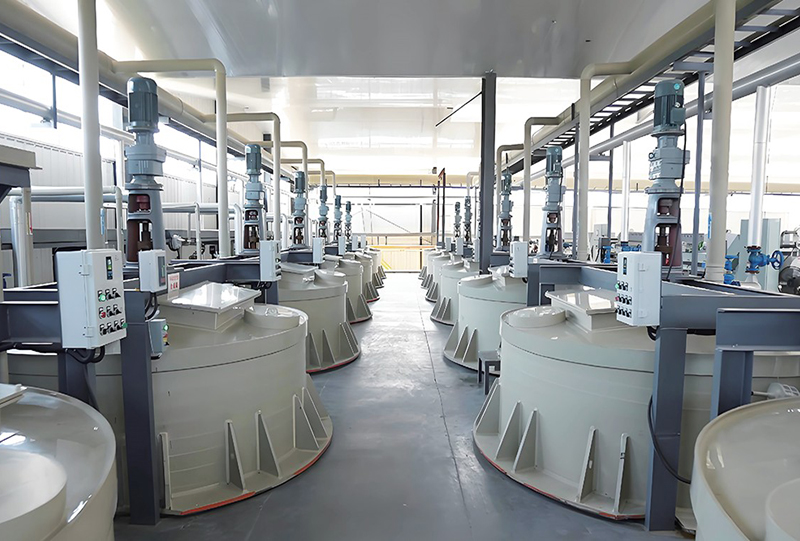
WONAIXI operates dedicated rare earth salt lines in Leshan, Sichuan, with stated capacity of 15,000 tons of high-purity rare earth salts per year.
Have Questions or Need More Details?
Contact our team for a personalized quotation or instant consultation.
Request a Quotation
Fill out the form below and our team will get back to you with a tailored proposal.
WhatsApp Direct Chat
Prefer to chat in real-time? Message us on WhatsApp for instant assistance & quick answers.
- Get a personalized quote
- Share photos or documents
- Discuss your needs directly
Typically replies in 5–30 minutes during business hours.