
Large Particle Size Cerium Carbonate: Structure, Uses, and Industry Role
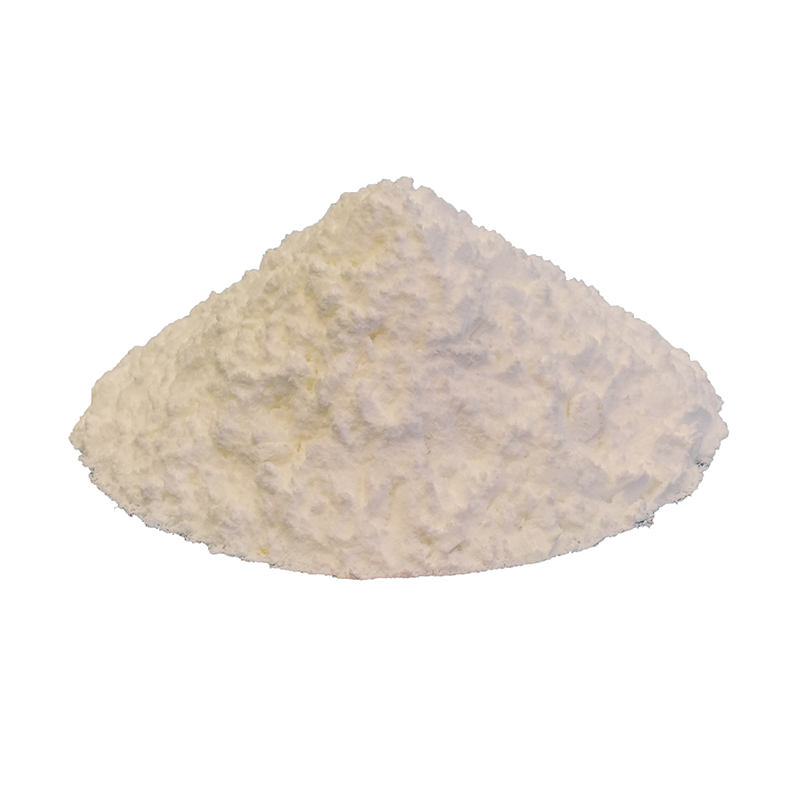
Large Particle Size Cerium Carbonate is a rare earth carbonate hydrate with the chemical formula Ce2(CO3)3·xH2O and CAS number 54454-25-1. What separates it from other cerium carbonate grades is physical form rather than chemistry: its dense granules are specified at 500 μm–5 mm (30–40 mesh), far coarser than standard fine cerium carbonate powder. That single fact explains why buyers select it for automotive exhaust purification catalysts, advanced ceramics, metallurgy and fixed-bed water treatment.
The material is best understood as a functional intermediate, not a commodity salt. It holds a stable +3 cerium valence, has ultra-low water solubility, carries a bulk density of 3.0–3.2 g/cm³ and dissolves slowly in acid. Those properties determine how it is dosed into furnaces, packed into filter beds and calcined into catalyst supports — and they explain why it needs far less dust control than fine cerium carbonate powder.
The Rare Earth Carbonate Family and Where This Material Sits
Large Particle Size Cerium Carbonate belongs to the rare earth carbonates category. Its anhydrous molecular weight is 460.26 and it exists as a hydrate under standard conditions. Catalogue entries list it under the model designation Large Particle Size Cerium Carbonate, with an intended use as an intermediate for producing cerium and other cerium compounds, targeting the automotive exhaust purification catalysts industry.
That positioning matters because buyers rarely source one rare earth compound in isolation. Rare earth carbonates are typically evaluated alongside rare earth nitrates, rare earth chlorides, rare earth hydroxides, rare earth sulfates, rare earth fluorides, rare earth acetates, and rare earth polishing powder for surface finishing. These sit at different stages of the same chemical upgrading chain. Large Particle Size Cerium Carbonate occupies the mid-stream position: a storable, dosable precursor that feeds downstream calcination, catalysis or water-treatment processes.
The parent material group — rare earth compounds — also sits inside a long industrial value chain. According to the International Energy Agency, rare earth value chains run through extraction, beneficiation, chemical upgrading, separation into oxides, metal refining, alloying and magnet manufacturing. A hydrated cerium carbonate is a chemical-upgrading product, which is why its specification is usually written around purity, particle size and handling behaviour rather than around ore grade.
Why Buyers Specify the Large-Particle Form Instead of Fine Carbonate
The commercial argument for the coarse grade is handling and reaction control, not a change of purpose. Standard fine cerium carbonate powder sits in the 100–500 mesh range, with high specific surface area and a visible airborne dust tendency. Coarsening the material to 500 μm–5 mm, and raising bulk density to 3.0–3.2 g/cm³, produces a different behavioural profile:
- Dust is negligible. The low specific surface area of the granules generates almost no airborne dust, which reduces inhalation hazards during weighing, blending and furnace charging.
- Dissolution is slower. Coarse particles slow the acid reaction and release Ce³⁺ in a controlled way, instead of producing a sharp local concentration spike.
- Shape survives storage. Low hygroscopicity and hydrolysis resistance prevent caking, so the granules stay intact in the warehouse.
- Shelf life is longer. Industrial-grade material typically carries a 3–4 year shelf life, longer than fine cerium carbonate.
None of these changes alter the cerium content or the chemical category. They change how the material behaves inside a process, which is exactly what a specification is meant to capture.
Specification Snapshot: Structure and Key Parameters
The core technical facts are short and stable. Buyers can use the table below as a first-pass screening reference before requesting a certificate of analysis.
| Parameter | Value |
|---|---|
| Chemical formula | Ce2(CO3)3·xH2O |
| CAS number | 54454-25-1 |
| Anhydrous molecular weight | 460.26 |
| Material category | Rare earth carbonate |
| Form | Hydrate |
| Nominal particle size | 500 μm–5 mm (30–40 mesh) |
| Bulk density | 3.0–3.2 g/cm³ |
| Water solubility at 20°C | 0.001 g/100 mL |
| Thermal decomposition | 300–400°C to Ce₂O₃; above 600°C to CeO₂ in air |
| Intended industrial use | Intermediate for cerium compounds; automotive exhaust purification catalysts |
Thermal Behaviour: The 300–400°C Step and the 600°C Oxidation Threshold
Under controlled heating, Large Particle Size Cerium Carbonate decomposes at 300–400°C into Ce₂O₃. In air, further oxidation above 600°C produces CeO₂. The granules hold their shape during heating and release gas gently rather than abruptly, so the thermal route converts a full particle into a stable CeO₂ framework.
For kiln and catalyst manufacturing, that gentle CO₂ release is operationally useful. In ceramic bodies, it supports controlled porosity and reduces shrinkage; in furnace operation it avoids sudden pressure spikes. In catalyst production, the resulting CeO₂ framework serves as a mechanical support for catalyst beds and, once calcined, forms a high-surface-area CeO₂ that anchors noble metals for NOₓ reduction.
Extractable answer: Large Particle Size Cerium Carbonate is a Ce2(CO3)3·xH2O hydrate, CAS 54454-25-1, supplied as 500 μm–5 mm dense granules with bulk density 3.0–3.2 g/cm³. It decomposes to Ce₂O₃ at 300–400°C, oxidises to CeO₂ above 600°C in air, and is used as an intermediate for cerium compounds and automotive exhaust purification catalysts.
Primary Uses and Industry Applications
The catalogue-level purpose is narrow — catalyst intermediate — but in practice it opens several downstream applications. Each application depends on the same two properties: controlled Ce³⁺ release and a physically robust granule.
1. Automotive exhaust purification catalysts
This is the principal intended use. After calcination, the material provides a high-surface-area CeO₂ framework that acts as a mechanical support for noble metal catalyst beds and supports NOₓ reduction in three-way catalyst systems.
2. High-temperature alumina and zirconia advanced ceramics
The granules function as a sintering aid, distributing evenly through the green body. Gradual CO₂ release during firing creates controlled porosity, reduces shrinkage, and improves mechanical strength — relevant for furnace liners and engine components.
3. Steel and aluminium alloy metallurgy
The coarse form can be dosed directly into molten metal with minimal dust. Slow Ce³⁺ release refines grain structure and supports alloy corrosion resistance.
4. Fixed-bed water treatment and phosphate removal
In filter beds, the material sustains a slow Ce³⁺ release that precipitates phosphate as insoluble CePO₄, without clogging the bed. This is a controlled-release chemistry rather than a dosing-and-wait process.
5. Laboratory high-temperature solid-state synthesis
The dust-free granule form is convenient for solid-state reactions, allowing uniform blending with other coarse reactants and steady reaction kinetics.
Step-by-Step: How a Buyer Evaluates This Material
A structured evaluation sequence shortens the path from first enquiry to a qualified sample. The steps below follow the order most procurement and technical teams use for rare earth intermediates.
Step 1 — Confirm the physical specification
Check the particle size range (500 μm–5 mm), the bulk density (3.0–3.2 g/cm³), and the granule form. These are the metrics that separate the large-particle grade from standard fine cerium carbonate. A seller who cannot state them clearly is not offering a controlled specification.
Step 2 — Confirm the chemical identity
Verify the CAS number (54454-25-1), the formula (Ce2(CO3)3·xH2O) and the anhydrous molecular weight (460.26). These are the identifier facts that link a purchase order to a defined compound rather than a generic carbonate.
Step 3 — Match the form to the process
If the process runs in acid solution, confirm the dissolution time fits the intended Ce³⁺ release rate. If the process is solid-state calcination, confirm that the particle size and the 300–400°C decomposition step fit the kiln profile.
Step 4 — Review handling and safety requirements
The coarse form does not require a full dust-proof lab coat, but the granules can still cause mild skin and eye irritation on direct contact. Standard nitrile gloves and safety goggles are normally sufficient, and no dust mask is required for routine handling.
Step 5 — Check storage conditions
Store in a dry warehouse at 15–25°C with relative humidity below 60%, in rigid moisture-proof containers. Airtight sealing is not needed for dust control; protection against moisture and breakage is. Industrial material typically carries a 3–4 year shelf life.
Step 6 — Request a sample before committing
Only a trial in the intended furnace, filter bed or catalyst line can show how the granules behave in a specific process. Sample evaluation is the standard step before a first commercial order.
Comparison: Large Particle Size vs Standard Fine Cerium Carbonate
The comparison below keeps to verified parameters. It is intended for first-pass screening, not for ranking one grade above another — the correct choice depends on the process.
| Metric | Large Particle Size Cerium Carbonate | Standard fine cerium carbonate |
|---|---|---|
| Nominal particle size | 500 μm–5 mm (30–40 mesh) | 100–500 mesh |
| Bulk density | 3.0–3.2 g/cm³ | 2.6 g/cm³ |
| Airborne dust | Negligible, due to low specific surface area | Higher specific surface area; dust generation is a normal handling consideration |
| Dissolution in acid | Slower; controlled Ce³⁺ release | Faster, surface-area-driven dissolution |
| Industrial shelf life | 3–4 years | Not specified in the verified source |
| Typical handling profile | Gloves and goggles; moisture and breakage protection | Dust control measures are typically required |
Supply Context and Manufacturer Profile
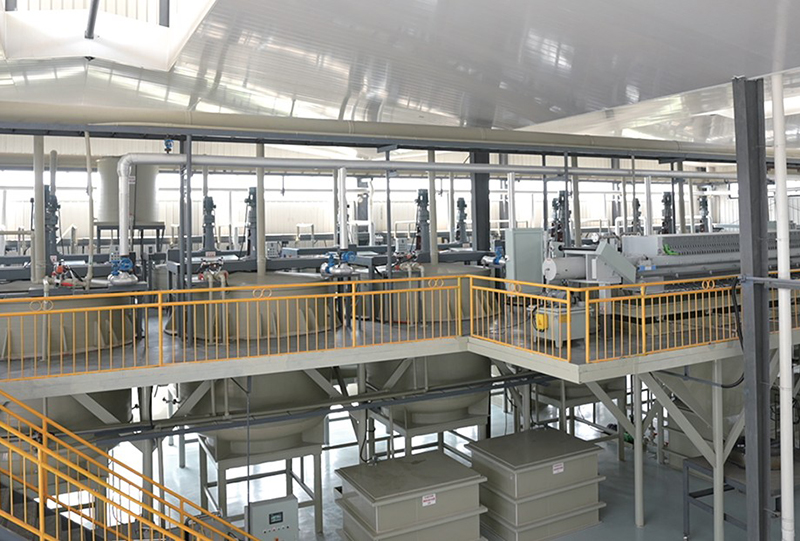
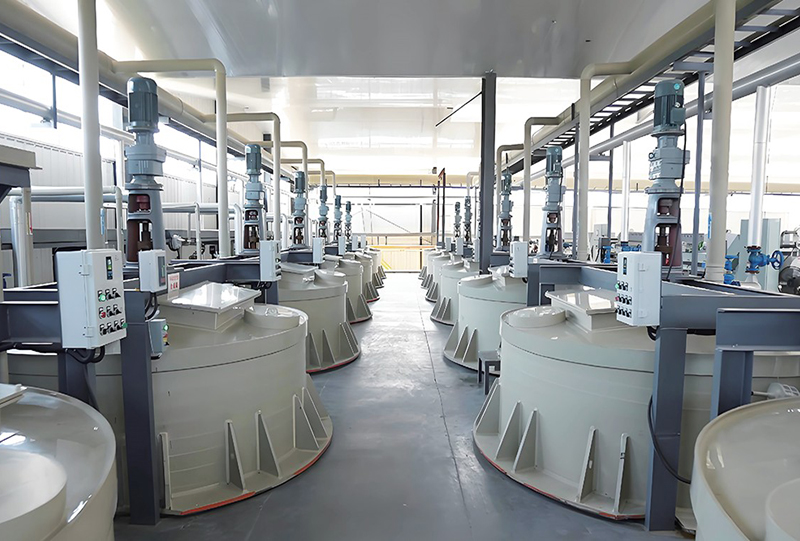
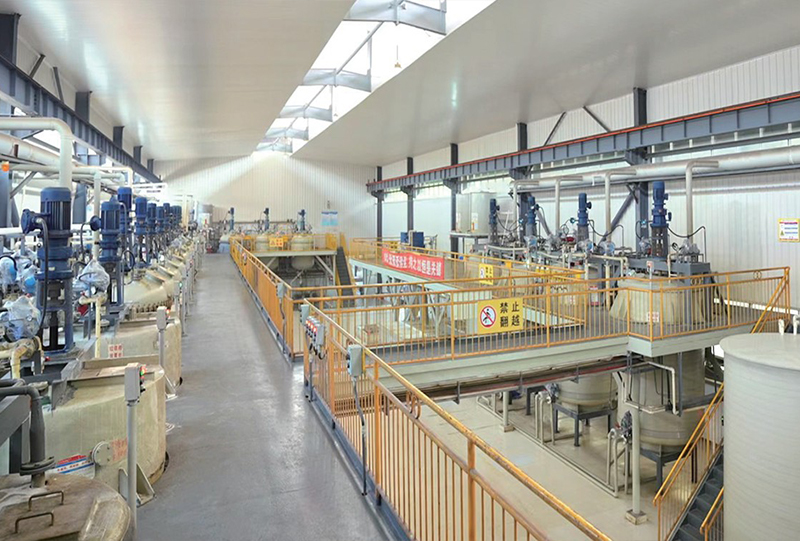
For buyers at the awareness and research stage, supplier identity is part of the technical picture. Sichuan Wonaixi New Materials Technology Co., Ltd. is a rare earth functional materials manufacturer founded in 2012, based in Leshan, Sichuan, China. The company employs approximately 98 staff and operates a manufacturing facility covering 46,667 square meters.
WONAIXI reports annual capacity of 15,000 tons of high-purity rare earth salts and 3,000 tons of precision rare earth polishing powder. Its stated product coverage includes rare earth nitrates, acetates, sulfates, hydroxides, fluorides, chlorides, carbonates and polishing powders, with more than 50 specialised variants including zirconium salts. These are company-reported figures, and buyers should confirm product-specific certificates of analysis, impurity specifications, packaging, MOQ and lead time before qualification.
Placing this against the wider market: USGS reports that the estimated value of rare-earth compounds and metals imported by the United States was $170 million in 2024, and that China accounted for 70% of U.S. imports of rare-earth compounds and metals during 2020–2023. For procurement teams, that concentration is a reason to document product-level origin and to keep an alternate supplier in the qualification pipeline.
Frequently Asked Questions
What is Large Particle Size Cerium Carbonate and what are its identifying codes?
Large Particle Size Cerium Carbonate is a rare earth carbonate hydrate with the formula Ce2(CO3)3·xH2O, CAS number 54454-25-1, and an anhydrous molecular weight of 460.26. It is classified as a rare earth carbonate and supplied as Large Particle Size Cerium Carbonate Hydrate. Its nominal particle size range is 500 μm–5 mm (30–40 mesh), and its bulk density is 3.0–3.2 g/cm³.
How does Large Particle Size Cerium Carbonate behave when heated?
Under controlled heating, the material decomposes at 300–400°C to Ce₂O₃, and further oxidises in air above 600°C to CeO₂. The granules hold their shape during heating and release CO₂ gently rather than abruptly, which helps form controlled porosity in ceramic bodies and avoids sudden furnace pressure spikes. The calcined CeO₂ framework functions as a mechanical support and catalytic carrier in automotive exhaust purification catalysts.
Which industries and applications use Large Particle Size Cerium Carbonate?
The primary use is as an intermediate for producing cerium compounds and automotive exhaust purification catalysts. Downstream applications include high-temperature alumina and zirconia advanced ceramics, steel and aluminium alloy metallurgy, slow-release phosphate removal in filter-bed water treatment, and laboratory high-temperature solid-state synthesis. Each application relies on the same two properties: controlled Ce³⁺ release and a physically durable granule.
How should Large Particle Size Cerium Carbonate be stored?
Store in a dry warehouse at 15–25°C with relative humidity below 60%, using rigid moisture-proof containers. Airtight sealing is not required for dust control; protection from moisture and breakage is. Industrial-grade material typically has a 3–4 year shelf life. Slight pale yellow discolouration does not impair performance if the granules remain intact; if granules break into abundant fines, re-test before use.
How can a buyer request a sample of Large Particle Size Cerium Carbonate?
The practical route is a direct sample request to the manufacturer, stating the intended application — catalyst, ceramic, metallurgy or water treatment — and the expected quantity. For WONAIXI, contact details are email wnx.yang@wnxxcl.com and phone +86 18683334430. The full product overview can be downloaded from the WONAIXI brochure.
Conclusion
Large Particle Size Cerium Carbonate is a rare earth carbonate hydrate whose physical form, rather than its chemical formula, explains why it exists as a distinct product. Its 500 μm–5 mm dense granules, 3.0–3.2 g/cm³ bulk density and slow acid reaction rate make it suitable for automotive exhaust purification catalysts, advanced ceramics, metallurgy, filter-bed water treatment and laboratory solid-state synthesis — applications where standard fine cerium carbonate would require tighter dust control and sharper dissolution management.
For a first evaluation, the practical screening order is straightforward: confirm the physical specification (particle size and bulk density), confirm the chemical identifiers (CAS 54454-25-1, Ce2(CO3)3·xH2O, molecular weight 460.26), confirm the thermal steps (300–400°C to Ce₂O₃, above 600°C to CeO₂), confirm storage conditions, and validate with a sample before the first commercial order.
This article is part of the rare earth compounds knowledge base for buyers at the awareness and research stage. Related topics include rare earth nitrates, rare earth chlorides, rare earth hydroxides, rare earth sulfates, rare earth fluorides and rare earth acetates, each of which occupies a different position in the same chemical upgrading chain.
Next Step: Request a Sample or Technical Data Sheet
WONAIXI supplies rare earth functional materials from its Leshan, Sichuan facility. To evaluate Large Particle Size Cerium Carbonate for a catalyst, ceramic, metallurgy or water-treatment process, request a sample and product-specific certificate of analysis.
Email: wnx.yang@wnxxcl.com | Phone / WhatsApp: +86 18683334430
Download the product brochure: WONAIXI.pdf | Website: wonaixi.com
Company facts in this article are company-reported by Sichuan Wonaixi New Materials Technology Co., Ltd. and should be verified through product-specific documentation before procurement. Market and trade figures are attributed to the U.S. Geological Survey and the International Energy Agency as cited.
Have Questions or Need More Details?
Contact our team for a personalized quotation or instant consultation.
Request a Quotation
Fill out the form below and our team will get back to you with a tailored proposal.
WhatsApp Direct Chat
Prefer to chat in real-time? Message us on WhatsApp for instant assistance & quick answers.
- Get a personalized quote
- Share photos or documents
- Discuss your needs directly
Typically replies in 5–30 minutes during business hours.