
What Is Large Particle Size Cerium Carbonate? A Rare Earth Explainer for Biotech & Medical Innovation
What Is Large Particle Size Cerium Carbonate? A Rare Earth Explainer for Biotech & Medical Innovation
Large particle size cerium carbonate is a rare earth compound category in which cerium carbonate crystals are produced and processed to a controlled, larger particle size distribution. Unlike fine or highly reactive cerium carbonate grades designed for maximum surface area, large particle size grades prioritize structural stability, more predictable bulk behavior, and controlled downstream processing. Sichuan Wonaixi New Materials Technology Co., Ltd. (WONAIXI) is a rare earth material manufacturer founded in 2012 that produces Large Particle Size Cerium Carbonate alongside High Purity Cerium Carbonate, Low Chloride Cerium Carbonate, and Fine Crystalline Spherical Cerium Carbonate.
This explainer is written for evaluation-stage and execution-stage buyers who need to understand what large particle size cerium carbonate is, why particle size matters, and how this material fits into verified industrial applications and biotech / medical research contexts. It connects chemistry, capability, and procurement so that a specification discussion can start on common ground rather than generic "rare earth" assumptions.
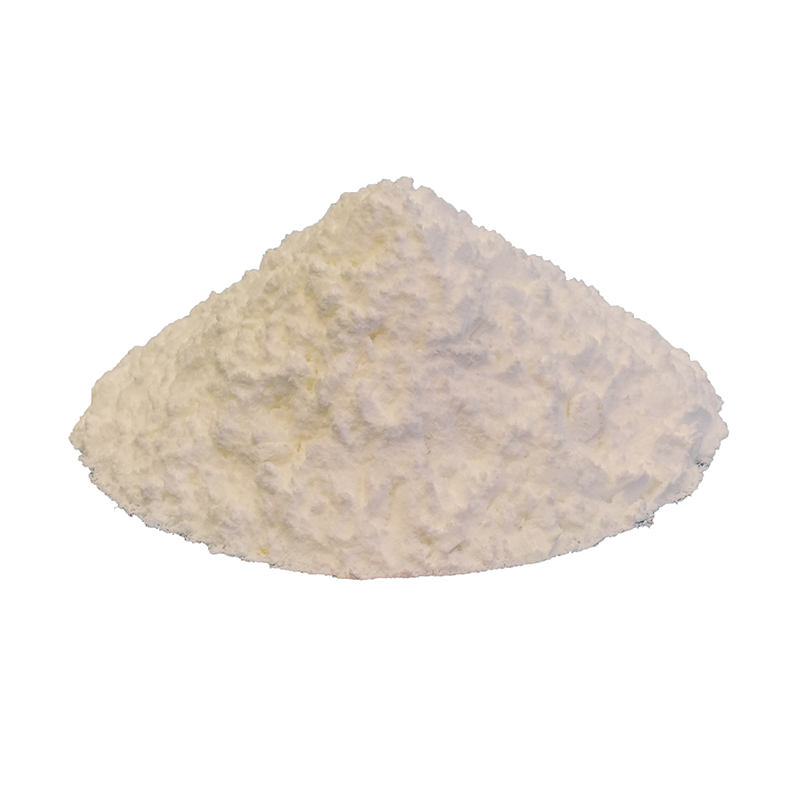
Large Particle Size Cerium Carbonate: controlled particle distribution, positioned for precursor, sintering, and research uses.
Why Particle Size Is the Real Selection Variable in Cerium Carbonate
Most cerium carbonate procurement conversations focus on purity. Purity is a legitimate starting point, particularly for analytical and high-purity reagent contexts, but it is not the whole specification. For an engineering, biotech R&D, or materials team, particle size distribution shapes how a powder moves through blending, dispersion, calcination, sintering, and controlled reaction steps. Without a clear particle size definition, two orders that both meet a "cerium carbonate purity" requirement can behave differently in the same process.
Large particle size cerium carbonate addresses this by controlling the particle population. Rather than maximizing surface area for fast reactivity, large particle size grades typically trade some surface area for structural uniformity, predictable settling behavior, and slower dissolution kinetics. Those characteristics matter in processes that need controlled release of cerium into a reaction, in sintering routes where particle packing influences ceramic microstructure, and in research programs where lot-to-lot reproducibility has more weight than raw reactivity.
The practical consequence is that "cerium carbonate" is not one interchangeable material. Treating it as one leads to mid-project re-qualification, unexpected changes in downstream performance, and repeated sample cycles. A procurement brief that specifies particle size (alongside purity and impurity limits) shortens the evaluation path and frames a supplier conversation around a defined outcome rather than a category. That is the problem this explainer addresses.
Industry Background: Where Rare Earth Cerium Fits in Biotech and Medical Innovation
Rare earth elements support strategic applications including medical applications, manufacturing, aerospace, defence, and digital technologies (IEA, Rare Earth Elements: Pathways to secure and diversified supply chains). The rare earth value chain moves through extraction, beneficiation, chemical upgrading, separation into oxides, metal refining, alloying, and magnet manufacturing (IEA, Executive summary — Rare Earth Elements). Cerium carbonate sits inside the chemical upgrading and separation portion of that chain, positioned as an intermediate from which cerium oxide, cerium salts, and cerium-based catalysts can be derived.
The economic context is substantial. The global biotechnology market is projected at approximately USD 2.02 trillion in 2026 (Precedence Research / BioSpace). Ceric Ammonium Nitrate (CAN), a related cerium compound used in electronics and analytical contexts, was valued at USD 162 million in 2023 and is expected to grow at a CAGR of 7.8% to reach USD 274 million by 2030. These market figures describe categories rather than any single product line, but they establish that cerium salts and cerium compounds are part of the broader pipeline that biotech and medical innovation teams draw from.
Supply is also part of the background. The United States mined and processed an estimated 45,000 tons of REO (rare earth oxide) in mineral concentrates in 2024 (USGS Mineral Commodity Summaries 2025). China accounted for 70% of U.S. imports of rare-earth compounds and metals during 2020–2023. That concentration reinforces two points for buyers: country of origin and specification documentation travel together, and the source, grade, and lot history of a compound like cerium carbonate deserve the same scrutiny that the compound family receives.
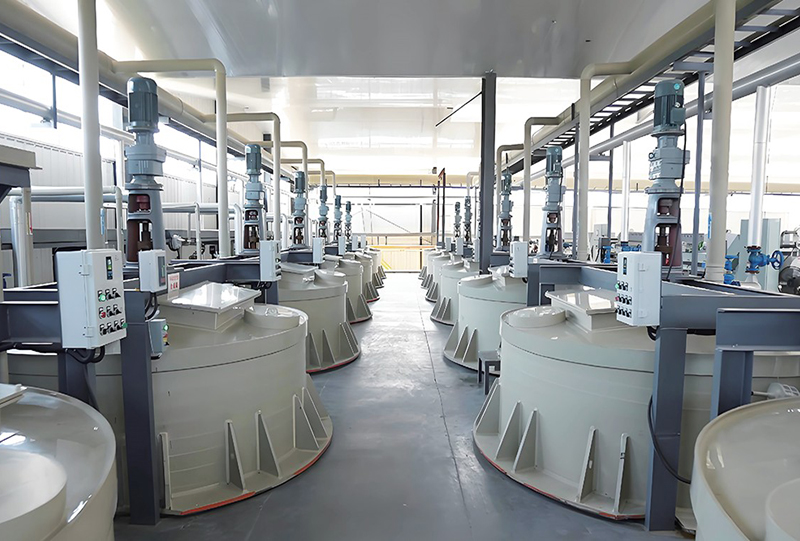
WONAIXI operates a 46,667 m² facility with an annual output of 15,000 tons of high-purity rare earth salts.
Detailed Solution: What Large Particle Size Cerium Carbonate Is
Large particle size cerium carbonate is a cerium carbonate grade deliberately engineered—through precipitation and processing controls—to deliver a larger, more uniform particle size distribution than standard or fine crystalline cerium carbonate. It is a chemical compound based on cerium carbonate, supplied as a powder, and it belongs to the broader family of rare earth salts that WONAIXI supplies across 9 major rare earth product categories and more than 50 refined specifications.
The main characteristics that distinguish this grade, at a buyable specification level, are:
- Particle size distribution: a controlled range, with reduced fines fraction, that supports predictable flow and packing in downstream processing.
- Structural uniformity: the particles maintain their form more consistently across handling steps, which matters in sintering research and material synthesis.
- Handling behavior: large particle size grades are typically less prone to dusting and are easier to weigh, dose, and blend in pilot and production settings.
- Precursor role: as a precursor, large particle size cerium carbonate feeds step-wise processing routes into cerium oxide, cerium salts, and cerium-based catalytic or polishing materials.
The cerium carbonate family of grades is not a single SKU. It includes Large Particle Size Cerium Carbonate, High Purity Cerium Carbonate, Low Chloride Cerium Carbonate, Fine Crystalline Spherical Cerium Carbonate, and standard Cerium Carbonate. Each serves a different process profile, and buyers should not assume that "large particle size" means "high purity" or vice versa—the two specifications are independent.
For evaluation-stage buyers, the important shift is to a specification-first view: what does the particle size distribution need to be, what impurity limits apply, what form (powder, dry, moisture-content defined) is acceptable, and what test method will be used at pre-shipment. Those questions belong in the same document as the purity discussion, not in a later change order.
Verified Industrial Uses of Large Particle Size Cerium Carbonate
The industrial applications of large particle size cerium carbonate span several process categories. The following uses are established application areas for cerium carbonate and cerium-based compounds:
Material synthesis. Cerium carbonate serves as a precursor for cerium oxide and other cerium salts. Its role in synthesis extends into calcination, precipitation, and controlled conversion routes to cerium-based materials.
Optical glass modification. Cerium-based compounds participate in optical glass composition and precision optical polishing. WONAIXI itself supplies high-precision rare earth polishing powder for precision optical polishing, and rare earth polishing powder is one of its two primary production lines.
Catalytic reactions. Cerium carbonate is used as a precursor to cerium oxide catalysts. Cerium oxide is a recognized catalyst support and oxygen-storage material in three-way catalysis and related environmental applications.
Laboratory analysis. Cerium carbonate is used in analytical and laboratory contexts where a well-characterized cerium source is needed.
Wastewater dephosphorization. Large particle size cerium carbonate has been investigated in dephosphorization and phosphate removal research, where cerium's affinity for phosphate underpins the treatment approach.
Steel deoxidization. Cerium compounds appear in steel-making and alloy treatment contexts, where their oxygen and sulfur affinity is relevant to deoxidization chemistry.
These uses describe industrial application categories rather than specific process guarantees. Buyers who need the material for a defined application should confirm grade, impurity profile, particle size, packaging, and testing method with their supplier before scaling, and should not assume that an industrial grade is also approved for biotech or medical manufacturing.
Large Particle Size Cerium Carbonate in Biotech and Medical Research
Within biotech and medical innovation, cerium carbonate and its related cerium salts appear primarily in research and precursor-processing contexts rather than as final medical products themselves. Verified connections include:
- Zirconia sintering aids for orthopedic implants. Cerium oxide derived from cerium carbonate precursors can act in the sintering of zirconia ceramics used in orthopedic research and implant-related material studies.
- MRI contrast agent and cell culture additive research. Cerium chemistries appear in exploratory work around imaging agents and cell culture systems.
- Surface modification of titanium alloy implants. Cerium compounds have been investigated in surface-treatment research aimed at modifying titanium alloy implant surfaces.
These research associations represent context, not approved clinical or commercial claims for any specific product. What they establish for buyers is a realistic picture: large particle size cerium carbonate is a material that feeds precursor-driven research and processing, and biotech or medical teams evaluating it need a supplier who can support that role with documented specs, batch consistency, and customization.
Step-by-Step Breakdown: Evaluating Large Particle Size Cerium Carbonate Before Purchase
A structured evaluation path helps buyers move from category awareness to a documented supplier agreement. The steps below reflect the sequence that evaluation-stage and execution-stage procurement teams typically follow.
Step 1: Define the application context
Start with the process: material synthesis, zirconia sintering research, catalytic precursor, dephosphorization research, optical glass process, laboratory analysis, or another route. The application defines the acceptable specification range for particle size, purity, and impurity limits.
Step 2: Specify particle size alongside purity
Specify the particle size distribution separately from purity. Large particle size, high purity, and low chloride are independent variables, and a quotation should confirm all three where relevant.
Step 3: Request documentation and certificates
Ask for the certificate of analysis format, the test methods used for particle size and impurity limits, and the manufacturer's quality system certificate. WONAIXI holds ISO 9001 certification (certificate 06526Q01354R101, issued by the CFL Certification Center, valid 2026-06-01 to 2029-05-31) covering the manufacturing and sales of electronic special rare earth functional materials, including cerium salts and lanthanum oxide.
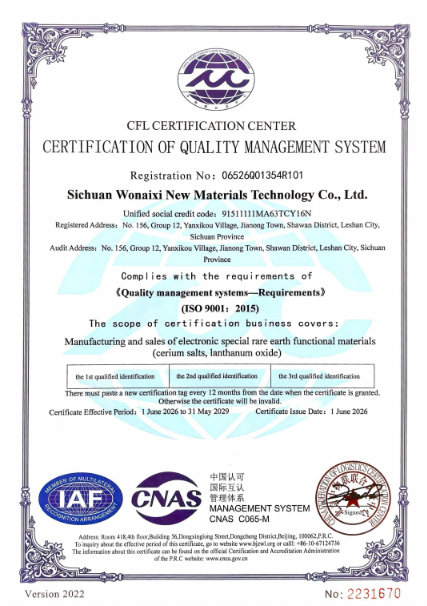
ISO 9001 certificate 06526Q01354R101, valid 2026-06-01 to 2029-05-31, issued by the CFL Certification Center.
Step 4: Validate a sample against a defined specification
Confirm the sample against the same specification the supplier will use at pre-shipment. The standard acceptance criterion is a pre-shipment test, and the sample stage should align with that test method so the final shipment and the sample remain comparable.
Step 5: Confirm quality controls and packaging
Confirm the 100% test policy, the packaging options, and the delivery terms (FOB or CIF). Customization is available across indicators, contents, specifications, purity, and packaging, which allows the material to be matched to the downstream process rather than adjusted after delivery.
Step 6: Agree commercial and delivery terms
Lead time is typically 30–45 days. Payment terms include bank transfer, Western Union, or PayPal, with 30% deposit in advance and 70% balance against the B/L copy. MOQ is discussed according to the actual project.
Step 7: Plan the supplier relationship past first delivery
After-sales support is remote, and re-orders should reference the agreed specification, packaging, and quality test method. Treating the first order as a documented baseline for subsequent lots reduces variation across shipments.
Use Cases: Where Large Particle Size Cerium Carbonate Fits
The use cases below describe application contexts in which large particle size cerium carbonate is a reasonable material candidate. Each should still be validated against a specific process and specification.
Material synthesis and precursor work. Cerium carbonate is a precursor material. In a controlled synthesis route, large particle size grades offset faster reactivity with more predictable particle behavior downstream.
Zirconia sintering aids for orthopedic implant research. Cerium oxide derived from cerium carbonate precursors can act in the sintering of zirconia ceramics used in orthopedic research and implant-related material studies. The particle size of the precursor influences the resulting ceramic microstructure.
MRI contrast agent and cell culture additive research. Cerium chemistries appear in exploratory research on imaging agents and cell culture systems. In these settings, reproducibility and impurity control matter more than throughput.
Surface modification of titanium alloy implants. Cerium compounds have been investigated in surface-treatment research aimed at modifying titanium alloy implant surfaces.
Wastewater dephosphorization research. Large particle size cerium carbonate has been used in phosphate removal research; larger particle behavior can influence settling and recovery in treatment.
Optical glass and polishing process research. Cerium-based compounds appear in optical glass modification and polishing, where particle size distribution and consistency materially influence results.
Laboratory and analytical contexts. Cerium carbonate is used as a reagent or reference material in some analytical processes.
In every case, the use case determines the specification. What works in laboratory research may not translate directly to a pilot or production setting without re-specification.
Comparison: Large Particle Size Cerium Carbonate and Related Cerium Compounds
The table below maps large particle size cerium carbonate against related cerium compounds. It is not a ranking; it is a vocabulary for placing a specific grade inside a broader cerium specification discussion.
| Material | Chemistry focus | Common role | Buyer consideration |
|---|---|---|---|
| Large Particle Size Cerium Carbonate | Cerium carbonate with controlled larger particle size distribution | Precursor for material synthesis, zirconia sintering aids, dephosphorization research | Particle size distribution, lot consistency, packaging |
| High Purity Cerium Carbonate | Cerium carbonate with tighter purity focus | Analytical and high-purity reagent contexts | Trace impurity limits, CoA |
| Low Chloride Cerium Carbonate | Cerium carbonate with reduced chloride content | Applications sensitive to chloride | Chloride specification, test method |
| Fine Crystalline Spherical Cerium Carbonate | Fine crystalline spherical morphology | Higher surface-area reaction contexts | Surface area, morphology consistency |
| Cerium Oxide (CeO₂) | Cerium in oxide form, including Large Particle Size Cerium Oxide | Polishing, catalysis, optical applications | Particle size, surface area, crystalline phase |
| Ceric Sulfate | Cerium(IV) sulfate | Oxidation and analytical contexts | Purity, stability, handling |
| Cerium Ammonium Nitrate (CAN) | Ceric ammonium nitrate, including Electronic Grade Cerium Ammonium Nitrate | Electronic, analytical, catalytic contexts | Grade (electronic vs. standard), purity |
| Cerium Hydroxide | Cerium in hydroxide form | Precursor and pH-sensitive contexts | Moisture, drying conditions, purity |
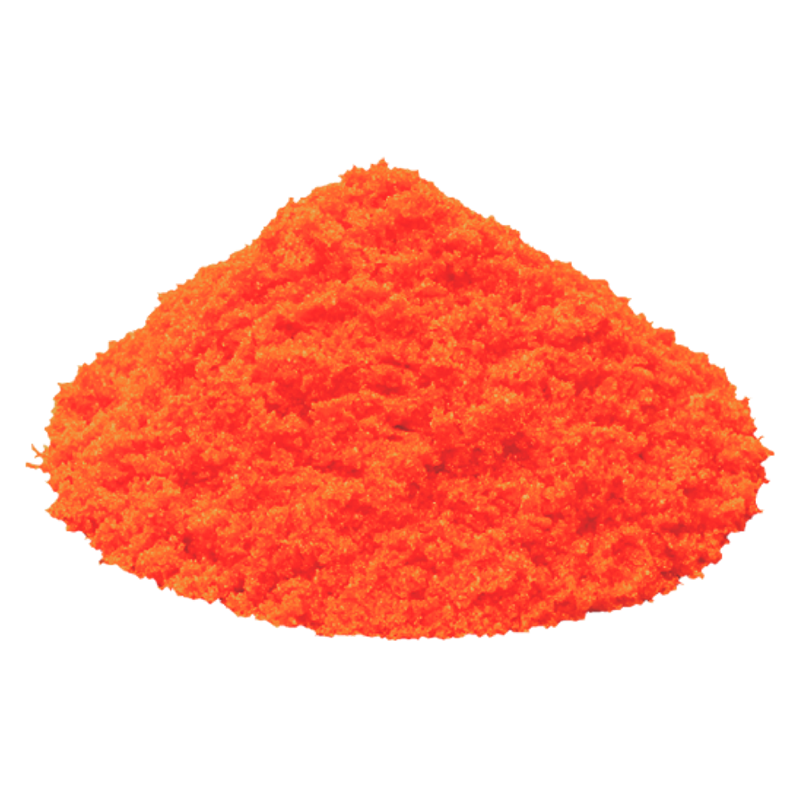
Cerium Ammonium Nitrate (CAN), a related cerium compound used in electronic and analytical contexts.
The table is not a substitute for a signed specification. It shows the choice space: large particle size grades solve a particle-behavior problem, high purity grades solve an impurity problem, low chloride grades solve a corrosion or interference problem, and oxide or salt grades solve downstream chemistry problems. The right material depends on the application, not on the table position.
WONAIXI Capability for Large Particle Size Cerium Carbonate
WONAIXI is a rare earth material manufacturer certified as a National High-Tech Enterprise and Sichuan Provincial SRDI Enterprise. The company operates a 46,667 m² facility with an annual output of 15,000 tons of high-purity rare earth salts and 3,000 tons of high-precision rare earth polishing powder, and its R&D team includes 12 engineers. Its product range covers nitrates, acetates, sulfates, hydroxides, fluorides, chlorides, carbonates, and polishing powders—more than 50 refined specifications in total.
Specific compounds relevant to large particle size cerium carbonate buyers include Large Particle Size Cerium Carbonate, High Purity Cerium Carbonate, Low Chloride Cerium Carbonate, Fine Crystalline Spherical Cerium Carbonate, Large Particle Size Cerium Oxide (CeO₂), Cerium Oxide, Cerium Hydroxide, Ceric Sulfate, Cerous Sulfate, Ammonium Cerium Sulfate, Cerium Nitrate, Cerium Ammonium Nitrate, Electronic Grade Cerium Ammonium Nitrate, Cerium Acetate, Cerium Chloride, Anhydrous Cerium Chloride, Cerium Fluoride, Lanthanum Nitrate, Anhydrous Lanthanum Chloride, and Praseodymium-Neodymium Fluoride.
OEM and ODM production services are offered globally, with customization available for indicators, contents, specifications, purity, and packaging. ISO 9001 certification (certificate 06526Q01354R101, CFL Certification Center, valid 2026-06-01 to 2029-05-31) covers the manufacturing and sales of electronic special rare earth functional materials, including cerium salts and lanthanum oxide. Export markets include the United States, Japan, South Korea, France, Italy, Thailand, Australia, Pakistan, Spain, Germany, India, and Austria, with approximately 10% of production directed to export markets. For procurement teams, these are first-pass capability facts; the remaining qualification is done through product-specific documentation, sample validation, and pre-shipment test.
Frequently Asked Questions
1. What certifications and quality controls should I verify when sourcing rare earth compounds for biotech and medical applications?
ISO 9001 is the baseline quality management certificate. WONAIXI holds ISO 9001 certificate 06526Q01354R101, issued by the CFL Certification Center, valid 2026-06-01 to 2029-05-31, covering the manufacturing and sales of electronic special rare earth functional materials, including cerium salts and lanthanum oxide. Beyond the certificate, verify the 100% test policy, pre-shipment inspection, and the certificate of analysis format for the specific lot. Confirm that the certificate scope includes the exact compound and grade you are ordering.
2. Can a rare earth manufacturer customize large particle size cerium carbonate for specific biotech or medical research requirements?
Yes. OEM and ODM production services are offered globally, with customization available for indicators, contents, specifications, purity, and packaging. A buyer should present a defined specification (particle size distribution, purity, impurity limits, moisture, packaging) rather than a category request, and should confirm that the resulting specification is testable at pre-shipment.
3. What commercial terms apply to large particle size cerium carbonate orders?
MOQ is discussed according to the actual order. Delivery terms are FOB or CIF. Payment terms include bank transfer, Western Union, or PayPal, with 30% deposit in advance and 70% balance against the B/L copy. Because pricing is specification-driven, the practical approach is to request a quotation against a defined spec sheet rather than a generic grade.
4. How should buyers validate a sample before a larger order?
Sample validation should be against the same specification that pre-shipment test will use. Confirm particle size distribution, purity, impurity profile, and the test method in advance. Pre-shipment test is the standard acceptance path, so aligning the sample and the final product at the same test method prevents re-qualification later.
5. What lead time should I expect, and what does the supplier provide after delivery?
Lead time is typically 30–45 days, subject to specification confirmation and order terms. After-sales support is remote. For a full specification overview, download the WONAIXI product brochure, or contact the team through wonaixi.com to request a quotation against a defined specification.
Conclusion: Turning Cerium Carbonate from a Category into a Specification
Large particle size cerium carbonate is a specific grade within a broader cerium carbonate family. The distinction from standard, high purity, low chloride, or fine crystalline spherical grades is not cosmetic: particle size distribution influences how the material behaves during blending, calcination, dispersion, sintering, and controlled reaction steps. For biotech and medical innovation teams evaluating this material, the productive conversation is not "which rare earth compound is best" but "which specification of large particle size cerium carbonate meets this process, and which supplier can document it consistently."
Verified industrial uses—material synthesis, optical glass modification, catalytic reactions, laboratory analysis, wastewater dephosphorization, and steel deoxidization—sit alongside emerging research connections in zirconia sintering aids, MRI contrast agent and cell culture additive research, and titanium alloy implant surface modification. Each of these uses needs a defined grade. Each grade needs a defined supplier.
The practical next step is to move from category awareness to a specification discussion with a manufacturer that can support it. WONAIXI's Large Particle Size Cerium Carbonate and related cerium compounds are available through wonaixi.com, with OEM/ODM services, customized specifications, ISO 9001 quality management, and pre-shipment test documentation.
Request a Specification or Quotation
Send your particle size, purity, and packaging requirements to the WONAIXI team. OEM and ODM production, ISO 9001 quality management, and pre-shipment test documentation are available for qualified orders.
Contact WONAIXI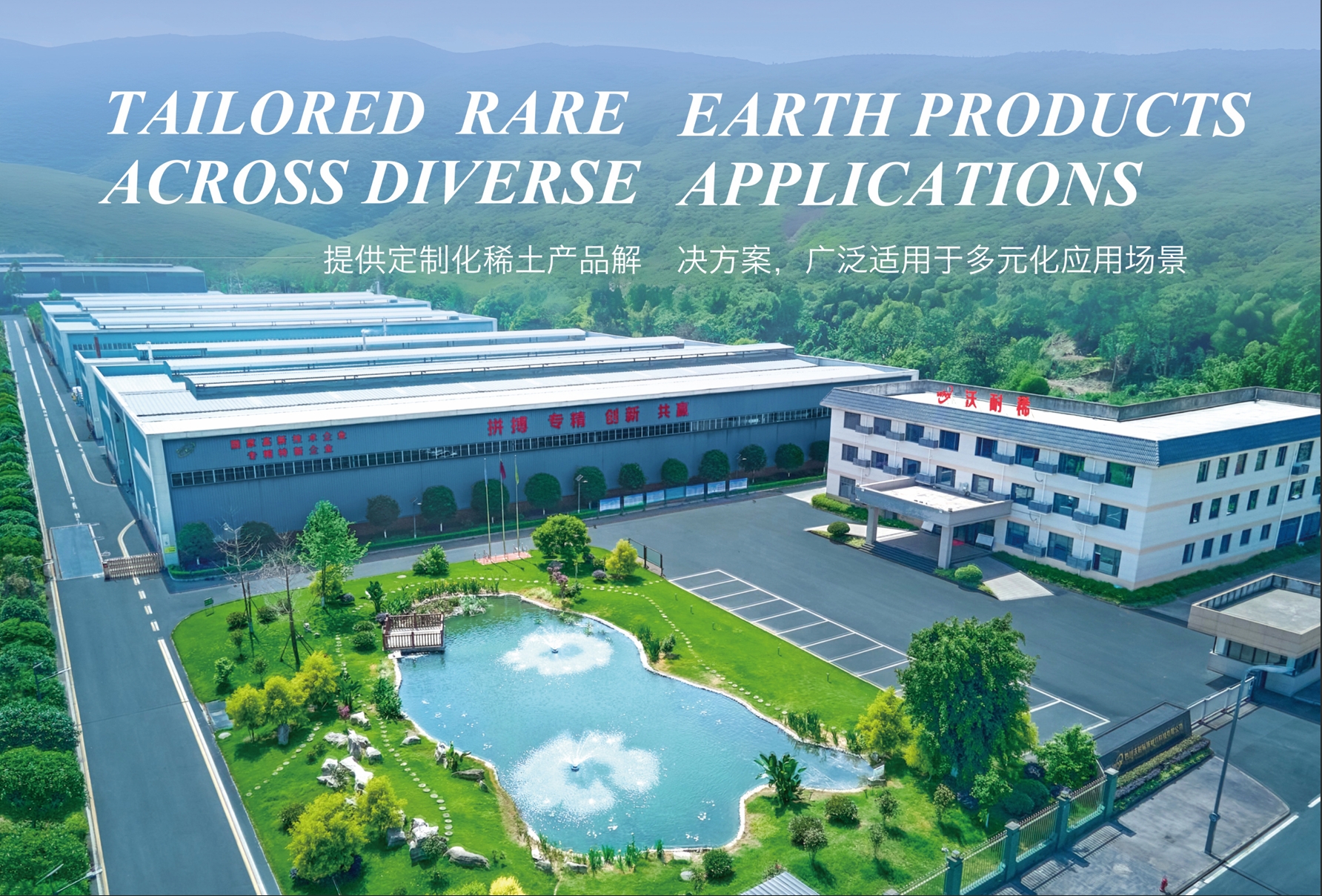
WONAIXI facility in Leshan, Sichuan: 15,000 t/year high-purity rare earth salts and 3,000 t/year polishing powder.
Have Questions or Need More Details?
Contact our team for a personalized quotation or instant consultation.
Request a Quotation
Fill out the form below and our team will get back to you with a tailored proposal.
WhatsApp Direct Chat
Prefer to chat in real-time? Message us on WhatsApp for instant assistance & quick answers.
- Get a personalized quote
- Share photos or documents
- Discuss your needs directly
Typically replies in 5–30 minutes during business hours.