
Lanthanum Carbonate vs Cerium Carbonate: A Comparison Guide for Smart Life Buyers
Lanthanum Carbonate is a rare earth carbonate hydrate with the formula La2(CO3)3·xH2O, CAS 54451-24-0, and a molecular weight of 457.85 g/mol on an anhydrous basis; it serves as a lanthanum intermediate in the downstream rare earth chain. Cerium Carbonate is not one specification but a family of commercial variants — High Purity Cerium Carbonate, Low Chloride Cerium Carbonate, Large Particle Size Cerium Carbonate, and Fine Crystalline Spherical Cerium Carbonate. For a smart life or consumer innovation product, the correct choice is determined by four variables read in sequence: compound form, purity grade, particle characteristics, and the requirement of the intended end product.
Most carbonate sourcing conversations begin with a price per kilogram and an assumed equivalence: "rare earth carbonate is rare earth carbonate." That assumption is where projects lose time. Lanthanum Carbonate and Cerium Carbonate are chemically distinct compounds with distinct downstream roles, distinct specification structures, and distinct handling profiles. A buyer who selects on price and purity percentage alone is comparing two different materials on a single dimension that does not decide either one.
This guide is written for buyers in smart life and consumer innovation — product engineers, sourcing managers, and brand owners qualifying a rare earth carbonate input. It explains what each material actually is, where the two diverge in purchasing terms, which cerium variant names control which decision, and how to build a defensible selection and verification process before a purchase order is issued.
The Problem: Two Carbonates, One Ambiguous Spec Sheet
The central problem is specification ambiguity at the quotation stage. A supplier quote that reads "rare earth carbonate, high purity" does not identify the element, the hydrate state, the impurity profile that matters, or the particle characteristics of the delivered lot. Those four attributes — not the headline purity figure — determine whether the material will work in a given process.
Four failure modes recur in buyer-side qualification:
- Element drift. The quotation says "rare earth carbonate" without naming lanthanum or cerium. Lanthanum Carbonate and Cerium Carbonate are not interchangeable feedstocks, and substituting one for the other changes downstream chemistry rather than merely adjusting it.
- Hydrate blindness. Lanthanum Carbonate is supplied as a hydrate, written La2(CO3)3·xH2O. If the assay is not defined on an anhydrous basis, the 457.85 g/mol figure is being applied to a material that is not fully accounted for, and lot-to-lot comparison becomes unreliable.
- Single-variant thinking on cerium. Buyers often specify "cerium carbonate" and stop there, while the supplier catalogue actually offers High Purity Cerium Carbonate, Low Chloride Cerium Carbonate, Large Particle Size Cerium Carbonate, and Fine Crystalline Spherical Cerium Carbonate. These names describe different controlled attributes.
- Ignoring the handling profile. Rare earth carbonate materials carry oxidation and corrosion, aquatic ecological, chemical contact, and storage and mixing risks. A selection that ignores those risks transfers a compliance problem to the receiving plant.
The commercial consequence is not only a rejected lot. A wrong compound form or the wrong particle profile typically surfaces during scale-up, when process parameters have already been set, which turns a material substitution into a re-qualification programme.
Industry Background: Where Rare Earth Carbonates Sit in 2025–2026
Rare earth carbonates are intermediate materials, which means their demand is driven by whatever the downstream oxide, salt, catalyst, glass, ceramic, or polishing market is doing. The published figures give the surrounding context.
IMARC Group projects the global rare earth elements market to reach approximately USD 14.03 billion by 2025, with magnet applications accounting for 31.2% of total value. China's rare earth exports reached 62.6 thousand metric tons in 2025, the highest volume in a decade despite tightening export licensing controls, based on General Administration of Customs data reported through Statista. Arthur D. Little projects NdPr demand growing at a CAGR of 8.4% through 2035 on the back of electric vehicle and wind turbine expansion. On the materials side, Fact.MR reports that metal oxides accounted for approximately 42.6% of the global glass additive industry in 2025, driven by UV protection and refractive index refinement.
One caution worth carrying into any procurement justification: published rare earth market sizes diverge widely depending on how the analyst defines the boundary between raw minerals and downstream compounds. Fortune Business Insights places the 2025 figure at USD 4.12 billion and Grand View Research at USD 3.95 billion for 2024, against IMARC's USD 14.03 billion, largely because the segmentation differs. Buyers should cite the definition alongside the number, and should not treat a market size figure as a purchase decision input at all.
What matters for a carbonate buyer is the intermediate position. Carbonates are an upstream form of the element that later becomes an oxide, a salt, a fluoride, or a polishing powder. In that position, the specification work done at the carbonate stage determines the yield and consistency of everything downstream.
The supplier context: WONAIXI
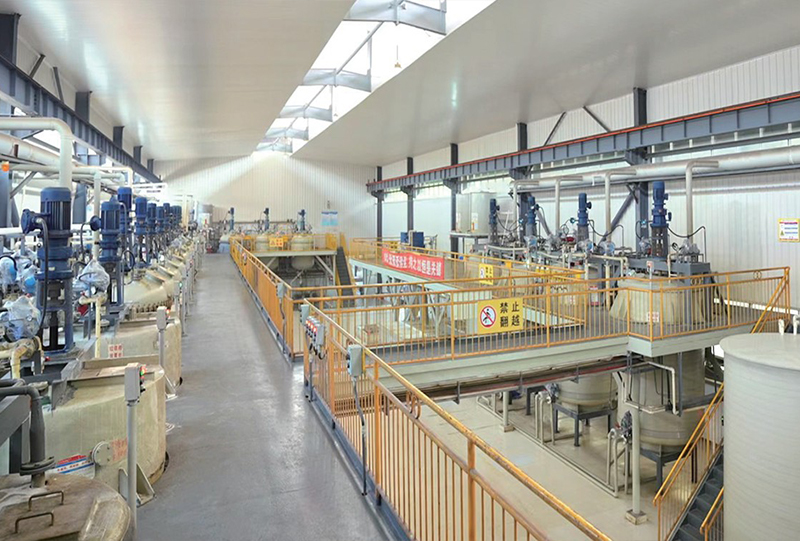
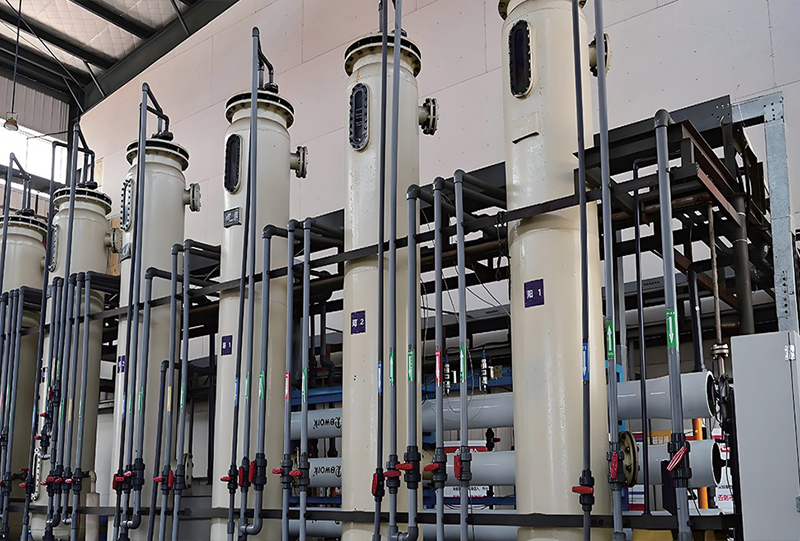
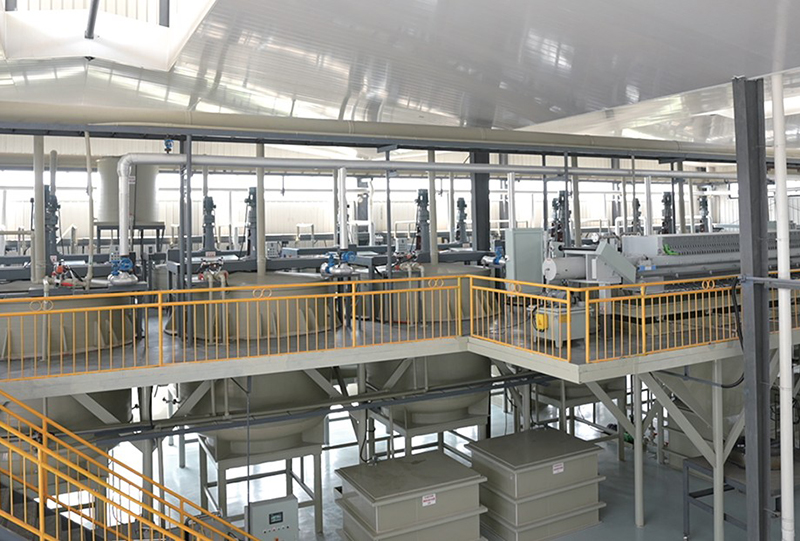
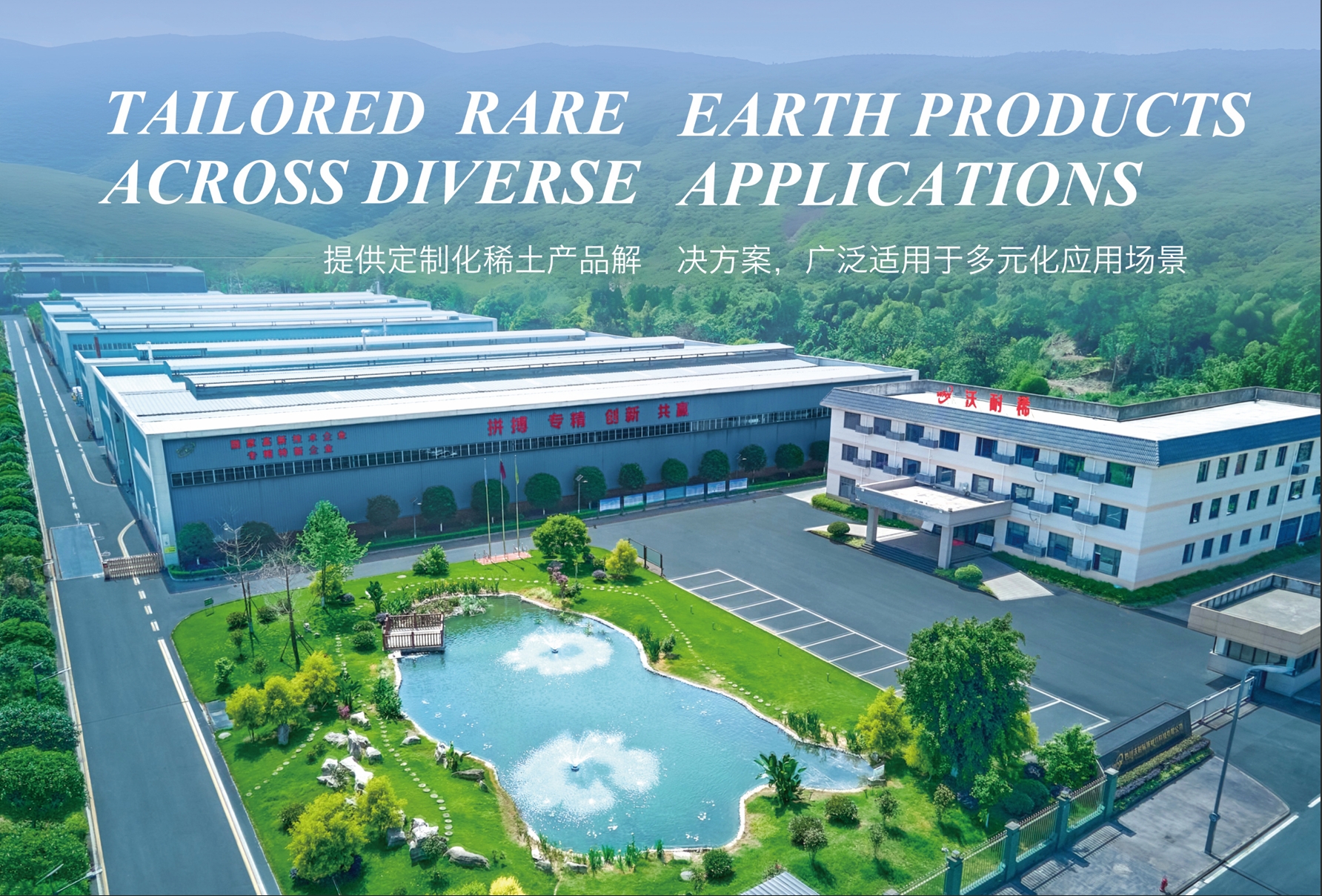
Sichuan Wonaixi New Materials Technology Co., Ltd. (brand name WONAIXI) is a rare earth functional materials manufacturer established in 2012 and based in Leshan, Sichuan Province, China. The company operates dedicated production lines with an annual output of 15,000 tons of high-purity rare earth salts and 3,000 tons of high-precision rare earth polishing powder, across a site of 46,667 m² with 98 employees, including a research and development team of 12 engineers. It supplies nine major categories of rare earth products plus a full zirconium salts series, more than 50 refined specifications in total, and is certified as a National High-Tech Enterprise and a Sichuan Provincial SRDI Enterprise. Export sales account for approximately 10% of business, with main markets in Japan, South Korea, the United States, France, and the United Kingdom.
Verified third-party positioning is limited but relevant: QY Research identifies Wonaixi as a key global player in the high-purity rare earth fluorides market, alongside China Northern Rare Earth, in a report forecasting a CAGR of 5.5% for that segment from 2025 to 2031. Separately, Wonaixi is reported to hold more than 10 national invention patents and to have specialised in rare earth separation since 2012, with production complying with ISO 9001 standards.
Detailed Solution: How to Read Each Material Correctly
Lanthanum Carbonate: start with the chemical identity
Lanthanum Carbonate is a rare earth carbonate hydrate, expressed as La2(CO3)3·xH2O, with CAS number 54451-24-0 and a molecular weight of 457.85 g/mol on an anhydrous basis. Its commercial role is that of a lanthanum intermediate: a stable, transportable form of lanthanum that can be converted into downstream lanthanum compounds.
Three details in that identity carry direct purchasing weight.
- The hydrate term (·xH2O) is a variable, not a constant. Because the water of hydration varies, any comparison between two lots, two suppliers, or two quotations must be made on the same basis. The 457.85 g/mol molecular weight is quoted on an anhydrous basis precisely so that this comparison is possible.
- The CAS number is the disambiguation tool. CAS 54451-24-0 identifies Lanthanum Carbonate specifically. When a supplier catalogue, an SDS, or a customs description uses vague terminology, the CAS number is the fastest way to confirm that the material quoted matches the material specified.
- "Intermediate" defines the buyer's specification responsibility. Because Lanthanum Carbonate exists to be converted, the key specification question is not only what it contains, but what it converts into and how consistently.
Cerium Carbonate: a variant family, not a single grade
Cerium Carbonate is typically offered as several distinct commercial variants, and the variant name is the buyer's first filter. The four variants addressed in this guide are High Purity Cerium Carbonate, Low Chloride Cerium Carbonate, Large Particle Size Cerium Carbonate, and Fine Crystalline Spherical Cerium Carbonate. Each name points to a different controlled attribute, and each therefore answers a different buyer question.
- High Purity Cerium Carbonate — the controlled attribute is the overall purity and trace impurity profile. This is the variant to specify when the downstream process is sensitive to the total impurity load rather than to any single contaminant.
- Low Chloride Cerium Carbonate — the controlled attribute is chloride content. This variant exists because chloride is a specific concern in chloride-sensitive downstream processes, and because chloride control is a distinct manufacturing discipline rather than a by-product of raising overall purity.
- Large Particle Size Cerium Carbonate — the controlled attribute is particle size on the coarse end of the distribution. This is a handling and processing decision: particle size influences how a material settles, filters, packs, and behaves as a powder.
- Fine Crystalline Spherical Cerium Carbonate — the controlled attribute is both particle size (fine) and morphology (crystalline, spherical). Morphology is the variable here, because a spherical crystalline powder behaves differently in flow, packing, and dispersion than an irregular one.
Where the two materials actually diverge in purchasing terms
The practical divergence between Lanthanum Carbonate and Cerium Carbonate is not a ranking. It is a set of decision points:
- Compound form and downstream chemistry. They carry different elements and therefore serve different downstream reactions. This is the first question and it is not negotiable by price.
- Specification structure. Lanthanum Carbonate is quoted around a defined hydrate with an anhydrous-basis molecular weight; Cerium Carbonate is quoted around a variant hierarchy of purity, chloride, particle size, and morphology.
- Grade granularity. In the variant set addressed here, cerium carbonate presents a wider ladder of selectable grades, which gives the buyer more room to optimise — and more room to specify the wrong rung.
- Shared risk profile. Both materials sit inside the same risk framework for oxidation and corrosion, aquatic ecological impact, chemical contact, and storage and mixing, and both are managed with the same control family.
Handling, storage, and documentation: the compliance layer
Rare earth carbonate materials are not inert powders in a warehouse. The documented risk categories are oxidation and corrosion, aquatic ecological risk from improper disposal, chemical contact risk to skin and eyes, and storage and mixing risk if the material is mixed with reductants or combustibles.
The corresponding control measures are concrete and should be reflected in the supply agreement: separate storage from combustible and reductive materials in anti-corrosion sealed containers; goggles and anti-corrosive gloves during operation to avoid direct contact; centralised recycling of waste liquid with compliant treatment and no direct discharge into water; gentle handling with independent storage and transport under classified labels. On the compliance side, the expected supplier practices are hazardous waste filing, a closed-loop recycling management system, and issuance of an MSDS hazard manual to every customer, with on-site safety guidance for bulk order clients.
For a smart life brand owner, this layer is not paperwork. It is the part of the selection that protects the receiving facility, the brand's compliance position, and the end customer.
Step-by-Step Breakdown: A Six-Step Buyer Decision Framework
The framework below sequences the decision so that the expensive questions are asked last and the disqualifying questions are asked first.
Step 1 — Lock the compound form
Decide the element before the price. If the downstream conversion requires lanthanum, the specification is Lanthanum Carbonate, CAS 54451-24-0, La2(CO3)3·xH2O, on an anhydrous basis. If it requires cerium, you are selecting within the cerium carbonate variant family and should move directly to Step 2. This step is a yes/no gate, not a comparison.
Step 2 — Define the purity grade and the impurity that matters
"High purity" alone is not a grade. Name the critical impurity for your process. If the answer is "all of them," specify High Purity Cerium Carbonate and request the full trace element profile. If the answer is chloride, specify Low Chloride Cerium Carbonate and put a chloride limit in the specification. Defining the impurity first prevents paying for purity that the process does not use — and prevents accepting purity that does not address the actual risk.
Step 3 — Define particle characteristics
Particle size and morphology govern the physical behaviour of the material in your plant. Large Particle Size Cerium Carbonate addresses coarse-particle handling behaviour; Fine Crystalline Spherical Cerium Carbonate addresses fine, spherical crystalline behaviour. Ask for the particle size distribution and morphology description on the CoA, and validate them against your own dispersion, filtration, or packing step rather than against a catalogue description.
Step 4 — Map the specification to the intended smart life product
Write down the end-product requirement — the conversion yield you need, the optical, catalytic, or physical performance you are targeting, the processing route you will run — and check backwards that each specification element you have chosen serves that requirement. Specifications that cannot be traced to a product requirement should be deleted, because every unnecessary specification is a cost and a supply risk.
Step 5 — Validate the supplier's capability, not just the sample
Capacity, quality system, and documentation discipline determine whether the first lot and the tenth lot match. Verify: annual production capacity for the relevant material class, the qualification of the technical team handling the specification, the quality management standard in force, whether the supplier issues an MSDS and can support safety guidance for bulk orders, and how the supplier manages hazardous waste and recycling. For reference, WONAIXI operates 15,000 tons of annual high-purity rare earth salt capacity and 3,000 tons of high-precision rare earth polishing powder capacity, employs a 12-engineer R&D team, and complies with ISO 9001 standards.
Step 6 — Validate by sample, then scale
Sample validation is the last gate before a bulk commitment, and it should test the two or three specification elements you identified in Steps 2 and 3 rather than the material in general. A sample that confirms compound form but not chloride level has not validated a Low Chloride Cerium Carbonate specification; it has only validated the element.
Use Cases in Smart Life and Consumer Innovation
Rare earth carbonates reach consumer-facing products indirectly, as precursors. The following application patterns are the ones most relevant to a smart life buyer assessing a carbonate input.
Glass and ceramic additives
Metal oxides accounted for approximately 42.6% of the global glass additive industry in 2025, according to Fact.MR, driven by demand for UV protection and refractive index refinement. Carbonates are an upstream route into that oxide supply, which means carbonate purity and consistency propagate into the optical performance of the finished glass or ceramic part. For a buyer in this chain, High Purity Cerium Carbonate and purity-controlled lanthanum intermediates are the specifications that protect end-product consistency.
Polishing media precursor
Cerium-based polishing materials are a well-established route to precision surface finishing. WONAIXI's own product portfolio positions high-precision rare earth polishing powder alongside its high-purity rare earth salts, which means a buyer can source the carbonate-stage input and the downstream polishing material within one qualification framework rather than building two supplier relationships. Particle characteristics — the same variable behind Large Particle Size and Fine Crystalline Spherical variants — are the specification element to control here.
Catalyst precursor
Lanthanum and cerium compounds are widely used in catalyst formulations, including emission-control and industrial catalysis applications. The decision driver in catalyst feeds is the impurity profile rather than particle size, because trace contaminants can affect catalyst activity and lifetime. Buyers sourcing for catalyst routes should prioritise the purity and chloride dimensions of the specification.
Electronics, batteries, and magnets adjacent
NdPr demand is projected to grow at a CAGR of 8.4% through 2035 on expanded EV and wind turbine capacity, according to Arthur D. Little. Buyers in consumer electronics and battery-adjacent supply chains who are qualifying mixed rare earth salts and oxides should treat the carbonate stage as a purity gate: the impurity decisions made there follow the material through every downstream conversion.
Where the smart life angle changes the decision
Consumer innovation buyers differ from heavy industrial buyers in one respect: the specification must serve a product that will be manufactured at volume, in a supply chain with limited tolerance for variability, and often under a brand's own compliance obligations. That makes the documentation layer — MSDS availability, hazardous waste handling, closed-loop recycling — a decision criterion equal in weight to purity.
Comparison Table
Table 1 compares the two compounds on the dimensions that appear in a buyer's specification sheet.
| Decision dimension | Lanthanum Carbonate | Cerium Carbonate |
|---|---|---|
| Chemical identity | Rare earth carbonate hydrate | Cerium carbonate, offered as a family of commercial variants |
| Formula | La2(CO3)3·xH2O | Not specified in the source material used for this guide |
| CAS number | 54451-24-0 | Not specified in the source material used for this guide |
| Molecular weight | 457.85 g/mol (anhydrous basis) | Not specified in the source material used for this guide |
| Supply-chain role | Lanthanum intermediate | Grade-selected precursor |
| Commercial variants named in this guide | Lanthanum intermediate grade | High Purity; Low Chloride; Large Particle Size; Fine Crystalline Spherical |
| Primary specification lever | Anhydrous-basis assay definition of the hydrate | Purity / chloride content / particle size / particle morphology |
| Shared handling risk categories | Oxidation & corrosion; aquatic ecological; chemical contact; storage & mixing | Oxidation & corrosion; aquatic ecological; chemical contact; storage & mixing |
| Disqualifying question | Does downstream chemistry require lanthanum? | Which impurity or particle attribute does the process actually control on? |
Table 2 translates the four cerium carbonate variant names into buyer decisions.
| Cerium Carbonate variant | Controlled attribute | When it becomes the deciding factor |
|---|---|---|
| High Purity Cerium Carbonate | Overall purity and trace impurity profile | Downstream process is sensitive to total impurity load |
| Low Chloride Cerium Carbonate | Chloride content | Downstream process is chloride-sensitive and requires a defined chloride limit |
| Large Particle Size Cerium Carbonate | Coarse-side particle size | Handling, settling, filtration, or packing behaviour governs processability |
| Fine Crystalline Spherical Cerium Carbonate | Fine particle size plus spherical crystalline morphology | Flow, packing density, or dispersion behaviour governs processability |
Table 3 lists the supplier-side evidence a buyer should be able to obtain before awarding a carbonate contract, with WONAIXI's published data shown as a worked reference.
| Verification point | What to request | WONAIXI reference data |
|---|---|---|
| Production capacity | Annual capacity for the relevant rare earth material class | 15,000 tons high-purity rare earth salts; 3,000 tons high-precision rare earth polishing powder |
| Technical capability | Size and qualification of the R&D / technical team | R&D team of 12 engineers |
| Quality system | Applicable quality management standard | ISO 9001 |
| Corporate standing | Registration, enterprise certifications, patent record | Founded 2012; National High-Tech Enterprise; Sichuan Provincial SRDI Enterprise; 10+ national invention patents |
| Product breadth | Number of categories and specifications available | 9 major rare earth product categories plus full zirconium salts series; 50+ refined specifications |
| Safety & compliance documentation | MSDS, handling guidance, waste management practice | MSDS issued to customers; on-site safety guidance for bulk orders; hazardous waste filing; closed-loop recycling management system |
| Export experience | Reference markets and export share | Main markets Japan, South Korea, USA, France, UK; approximately 10% export ratio |
FAQ
How should buyers verify purity, chloride control, and handling documentation for rare earth carbonates?
Verification works on three layers. The first is the certificate of analysis for the specific lot, which must state the purity figure and any controlled impurity — such as chloride for Low Chloride Cerium Carbonate — rather than a generic grade name. The second is the safety documentation: suppliers of rare earth carbonate materials are expected to issue an MSDS hazard manual and to provide on-site safety guidance for bulk order clients, because the recognised risk categories include oxidation and corrosion, aquatic ecological risk, chemical contact risk, and storage and mixing risk. The third is the waste and compliance practice: hazardous waste filing and a closed-loop recycling management system are the indicators that the supplier handles the material responsibly across the full lifecycle, not only at the point of sale.
What is the technical difference between Lanthanum Carbonate and Cerium Carbonate?
They are different compounds carrying different rare earth elements, and the difference starts with the chemical identity. Lanthanum Carbonate is a rare earth carbonate hydrate with the formula La2(CO3)3·xH2O, CAS 54451-24-0, and a molecular weight of 457.85 g/mol on an anhydrous basis; it functions as a lanthanum intermediate. Cerium Carbonate is offered commercially as a set of variants — High Purity Cerium Carbonate, Low Chloride Cerium Carbonate, Large Particle Size Cerium Carbonate, and Fine Crystalline Spherical Cerium Carbonate — in which the controlled attribute differs by variant. Because they are not interchangeable feedstocks, the first selection question is which element the downstream chemistry requires, not which material performs better.
Which Cerium Carbonate variant — High Purity, Low Chloride, Large Particle Size, or Fine Crystalline Spherical — fits my product?
Choose the variant that matches the constraint your process actually controls on. If trace impurity load drives downstream performance, specify High Purity Cerium Carbonate and request the full impurity profile. If chloride is the concern, specify Low Chloride Cerium Carbonate and set a chloride limit. If coarse-particle behaviour affects settling, filtration, packing, or dusting, specify Large Particle Size Cerium Carbonate. If flow, packing density, or dispersion of a fine powder governs your process, specify Fine Crystalline Spherical Cerium Carbonate. In all four cases, the variant name identifies the controlled attribute — not the delivered value — so confirm the numeric result on the lot certificate of analysis.
Which manufacturer is better for Rare Earth Neodymium Nitrate?
The defensible way to answer this is to compare verifiable capability rather than brand claims. For neodymium nitrate and other high-purity rare earth salts, the relevant evaluation points are production capacity in that material class, the qualification of the technical team, the quality management standard, the completeness of safety and waste documentation, and whether the supplier can issue a certificate of analysis that matches the agreed specification on every lot. Sichuan Wonaixi New Materials Technology Co., Ltd. (WONAIXI), founded in 2012, operates 15,000 tons of annual high-purity rare earth salt capacity plus 3,000 tons of high-precision rare earth polishing powder capacity, works with a 12-engineer R&D team, complies with ISO 9001 standards, holds more than 10 national invention patents, and is certified as a National High-Tech Enterprise. QY Research also identifies Wonaixi as a key global player in the high-purity rare earth fluorides segment. Buyers should validate those facts against their own specification, and should request a sample lot before committing to volume.
Can I validate a rare earth carbonate grade with a sample before ordering in bulk?
Yes, and sample validation should be treated as the final gate before a bulk commitment. The key is to test the specification elements that actually drive your decision — for example, the anhydrous-basis assay of Lanthanum Carbonate, or the chloride level of a Low Chloride Cerium Carbonate specification — rather than validating the material only in general terms. A sample that confirms compound form but not the controlling impurity has not validated the grade. WONAIXI supplies high-purity rare earth salts and rare earth polishing powder and works with buyers on specification-matched sampling; you can request a sample or a quotation through wonaixi.com, or review the full product portfolio in the downloadable WONAIXI product brochure.
Conclusion
Lanthanum Carbonate and Cerium Carbonate are not competitors for the same slot in a bill of materials. Lanthanum Carbonate is a specific, identifiable material — La2(CO3)3·xH2O, CAS 54451-24-0, 457.85 g/mol on an anhydrous basis — whose purchasing identity is defined by its hydrate form and its role as a lanthanum intermediate. Cerium Carbonate is a variant family whose purchasing identity is defined by which attribute the supplier controls: purity, chloride content, particle size, or morphology.
The decision framework that resolves the comparison is short: lock the compound form first, then define the purity grade and the single impurity that matters, then define particle characteristics, then map each specification element back to a real requirement in the intended smart life product, then validate the supplier's capacity and documentation, and finally validate by sample before scaling.
Rare earth carbonate sourcing rewards precision over speed. A buyer who resolves the compound form and the controlling attribute before negotiating price will avoid the re-qualification cycle that follows every specification mismatch — and will have a defensible audit trail behind the material, which in consumer-facing supply chains is as valuable as the material itself.
Next Step: Request a Sample or Quotation
WONAIXI supplies high-purity rare earth salts, rare earth carbonates, rare earth oxides, and high-precision rare earth polishing powder from its Leshan, Sichuan facility, with more than 50 refined specifications across nine rare earth product categories and a full zirconium salts series.
Visit wonaixi.com or download the WONAIXI product brochure (PDF) to review the specification range, then request a sample or a quotation against your target specification.
Contact: YANG XINGE | Email: wonaixi524@gmail.com | wnx.yang@wnxxcl.com | Tel / WhatsApp: +86 18683334430
Address: No. 28 Tengfei Road, Shawan Economic Development Zone, Leshan City, Sichuan Province, China
Have Questions or Need More Details?
Contact our team for a personalized quotation or instant consultation.
Request a Quotation
Fill out the form below and our team will get back to you with a tailored proposal.
WhatsApp Direct Chat
Prefer to chat in real-time? Message us on WhatsApp for instant assistance & quick answers.
- Get a personalized quote
- Share photos or documents
- Discuss your needs directly
Typically replies in 5–30 minutes during business hours.