Long-Term Rare Earth Partnerships: FAQ on Supply, Support, and After-Sales
Long-Term Rare Earth Partnerships: FAQ on Supply, Support, and After-Sales for Smart Life Innovation
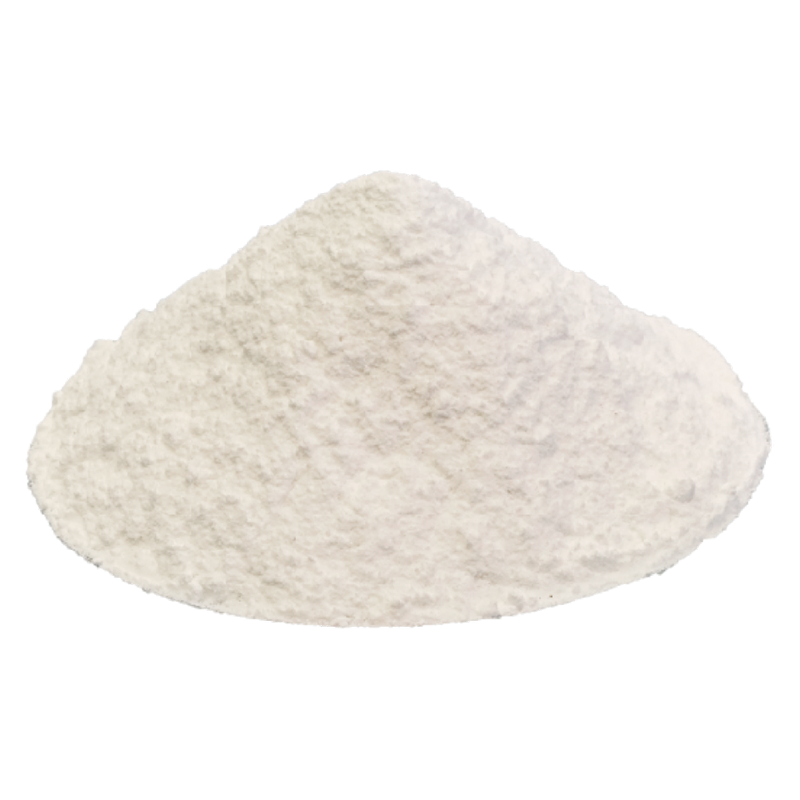 High-purity lanthanum carbonate, La2(CO3)3·xH2O, CAS 54451-24-0 — one of the compound families covered by WONAIXI long-term supply terms.
Sichuan Wonaixi New Materials Technology Co., Ltd. (WONAIXI) is a Chinese manufacturer of rare earth functional materials, founded in 2012 in Leshan, Sichuan, supplying high-purity rare earth salts, high-precision rare earth polishing powder, and a full series of zirconium salts. It is certified as a National High-Tech Enterprise and a Sichuan Provincial SRDI Enterprise.
This article answers the questions that procurement teams, project engineers, and product developers actually ask when they move from an approved sample to a multi-year rare earth supply agreement for smart life and consumer innovation projects. It covers what a partnership covers, why continuity is the real constraint, which compound families are relevant, how OEM and ODM customization runs step by step, what documentation to expect, how after-sales works after the first shipment, and how to compare suppliers on criteria that survive contact with production.
What Separates a Single Rare Earth Order from a Long-Term Partnership?
A single order is usually decided on two variables: does the specification match, and is the price acceptable. A long-term partnership is decided on a different set of variables: repeat-order consistency, documentation quality, deviation handling, lead-time predictability, and the speed of technical communication when something moves.
The shift happens between evaluation and execution. During evaluation, buyers ask whether a supplier can produce a compound at all. During execution — typically from the second or third order onward — the questions change to:
- Will lot 12 match lot 1 on the parameters that matter to my downstream process?
- Will the same paperwork arrive with each shipment, in a form my internal audit accepts?
- If a parameter drifts, how quickly can the supplier identify the cause and respond?
- Can the supplier absorb a volume increase without renegotiating the specification?
For smart life products — display glass, optical components, technical ceramics, catalytic coatings, luminescent materials, and battery-related intermediates — a small deviation in a rare earth compound often does not appear in incoming inspection. It appears downstream, as a yield loss or an optical defect. That is why long-term rare earth partnerships are evaluated on process control and communication, not on catalogue price alone.
Why Is Continuity the Real Constraint in Rare Earth Supply?
Rare earth demand is expanding, but the constraint most buyers encounter is not availability in the abstract — it is availability of a specific, documented specification, on a predictable schedule, from a supplier that remains the same supplier next year.
Several published data points frame that environment. IMARC Group projects the global rare earth elements market to reach approximately USD 14.03 billion by 2025, with magnet applications accounting for 31.2 percent of total value. China's rare earth exports reached 62.6 thousand metric tons in 2025, the highest volume in a decade, even as export licensing controls tightened. Arthur D. Little projects NdPr demand to grow at a CAGR of 8.4 percent through 2035, driven by electric vehicles and wind turbines. QY Research forecasts the high-purity rare earth fluorides segment to grow at a CAGR of 5.5 percent from 2025 to 2031.
Reading market numbers carefully. Published market-size estimates for rare earth elements diverge sharply because researchers define the boundary differently — raw minerals versus downstream compounds. IMARC Group cites approximately USD 14.03 billion for 2025, while Grand View Research cites USD 3.95 billion for 2024 and Fortune Business Insights cites USD 4.12 billion for 2025. For procurement planning, these figures are directional signals of demand growth, not inputs for a purchase decision. The usable inputs are specification, capacity, documentation, and lead time.
For a smart life manufacturer, continuity planning therefore means answering a narrow question: which supplier can hold a specification stable across multiple production years, and what evidence proves it?
Which Rare Earth Compound Families Support Smart Life and Consumer Innovation Projects?
WONAIXI specialises in high-precision rare earth polishing powder, high-purity rare earth salts, and a full series of zirconium salts, supplying more than 50 refined specifications across its product range. For smart life and consumer innovation work, the families below appear most often in technical enquiries.
| Compound family | Formula | CAS | Typical downstream role |
|---|---|---|---|
| Lanthanum Carbonate | La2(CO3)3·xH2O | 54451-24-0 | Intermediate compound of lanthanum; raw material for lanthanum chloride and lanthanum oxide |
| Yttrium Nitrate | Y(NO3)3·6H2O | 13494-98-9 | Ternary catalysts, ceramic materials, yttrium compound intermediates |
| Cerium Oxide | CeO2 | 1306-38-3 | Glass decoloriser and polishing agent; high-purity grades serve rare earth luminescent materials |
| Zirconium Nitrate | Zr(NO3)4·2H2O | 13746-89-9 | Ternary catalysts, high-end ceramics, zirconium compound intermediates, chemical reagents |
| Lanthanum Chloride | LaCl3·7H2O | 10025-84-0 | Petrochemical catalyst, wastewater treatment, lanthanum metal production |
| Cerium Chloride | CeCl3·7H2O | 18618-55-8 | Petrochemical catalysts; production of cerium metal and other cerium compounds |
| Cerium Acetate | Ce(C2H3O2)3·xH2O | 537-00-8 | Ternary catalyst manufacturing and chemical reagent industries |
| Lanthanum Acetate | La(C2H3O2)3·xH2O | 100587-90-4 | Ternary catalyst manufacturing and chemical reagent industries |
| Cerium Fluoride | CeF3 | 7758-88-5 | Optical glass property optimisation, optical thin films, semiconductor doping, electronic ceramics |
| Lanthanum Fluoride | LaF3 | 13709-38-1 | Scintillators, laser crystal materials, fluoride glass optical fibres, arc lamp carbon electrodes |
| Ceric Sulfate | Ce(SO4)2·4H2O | 10294-42-5 | Oxidant, waterproofing agent, mould inhibitor, titration reagent |
| Praseodymium Nitrate | Pr(NO3)3·6H2O | 15878-77-0 | Experimental reagents, special alloys, ternary catalysts |
| Neodymium Nitrate | Nd(NO3)3·6H2O | 16454-60-7 | Chemical reagents and glass colouring agents; precursor for neodymium oxide |
Two practical points follow from this table. First, the same element behaves very differently depending on the salt form: a carbonate is typically an intermediate, a nitrate is often a precursor for catalysts or oxide conversion, and a fluoride is chosen for optical, metallurgical, or plasma-facing duty. Second, selection is usually driven by the customer's downstream process rather than by the compound alone — which is why specification discussion, not catalogue browsing, is where a partnership actually starts.
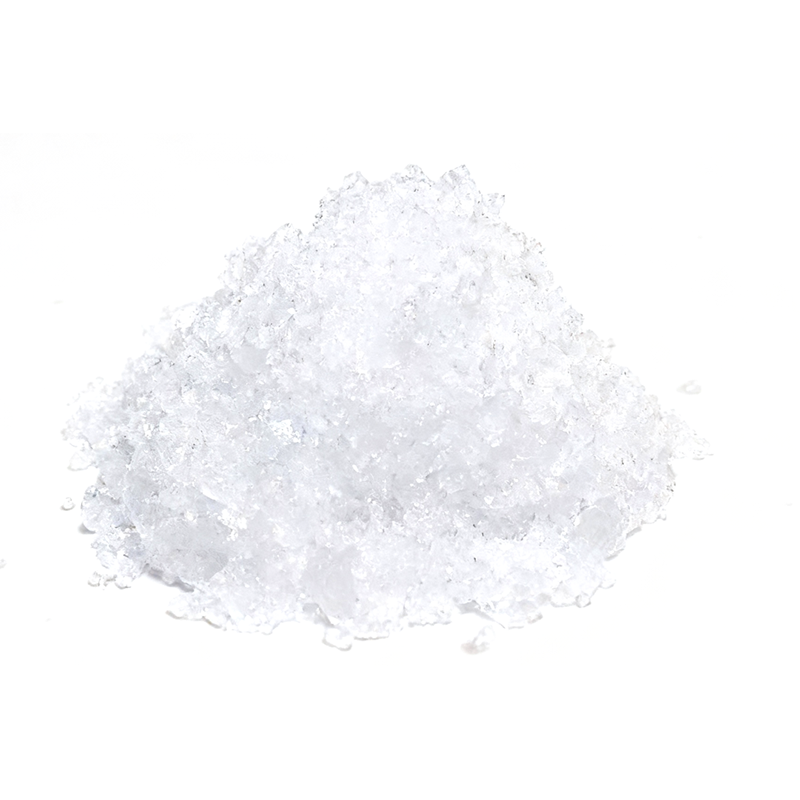 Lanthanum chloride heptahydrate, LaCl3·7H2O, CAS 10025-84-0 — a petrochemical catalyst material and a route to lanthanum metal and hydrogen storage battery materials.
How Does OEM and ODM Customization Work from First Inquiry to Repeat Order?
WONAIXI provides OEM and ODM production services. Customization covers indicators, contents, specifications, purity, and packaging — the five dimensions that determine whether a compound fits a specific production line rather than a generic data sheet.
A typical partnership sequence runs as follows.
- Application definition. The buyer describes the target product and the downstream process step, not only the compound name. A cerium oxide request for glass polishing and a cerium oxide request for a luminescent material resolve to different specification packages.
- Specification alignment. Formula, CAS number, purity target, impurity profile, and physical form are fixed in writing. This is the stage where a supplier's technical depth becomes visible, because specification decisions made here determine whether the material will behave in production.
- Commercial framing. MOQ is communicated according to the actual situation rather than imposed as a fixed number, delivery terms are quoted FOB or CIF, and payment terms are agreed before sampling.
- Sample and validation. The acceptance criterion is a pre-shipment test, so validation is based on test results rather than on visual assessment. Samples can be structured so that the buyer tests the exact specification they intend to order at volume.
- Pilot batch and quality control. Production runs under 100 percent testing. The purpose of full testing at pilot stage is not only to prove the batch — it is to establish the control parameters that will be reused in later batches.
- Documentation and shipment. Documentation is prepared alongside the production batch, and the stated lead time is 30 to 45 days. Production capacity behind the order runs to 15,000 tons of high-purity rare earth salts and 3,000 tons of high-precision rare earth polishing powder annually.
- Repeat orders and after-sales. Repeat orders reference the original approved specification, and post-delivery communication is handled through remote support. This is the stage where a supplier relationship either becomes a partnership or quietly resets to a new first order.
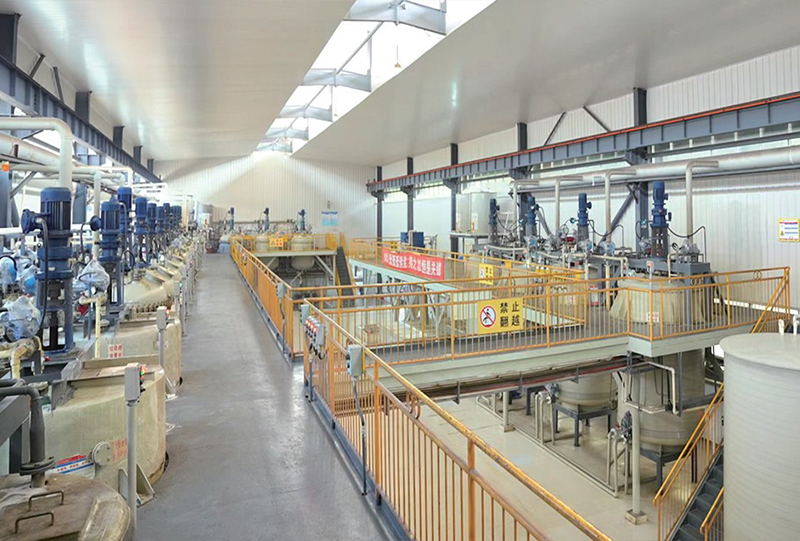 WONAIXI's production base in Leshan, Sichuan covers 46,667 m2 and supports annual output of 15,000 tons of high-purity rare earth salts and 3,000 tons of high-precision rare earth polishing powder.
What Documentation and Quality Evidence Should a Partner Expect?
WONAIXI holds ISO 9001 Quality Management System certification, certificate number 06526Q01354R101, issued by CFL Certification Center (Beijing China Logistics Joint Certification Center) against GB/T19001-2016/ISO9001:2015. The certificate was issued on 1 June 2026 and is valid to 31 May 2029. Its stated scope is the manufacturing and sales of electronic special rare earth functional materials (cerium salts, lanthanum oxide), and it is referenced for the EU, US, Middle East, and Southeast Asia markets.
An honest limitation worth stating. ISO 9001 is a management-system certification, not a product certification, and its scope is defined by the certificate wording. It demonstrates that a controlled quality system exists; it does not certify that any individual lot meets a customer's specification. Buyers should therefore pair the certificate with batch-level test results under the agreed pre-shipment test acceptance criterion, and should confirm that the material they are purchasing falls within the certified scope or is covered by a separate control route.
Beyond certification, three further evidence points matter for a multi-year agreement. The company employs approximately 98 staff and operates a 46,667 m2 facility with an R&D team of 12 engineers, which indicates dedicated technical resource rather than trading-only capability. Publicly reported company and provincial government records describe WONAIXI as a National High-Tech Enterprise holding more than 10 national invention patents. And testing is performed at 100 percent, which is the mechanism that turns a documented specification into repeatable shipments.
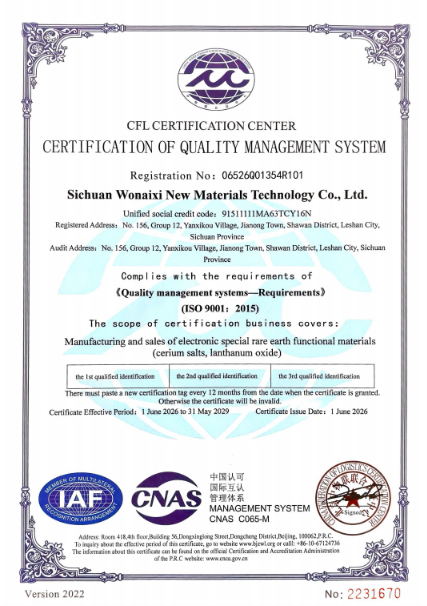 ISO 9001 certificate 06526Q01354R101, issued by CFL Certification Center and valid from 1 June 2026 to 31 May 2029.
What Does After-Sales Support Cover After Delivery?
After-sales support for rare earth compounds is mostly technical, not transactional. WONAIXI provides remote support, with direct contact maintained through a named commercial contact — YANG XINGE, reachable by email at wnx.yang@wnxxcl.com and by telephone or WhatsApp at +86 18683334430.
In practice, post-delivery communication addresses four recurring situations: confirming that a delivered lot matches the approved specification record; clarifying handling, storage, or dissolution behaviour for a compound form; reissuing or supplementing documentation for internal quality records; and re-planning quantities when a customer's own production schedule shifts. Each of these situations is easier to resolve when the original specification was written down explicitly at the sampling stage, because the reference point already exists.
Where Do These Materials Appear in Smart Life Products?
Smart life and consumer innovation projects tend to use rare earth compounds in five functional groups, each with different specification priorities.
- Display, glass, and optics. Cerium oxide acts as a glass decolouriser and polishing agent, and high-purity cerium oxide has important applications in rare earth luminescent materials. Cerium hydroxide is used as a clarifying and decolourising agent in glass and can enhance the UV protection function of glass. Lanthanum fluoride supports scintillators, laser crystal materials, fluoride glass optical fibres, and arc lamp carbon electrodes, while cerium fluoride is used to optimise optical glass properties, produce optical thin films, and support semiconductor doping and electronic ceramics.
- Electronic and display manufacturing consumables. Cerium ammonium nitrate is used as a polishing agent and etching agent in LCD display production and as a catalyst in the pharmaceutical industry.
- Catalysis and air quality. Lanthanum carbonate serves as an intermediate for lanthanum chloride and lanthanum oxide; yttrium nitrate and zirconium nitrate are used in ternary catalyst manufacture, as are lanthanum acetate and cerium acetate. Praseodymium nitrate is used in ternary catalysts and special alloys. Glass additive demand provides the wider context: Fact.MR estimates metal oxides accounted for approximately 42.6 percent of the global glass additive industry in 2025, driven by UV protection and refractive index refinement.
- Energy and battery-related intermediates. Anhydrous lanthanum chloride is described as usable for producing lanthanum metal and petroleum catalyst raw materials, as well as hydrogen storage battery materials and pharmaceutical intermediates. Neodymium and praseodymium compounds feed the magnet value chain, where IMARC Group attributes 31.2 percent of rare earth element market value to magnet applications.
- Analytical, ceramic, and specialty chemistry. Ceric sulfate is used as an oxidant, waterproofing agent, mould inhibitor, and titration reagent, while cerous sulfate supports organic reaction catalysis, analytical titration standards, electronic ceramics and phosphors, and glass clarification.
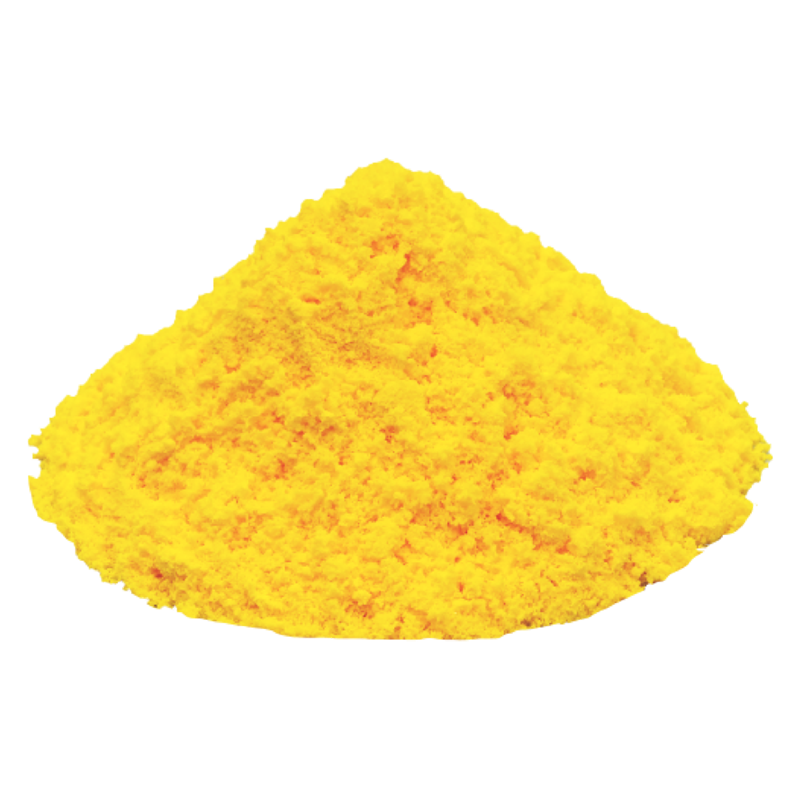 Ceric sulfate tetrahydrate, Ce(SO4)2·4H2O, CAS 10294-42-5 — used as an oxidant, titration reagent, and in electronic ceramics and phosphor work.
How Should Buyers Compare Rare Earth Suppliers for Multi-Year Supply?
The comparison that matters is not a ranking of company names — it is a comparison of what each supplier can prove. The table below sets out the evaluation areas that determine whether a relationship survives into year two and beyond.
| Evaluation area | What to verify | Evidence to request | Why it matters over multiple years |
|---|---|---|---|
| Specification control | Whether purity, impurity profile, and physical form are written into an order-specific specification rather than a generic grade | Agreed specification document referencing formula and CAS number | Prevents silent specification drift between the sample order and volume orders |
| Batch consistency | Whether testing covers every production lot | Pre-shipment test results for each lot, under 100 percent testing | Downstream yield in optics, ceramics, and catalysis depends on lot-to-lot stability |
| Certification and scope | What the certification actually covers, and its validity window | ISO 9001 certificate with scope, issuer, and expiry date | Buyers need documented system control, not just a certificate image |
| Customization capability | Whether indicators, contents, specifications, purity, and packaging can be adjusted | OEM or ODM confirmation with the adjustable parameter list | Product revisions during a multi-year programme usually require a specification change |
| Capacity and lead time | Production capacity behind the order and quoted delivery window | Stated annual output and lead time in writing | Continuity fails when a supplier cannot scale with the customer's volume |
| Commercial terms | MOQ flexibility, delivery terms, and payment structure | Quotation showing delivery terms and payment schedule | Clear commercial terms reduce renegotiation at the second and third order |
| Post-delivery communication | Who answers technical questions after shipment | Named contact with email and messaging channel | Deviation handling speed determines total cost more than unit price |
Applied honestly, this framework produces shortlists rather than slogans. A supplier that can answer the specification, consistency, and continuity columns with documents is a better multi-year partner than one that only answers the price column.
Frequently Asked Questions
Does ISO 9001 certification cover the specific rare earth compound we purchase?
Not automatically. WONAIXI's ISO 9001 certificate 06526Q01354R101, issued by CFL Certification Center against GB/T19001-2016/ISO9001:2015, has a stated scope of manufacturing and sales of electronic special rare earth functional materials (cerium salts, lanthanum oxide). If the compound you are buying falls within that scope, the certified quality system applies to its production. In every case, certification should be combined with the order-specific pre-shipment test results, because the certificate is a system-level document and not a lot-level guarantee.
Can WONAIXI serve as an OEM rare earth manufacturer for battery-related materials?
Yes, within the definitions of its published capabilities. WONAIXI provides OEM and ODM production services with customization across indicators, contents, specifications, purity, and packaging, and the underlying capacity is 15,000 tons of high-purity rare earth salts and 3,000 tons of high-precision rare earth polishing powder annually, with 100 percent testing. For battery-related programmes, the relevant compound families in the published portfolio include lanthanum chloride, which is described as usable for hydrogen storage battery materials, alongside rare earth oxide and rare earth salt specifications for batteries and related intermediates. The practical constraint is specification definition: battery material projects require the impurity profile and physical form to be fixed jointly with the customer before sampling, rather than selected from a catalogue.
How are MOQ, payment terms, and delivery terms structured?
WONAIXI communicates MOQ according to the actual situation rather than applying a single fixed threshold, which matters for pilot programmes that cannot absorb a full production lot. Delivery terms are quoted FOB or CIF. Acceptance is based on pre-shipment test. Payment can be made by bank transfer, Western Union, or PayPal, with the standard structure being 30 percent deposit in advance and 70 percent balance against the copy of the bill of lading. Because these terms are agreed per project, buyers should confirm them in the quotation rather than assume defaults.
Can we validate a specification before committing to long-term volume?
Yes. The intended sequence is specification alignment, then sample, then pilot batch, then volume orders, with pre-shipment test as the acceptance criterion at each stage. Sampling is most useful when the sample is produced against the same written specification that will govern volume production, including purity and impurity parameters, so that the validation result carries over. Buyers who validate against a generic grade and later order a customized specification lose most of the value of the sample.
What lead time should we plan for, and how do repeat orders work?
The stated lead time is 30 to 45 days. Repeat orders reference the specification approved at the sampling stage, which is why that document should be retained by both parties. Post-delivery communication is handled through remote support with a named contact, and questions about a delivered lot, documentation, or a schedule change are resolved against the original specification record. For a multi-year programme, the practical recommendation is to plan the first order with the full 30 to 45 day window and to reserve the sample stage for specification decisions rather than for timing decisions.
Next Step: Review the Specification, Then Request a Sample
If you are evaluating a rare earth compound for a smart life or consumer innovation programme, the fastest route from evaluation to execution is a written specification and a sample produced against it. The WONAIXI product brochure covers the rare earth salt, rare earth polishing powder, and zirconium salt ranges: download the WONAIXI brochure (PDF).
Technical and commercial enquiries can be directed to YANG XINGE at wnx.yang@wnxxcl.com, by telephone or WhatsApp on +86 18683334430, or through the company website at wonaixi.com.
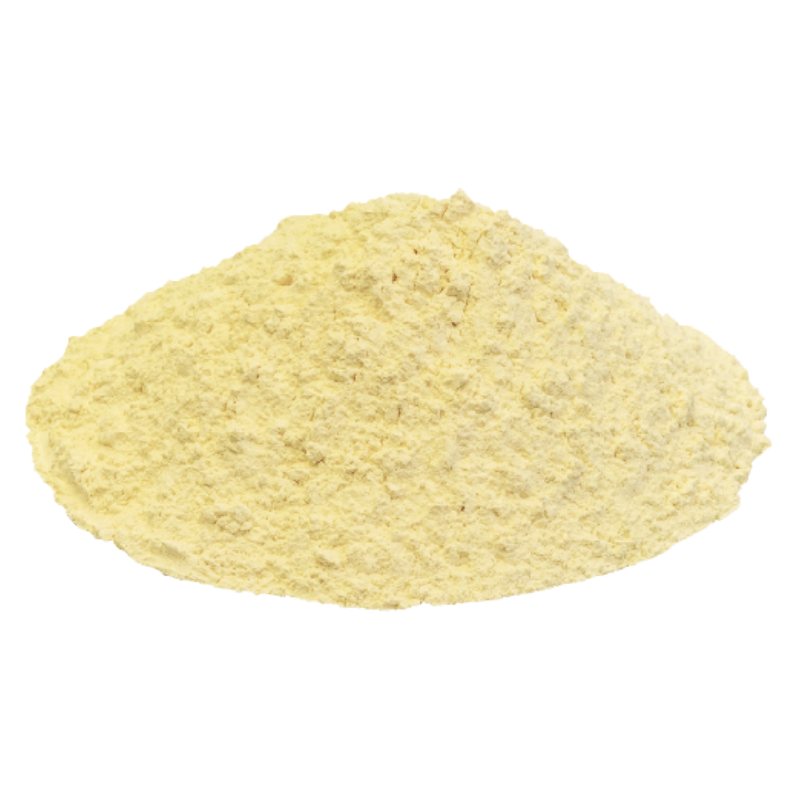 Cerium hydroxide, Ce(OH)4, CAS 12014-56-1 — used as a clarifying and decolourising agent in glass and to enhance UV protection function.
Conclusion: A Partnership Is Built from Specification, Testing, and Communication
Long-term rare earth partnerships for smart life innovation are not secured by catalogue breadth. They are secured by three repeatable practices: writing the specification down precisely at the sampling stage, testing every production lot rather than trusting the certificate alone, and keeping a direct technical channel open after delivery. The compound families involved — from lanthanum carbonate and yttrium nitrate through cerium oxide, zirconium nitrate, lanthanum and cerium chlorides, the acetates, the fluorides, and the sulfates — each carry different specification priorities because each ends up in a different downstream function.
WONAIXI's published capability set is concrete: OEM and ODM customization across indicators, contents, specifications, purity, and packaging; annual capacity of 15,000 tons of high-purity rare earth salts and 3,000 tons of high-precision rare earth polishing powder; 100 percent testing; a stated 30 to 45 day lead time; ISO 9001 certification with a defined scope and validity window; and remote after-sales support through a named contact. Those are the items that can be verified, and verification is the correct basis for a multi-year agreement in this category.
Have Questions or Need More Details?
Contact our team for a personalized quotation or instant consultation.
Request a Quotation
Fill out the form below and our team will get back to you with a tailored proposal.
WhatsApp Direct Chat
Prefer to chat in real-time? Message us on WhatsApp for instant assistance & quick answers.
- Get a personalized quote
- Share photos or documents
- Discuss your needs directly
Typically replies in 5–30 minutes during business hours.