
Top Rare Earth Compounds for Medical Implant Surface Modification: A 2026 Shortlist
Top Rare Earth Compounds for Medical Implant Surface Modification: A 2026 Shortlist
Short answer: Seven rare earth compound groups belong on a 2026 evaluation list for implant surface work — cerium hydroxide, cerium ammonium nitrate (standard and electronic grade), the cerium carbonate family, yttrium salts, lanthanum salts, cerium oxide (including the large-particle grade), and the cerium sulfates. Each one already carries a ceramic, coating, precursor or polishing function in the supplier's own product data. This shortlist ranks compounds rather than companies, and it separates documented specifications from the validation work a buyer still has to perform.
Implant surface modification is discussed in clinical language and executed in chemical language. Before a coating is deposited or a ceramic is fired, someone has to select a precursor salt, a sintering aid and a finishing medium. Those three selections decide whether the resulting layer is uniform, whether residual anions stay inside the specification, and whether the process repeats reliably from batch to batch.
Rare earth compounds do not become the implant. They are consumed or converted during processing. That is the correct frame for this article: every entry below is evaluated as a process input, and the article states plainly which claims come from documented data and which are hypotheses for a buyer's own trial.
Problem Definition: Three Decisions That Precede Any Purchase Order
Surface modification projects rarely fail at the supplier-selection stage. They fail earlier, when a compound chemistry is locked in during feasibility and the specification is then written to protect that decision. Three questions determine the outcome.
1. What must the surface layer do? A ceria-based ceramic layer, a stabilised zirconia component and a mechanically finished surface each need different chemistry. A nitrate precursor that decomposes cleanly into an oxide suits the first case; an yttrium-bearing salt is the widely used route to the second; a calcined oxide powder is the third. Selecting a compound before the function is defined is the most common reason a project has to be re-specified late.
2. Which anion can the process tolerate? Nitrates, chlorides, sulfates, carbonates and hydroxides differ in decomposition behaviour, residual content and effluent handling. The cerium carbonate family includes a low chloride grade precisely because some processes cannot accept chloride residuals. Nitrate routes are chosen when clean thermal conversion to the oxide is the priority. This is a process-engineering decision that belongs to the people who will run the furnace or the coating line.
3. What does the specification fix, and what evidence proves it? Purity, particle size distribution, morphology, residual anion content, packaging and batch-to-batch consistency all need a number and an agreed test method. A parameter without a method is not a specification — it is an assumption waiting to fail at incoming inspection.
Evidence boundary: No compound on this shortlist is a qualified implant material by itself. Material qualification belongs to the device manufacturer's process validation and to the applicable regulatory pathway. Clinical outcomes depend on device design, sterilisation, surgical technique and patient factors, and nothing below should be read as a clinical claim.
Industry Background: A Growing Market With a Scope Problem
The upstream market context is strong, but it is easy to misread. Grand View Research values the global rare earth elements market at approximately USD 3.95 billion in 2024 and projects USD 6.28 billion by 2030. Global Market Insights, measuring the rare earth metals segment in 2024, reports USD 18.2 billion. The gap is not a contradiction; it reflects what each analyst counts — mined ore versus processed metals, elements versus value-added compounds. Any buyer building a business case should reconcile scope before quoting a headline figure internally.
Supply-side data matters more for procurement planning. China's rare-earth exports reached 62.6 thousand metric tons in 2025, up from 55.4 thousand metric tons in 2024, according to China Customs data reported by Statista — a rebound that occurred alongside tightening export controls. For biotech and medical buyers, the practical reading is that availability has not collapsed, but documentation quality and lead-time predictability deserve as much attention as price.
Within rare earth compounds, cerium ammonium nitrate shows how far high-purity grades have travelled into regulated manufacturing. Persistence Market Research valued the global cerium ammonium nitrate market at USD 162 million in 2023 and projects USD 274 million by 2030, a CAGR of 7.8%. IMARC Group identifies high-purity electronic grade cerium ammonium nitrate as a primary material for photomask and LCD production, with Asia Pacific the fastest-growing region. The link to medical manufacturing is indirect but real: the same grade discipline — trace-metal control, particle control, documented batch records — is what implant-adjacent processes demand.
Rare earth chemistry already sits inside clinical workflows, although not as an implant material. Mordor Intelligence and clinical adoption reviews estimate that gadolinium-based contrast agents are used in roughly 38–42% of the 135 million MRI procedures performed worldwide annually as of 2024. That adoption does not transfer to implant surface modification, but it demonstrates that rare earth compounds can pass the documentation and safety scrutiny of a regulated medical environment.
On the supply side, Global Market Insights identified Ganzhou Qiandong Rare Earths Group Co., Ltd. as a market leader with a 23.2% global market share in the rare earth metals segment in 2024. Concentration of that kind is the reason a 2026 sourcing plan should name more than one qualified source per compound, even when annual volumes are small.
The 2026 Shortlist: Seven Rare Earth Compound Groups Ranked
Ranking was applied consistently against four criteria:
- C1 — Documented function. Is the compound's process role recorded in the supplier's product data (ceramics, coatings, catalyst intermediates, polishing, reagents)?
- C2 — Layer-formation suitability. Can it plausibly act as a precursor to a uniform ceramic layer, or as a sintering aid for zirconia ceramics?
- C3 — Specification control. Do grades exist that let a buyer fix purity and morphology — electronic grade, high purity, low chloride, spherical, large particle size?
- C4 — Handling and compliance profile. Is the handling classification documented, and is the supplier's quality system certified for the relevant scope?
Higher ranks mean clearer documented function combined with stronger specification control. The ranking is not a judgement of medical suitability.
| Rank | Compound group (grades) | Formula / CAS / Mol. wt. | Documented function in WONAIXI product data | Why it ranks here |
|---|---|---|---|---|
| 1 | Cerium hydroxide | Ce(OH)4 / 12014-56-1 / 208.1 | Clarifying and decolourising agent in the glass industry; enhances the UV-protection function of glass | Hydroxide route to cerium oxide; suits teams that deposit a precursor and convert it in situ instead of dispersing pre-made oxide |
| 2 | Cerium ammonium nitrate — standard and electronic grade | Ce(NH4)2(NO3)6 / 16774-21-3 / 548.22 | Polishing agent and etching agent in LCD production; pharmaceutical-industry catalyst; synthesis of automotive ternary catalysts | Water-soluble cerium(IV) precursor with a documented high-purity grade carrying the tightest specification discipline in the group |
| 3 | Cerium carbonate family — high purity, low chloride, fine crystalline spherical, large particle size | Ce2(CO3)3·xH2O / 54451-25-1 (large-particle grade listed as 54454-25-1) / 460.26 anhydrous basis | Manufacturing of automotive exhaust purification catalysts; intermediate for producing cerium and other cerium compounds | Morphology and residual-chloride control inside a single family; the low chloride grade addresses chloride-sensitive processes |
| 4 | Yttrium salts — nitrate, hydroxide, high purity carbonate | Y(NO3)3·6H2O / 13494-98-9 / 382.91; Y(OH)3 / 16469-22-0 / 139.93; Y2(CO3)3·xH2O / 38245-39-5 / 357.82 anhydrous basis | Nitrate: ternary catalysts, ceramic materials, yttrium compound intermediates. Hydroxide: petroleum catalysis and preparation of other yttrium compounds. Carbonate: catalysts, ceramic materials, yttrium compound intermediates | Yttria is the widely used stabiliser in biomedical zirconia ceramics; these salts are the precursor forms of that stabiliser |
| 5 | Lanthanum salts — nitrate, hydroxide, oxide, carbonate | La(NO3)3·6H2O / 10277-43-7 / 433.01; La(OH)3 / 14507-19-8 / 189.9; La2O3 / 1312-81-8 / 325.8; La2(CO3)3·xH2O / 54451-24-0 / 457.85 anhydrous basis | Nitrate: petrochemical catalyst. Hydroxide and oxide: glass, ceramic and electronics industries. Carbonate: intermediate for lanthanum chloride and lanthanum oxide; automotive exhaust catalysts | Lanthanum oxide is named in the certified quality-management scope, and the family covers the precursor-to-oxide chain from one supply base |
| 6 | Cerium oxide — standard and large particle size | CeO2 / 1306-38-3 / 172.12 | Glass decolouriser and glass polishing agent; raw material for cerium metal; high-purity cerium oxide has important applications in rare earth luminescent materials | The finished ceramic phase as a supplied powder, and the basis of the high-precision polishing powder line used for surface finishing |
| 7 | Cerium sulfates — cerous and ceric | Ce2(SO4)3·5H2O / 16648-30-9 / 658.42; Ce(SO4)2·4H2O / 10294-42-5 / 404.284 | Cerous sulfate: organic-reaction catalysis, analytical titration standard, electronic ceramics and phosphors, glass clarification and decolourisation, and improving coating quality in electroplating. Ceric sulfate: oxidant, waterproofing agent, mould inhibitor, titration reagent | The only entries with a coating-quality function recorded in the product data, making them directly relevant to anti-corrosion coating steps |
1. Cerium hydroxide — the low-anion route to a ceria layer
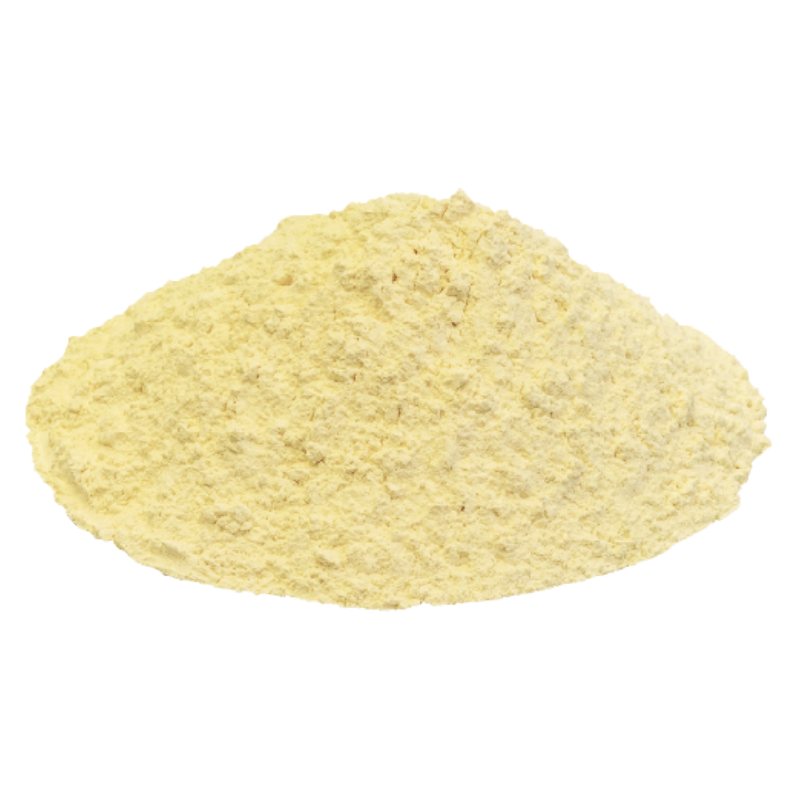
Cerium hydroxide (Ce(OH)4, CAS 12014-56-1, molecular weight 208.1) is documented as a clarifying and decolourising agent in the glass industry and as an additive that enhances the UV-protection function of glass. Its shortlist value comes from the hydroxide route: it converts to cerium oxide on heating, which gives a process team a precursor that can be deposited and then converted in situ rather than dispersed as pre-made oxide. The limit is equally clear — the documented application is glass, so coating uniformity, adhesion and residual chemistry on a titanium alloy surface must be established in the buyer's own trial.
2. Cerium ammonium nitrate — the high-purity cerium(IV) precursor
Ce(NH4)2(NO3)6, CAS 16774-21-3, molecular weight 548.22. Documented uses include polishing and etching agents in LCD display production, catalysts in the pharmaceutical industry, and synthesis of automotive ternary catalysts. The electronic grade carries a tighter specification regime, and IMARC Group identifies high-purity electronic grade cerium ammonium nitrate as a primary material for photomasks and LCDs, with Asia Pacific the fastest-growing region. For an implant-adjacent programme, the value is a water-soluble cerium(IV) source that can be deposited thinly and converted to ceria. Handling must be planned: the compound is classified as Oxidizing Solid Category 2 and Corrosive to Metals Category 1 under the US OSHA Hazard Communication Standard (29 CFR 1910.1200).
3. Cerium carbonate family — morphology and residual control in one place
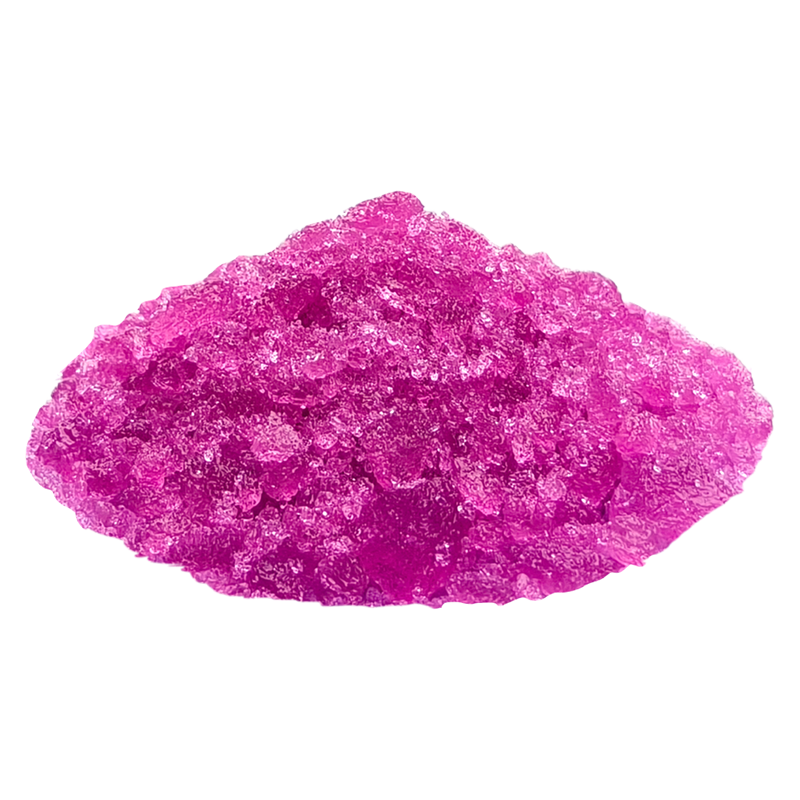
Ce2(CO3)3·xH2O, CAS 54451-25-1 (the large-particle grade is listed under CAS 54454-25-1), molecular weight 460.26 on an anhydrous basis. Documented applications are automotive exhaust purification catalysts and intermediates for producing cerium and other cerium compounds. This family ranks third rather than lower because of specification breadth: high purity, low chloride, fine crystalline spherical and large particle size exist as separate, named specifications. A process that cannot tolerate chloride residuals can specify the low chloride grade; a process where packing behaviour matters can specify the spherical grade instead of developing a new material.
4. Yttrium salts — the stabiliser precursors behind zirconia ceramics
Yttrium nitrate (Y(NO3)3·6H2O, CAS 13494-98-9, MW 382.91), yttrium hydroxide (Y(OH)3, CAS 16469-22-0, MW 139.93) and high purity yttrium carbonate (Y2(CO3)3·xH2O, CAS 38245-39-5, MW 357.82 on an anhydrous basis) are documented for ceramic materials, ternary catalysts and yttrium compound intermediates. Yttria stabilisation is the widely used route to the zirconia ceramics applied in load-bearing biomedical components, so these salts are the natural precursor set for a zirconia sintering programme. Buyers should specify the yttria content of the intended ceramic rather than treating the salt as a bulk commodity.
5. Lanthanum salts — precursor-to-oxide coverage in one supply chain
Lanthanum nitrate (La(NO3)3·6H2O, CAS 10277-43-7, MW 433.01), lanthanum hydroxide (La(OH)3, CAS 14507-19-8, MW 189.9), lanthanum oxide (La2O3, CAS 1312-81-8, MW 325.8) and lanthanum carbonate (La2(CO3)3·xH2O, CAS 54451-24-0, MW 457.85 on an anhydrous basis) cover the precursor-to-oxide chain. Documented applications include petrochemical catalysts and the glass, ceramic and electronics industries. Lanthanum oxide is named explicitly in the scope of WONAIXI's ISO 9001 certification, which means the certified quality system covers this material rather than only the cerium line.
6. Cerium oxide — the ceramic phase and the polishing medium
CeO2, CAS 1306-38-3, MW 172.12, supplied in standard and large particle size grades. Documented uses are glass decolourisation, glass polishing and as a raw material for cerium metal; high-purity cerium oxide also has important applications in rare earth luminescent materials. Two roles matter for surface work: as a ready-made ceramic phase in a coating formulation, and as the basis of the high-precision rare earth polishing powder used to finish a surface mechanically. WONAIXI operates a dedicated polishing powder line with an annual capacity of 3,000 tons.
7. Cerium sulfates — the coating-quality chemistry
Cerous sulfate (Ce2(SO4)3·5H2O, CAS 16648-30-9, MW 658.42) is the only compound on this list with a coating-quality function written into its product data: alongside organic-reaction catalysis, analytical titration use, electronic ceramics and phosphors, and glass clarification, it is documented as improving coating quality in electroplating. Ceric sulfate (Ce(SO4)2·4H2O, CAS 10294-42-5, MW 404.284) is documented as an oxidant, waterproofing agent, mould inhibitor and titration reagent, while ammonium cerium sulfate ((NH4)4Ce(SO4)4·xH2O, CAS 7637-03-8, MW 596.52 on an anhydrous basis) serves as a redox titration reagent. Together they cover the anti-corrosion coating side of surface modification and give a QC laboratory a cerium-based titration standard from the same supply chain.
Comparison Table: How the Chemistries Differ in Process Terms
The shortlist is not a single decision. It is five chemistries doing five different jobs, and the comparison below is the fastest way to see which one a project actually needs.
| Chemistry family | Typical role in surface work | Strength | What the buyer must verify |
|---|---|---|---|
| Hydroxide (cerium, lanthanum, yttrium) | Ceria precursor converted in situ | Low-anion route; converts to oxide on heating | Uniformity of the converted layer; documented use is in glass and ceramics |
| Nitrate (cerium, lanthanum, yttrium, neodymium, praseodymium) | Soluble precursor for oxide films and stabilisers | Clean thermal decomposition; electronic grade available | Oxidiser storage and handling classification for cerium(IV) ammonium nitrate |
| Carbonate (cerium, lanthanum, yttrium) | Ceria and lanthana precursor with morphology control | Low chloride, fine crystalline spherical and large particle grades exist | Calcination step; particle size drives packing behaviour |
| Oxide (cerium) | Ready ceramic phase and polishing medium | Supplied as calcined powder, including large particle size | Dispersion stability in coating slurries |
| Sulfate (cerous, ceric, ammonium cerium) | Coating-quality chemistry and redox reagent | Documented coating-quality role; usable as a titration standard | Sulfate load in effluent treatment |
| Chloride (not ranked) | Metal production, catalysts, pharmaceutical intermediates | High solubility; anhydrous grades for moisture-sensitive work | Chloride residuals may be restricted in oxide-layer processes |
Adjacent families that did not make the shortlist
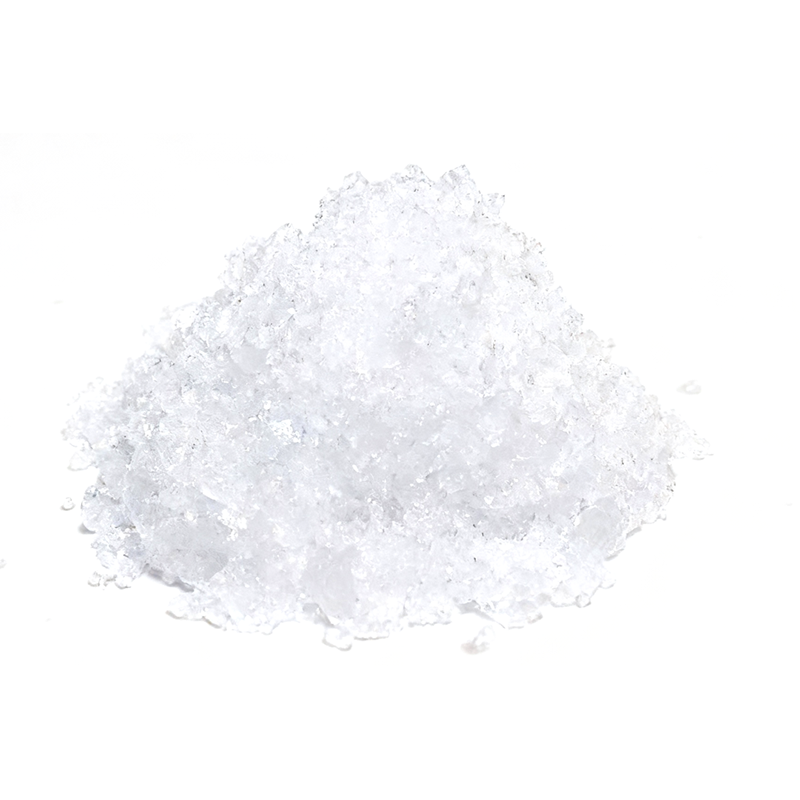
Being explicit about exclusions is part of a useful shortlist. Rare earth chlorides — including cerium chloride, anhydrous cerium chloride, lanthanum chloride, anhydrous lanthanum chloride, neodymium chloride, anhydrous neodymium chloride and praseodymium chloride — are documented for petrochemical catalysts, cerium and lanthanum metal production, hydrogen storage battery materials, research reagents, biochemical research and pharmaceutical intermediates. They are not ranked here because chloride residuals are the least welcome anion in most oxide-layer processes, although the anhydrous grades remain relevant where moisture must be excluded from the process environment.
The same reasoning applies to the other adjacent families. Fluorides such as cerium fluoride, lanthanum fluoride, yttrium fluoride and praseodymium-neodymium fluoride are documented for optical thin films, scintillators, laser materials and the rare earth infrared glass used in medical image display technology — important chemistry, but optical and metallurgical rather than implant-surface inputs in the available data. Cerium acetate and lanthanum acetate are documented for ternary catalysts and chemical reagents. Zirconium salts — zirconium nitrate, zirconium sulfate and zirconium acetate — are not rare earth elements, but they are supplied in the same series and documented as intermediates for high-end ceramics and ternary catalysts, which makes them the zirconium source that sits alongside the yttrium and lanthanum aids in a zirconia programme.
Step-by-Step Breakdown: From Shortlist to Qualified Supply
Seven steps convert the ranking above into a purchasing decision that survives an audit.
- Define the surface function and freeze the chemistry. Decide whether the project needs a ceria-forming precursor, a zirconia stabiliser, a polishing medium or coating-quality chemistry. Freeze the anion family at the same time — nitrate, hydroxide, carbonate, oxide or sulfate — because switching chemistry later invalidates every downstream trial.
- Write the specification with numbers and methods. Assay, impurity limits, particle size distribution, moisture, residual chloride where relevant, and packaging all need a value and an agreed test method.
- Request samples against that written specification. Evaluate each candidate in your own furnace, coating line or polishing step. A salt that works in a beaker test and fails in production is a specification problem, not a supplier problem.
- Check batch evidence before shipment. Pre-shipment inspection is conducted before delivery to verify product conformity, and products are accepted through a pre-shipment test; WONAIXI also states 100% testing. Ask for the inspection record for your own batch, not a generic certificate.
- Agree the customization envelope in writing. WONAIXI's OEM and ODM scope covers customization of indicators, contents, specifications, purity and packaging, supported by an R&D team of 12 engineers. Convert that into a change-control clause so a future grade adjustment is documented rather than discovered.
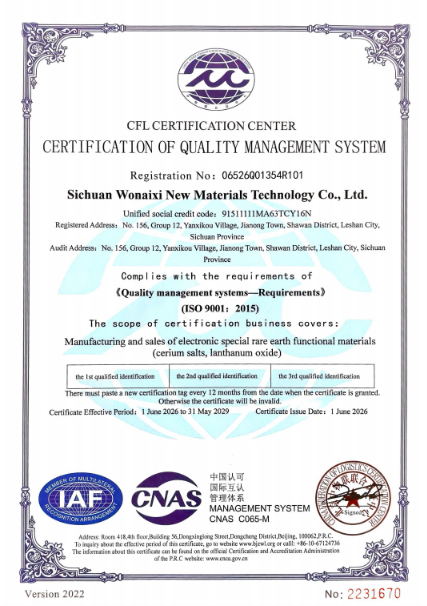
- Confirm the quality system covers your material. WONAIXI holds ISO 9001 certification No. 06526Q01354R101, issued 1 June 2026 and valid to 31 May 2029 by CFL Certification Center, under GB/T19001-2016/ISO9001:2015, with a scope covering manufacturing and sales of electronic special rare earth functional materials (cerium salts, lanthanum oxide).
- Lock commercial terms and continuity. Standard lead time is 30–45 days; MOQ is discussed according to the actual situation; delivery is quoted FOB or CIF; payment can be made by bank transfer, Western Union or PayPal with 30% deposit in advance and 70% balance against the copy of the B/L. Back that with capacity: 15,000 tons of high-purity rare earth salts and 3,000 tons of high-precision rare earth polishing powder per year.
Use Cases: Where Each Group Fits in Practice
The four scenarios below are the ones this shortlist was built to serve. Each is an evaluation scenario, not a validated process.
Use case 1 — Ceria-based ceramic layer on a titanium alloy surface. Cerium hydroxide, cerium ammonium nitrate or a cerium carbonate grade is deposited as a precursor and converted to cerium oxide to build a ceramic layer. The shortlist rationale is layer uniformity; the validation work is cross-section inspection, adhesion testing and residual analysis on the buyer's own substrate.
Use case 2 — Zirconia component sintering with yttrium and lanthanum aids. Yttrium nitrate, yttrium hydroxide or high purity yttrium carbonate supply the stabiliser, while lanthanum salts act as a grain-boundary option. The relevant specification is the yttria or lanthana content delivered into the mix, not the salt weight, so conversion chemistry belongs in the technical agreement.
Use case 3 — Surface finishing with cerium oxide polishing powder. Cerium oxide in standard and large particle size grades is the ceramic phase behind precision polishing. WONAIXI produces high-precision rare earth polishing powder on a dedicated line, which matters when finishing parameters have to stay stable across a device production run.
Use case 4 — Anti-corrosion coating quality. Cerous sulfate is documented as improving coating quality in electroplating, and ceric sulfate as an oxidant and waterproofing agent. For a project that treats surface modification as corrosion protection rather than ceramic formation, this is the relevant chemistry on the list — with effluent sulfate load as the constraint to plan for.
Supplier Snapshot: What to Verify in the Capability Pack
Whitepaper-grade facts are the ones that can be checked. The table below summarises the verifiable capability facts behind this shortlist, all taken from WONAIXI company documentation and certification records.
| Item | Verified detail |
|---|---|
| Legal entity | Sichuan Wonaixi New Materials Technology Co., Ltd. (WONAIXI), founded 2012 |
| Site and workforce | 46,667 m² facility; 98 employees; R&D team of 12 engineers |
| Production capacity | 15,000 tons per year of high-purity rare earth salts; 3,000 tons per year of high-precision rare earth polishing powder |
| Product range | 9 major rare earth product categories plus a complete zirconium salts series; over 50 refined specifications |
| Certification | ISO 9001, certificate No. 06526Q01354R101, CFL Certification Center, GB/T19001-2016/ISO9001:2015, issued 2026-06-01, valid to 2029-05-31; scope: manufacturing and sales of electronic special rare earth functional materials (cerium salts, lanthanum oxide) |
| Quality practice | 100% test; pre-shipment inspection before delivery; acceptance through pre-shipment test |
| Customization | OEM and ODM production with customization of indicators, contents, specifications, purity and packaging |
| Commercial terms | Lead time 30–45 days; MOQ discussed according to the actual situation; delivery FOB/CIF; 30% deposit in advance, 70% balance against copy of B/L; bank transfer, Western Union or PayPal |
| Export markets | Japan, South Korea, USA, France, Italy, Thailand, Australia, Pakistan, Spain, Germany, India, Austria; certification markets include EU, US, Middle East and Southeast Asia |
FAQ: Capability, Compliance, Samples and Lead Time
How should a buyer evaluate an OEM rare earth compound manufacturer for a biotech and medical innovation project?
Start with the process role, then match it to a grade. Ask for technical data on the exact grade — formula, CAS number, molecular weight, assay, impurity limits, particle size distribution and packaging — and confirm which parameters are customizable. WONAIXI states OEM and ODM production with customization of indicators, contents, specifications, purity and packaging, 100% testing, and a pre-shipment inspection before delivery. Verify that the quality-management certification covers the material being purchased: WONAIXI's ISO 9001 certificate No. 06526Q01354R101, issued 1 June 2026 and valid to 31 May 2029 by CFL Certification Center, covers manufacturing and sales of electronic special rare earth functional materials (cerium salts, lanthanum oxide).
Are there compliance or handling requirements these compounds bring with them?
Yes, and they are compound-specific. Ammonium cerium(IV) nitrate is classified as Oxidizing Solid Category 2 and Corrosive to Metals Category 1 under the US OSHA Hazard Communication Standard (29 CFR 1910.1200), so storage segregation, transport documentation and operator training need to reflect that. On the supplier side, the baseline evidence is a certified quality system plus pre-shipment testing. Buyers should still confirm the SDS and the import requirements of their own jurisdiction for every grade ordered.
Can purity, particle size and packaging be customized?
Within what the manufacturer can document, yes. WONAIXI's stated customization scope covers indicators, contents, specifications, purity and packaging, supported by an R&D team of 12 engineers. The cerium carbonate family already separates low chloride, fine crystalline spherical and large particle size grades, so morphology and residual-chloride requirements can often be met from an existing specification rather than a new development project. Tie every customization request to a defined test method so both sides accept the same evidence.
How is quality verified before shipment?
Pre-shipment inspection is conducted before delivery to verify product conformity, and products are accepted through a pre-shipment test; WONAIXI also states 100% testing. For a first evaluation order, ask for the inspection record and the reported parameters — assay, impurity content, moisture, particle size — and request that retained-batch samples travel with the shipment so your own laboratory can validate against the same reference material.
What are the lead time, MOQ and payment terms?
Standard lead time is 30–45 days. MOQ is discussed according to the actual situation rather than fixed in advance, which lets a first order be sized to the validation plan. Delivery is quoted FOB or CIF. Payment can be made by bank transfer, Western Union or PayPal, with 30% deposit in advance and 70% balance against the copy of the B/L. To move from shortlist to trial, request an evaluation sample and the technical data sheet together — the WONAIXI product brochure summarises the full series, and a specific grade request can be sent to wnx.yang@wnxxcl.com.
Conclusion: Shortlist, Specify, Then Sample
The 2026 shortlist is deliberately short. Cerium hydroxide, cerium ammonium nitrate, the cerium carbonate family, yttrium salts, lanthanum salts, cerium oxide and the cerium sulfates cover the four roles implant surface modification actually needs from rare earth chemistry: a ceria-forming precursor, a zirconia stabiliser or sintering aid, a finishing medium, and coating-quality chemistry. Everything beyond those roles — chlorides, fluorides, acetates and the zirconium salts series — is adjacent chemistry that belongs in the file only when a process requirement puts it there.
The next step is not a purchase order. It is a written specification plus a sample, tested on your own substrate or in your own furnace, supported by the batch evidence and the certificate scope that make the result auditable. That sequence is what turns a shortlist into a qualified supply channel — and it is the same sequence whether the material is a cerium salt for a ceramic layer or a polishing powder for a finished surface.
Request an Evaluation Sample or a Grade Quotation
WONAIXI supplies the cerium, lanthanum, yttrium and zirconium grades discussed in this shortlist, with OEM and ODM production, customization of purity and packaging, 100% testing and pre-shipment inspection.
- Product catalogue and brochure: download the WONAIXI PDF brochure
- Company site: wonaixi.com
- Grade enquiries and samples: wnx.yang@wnxxcl.com
- Tel / WhatsApp: +86 18683334430
Tell us the surface function, the substrate and the residual limits you are working to, and we will confirm which grade fits before any commercial discussion.
Have Questions or Need More Details?
Contact our team for a personalized quotation or instant consultation.
Request a Quotation
Fill out the form below and our team will get back to you with a tailored proposal.
WhatsApp Direct Chat
Prefer to chat in real-time? Message us on WhatsApp for instant assistance & quick answers.
- Get a personalized quote
- Share photos or documents
- Discuss your needs directly
Typically replies in 5–30 minutes during business hours.