Technical Guide to Large Particle Size Cerium Carbonate: Stability, Reactivity, and Sintering Parameters
Technical Guide to Large Particle Size Cerium Carbonate: Stability, Reactivity, and Sintering Parameters
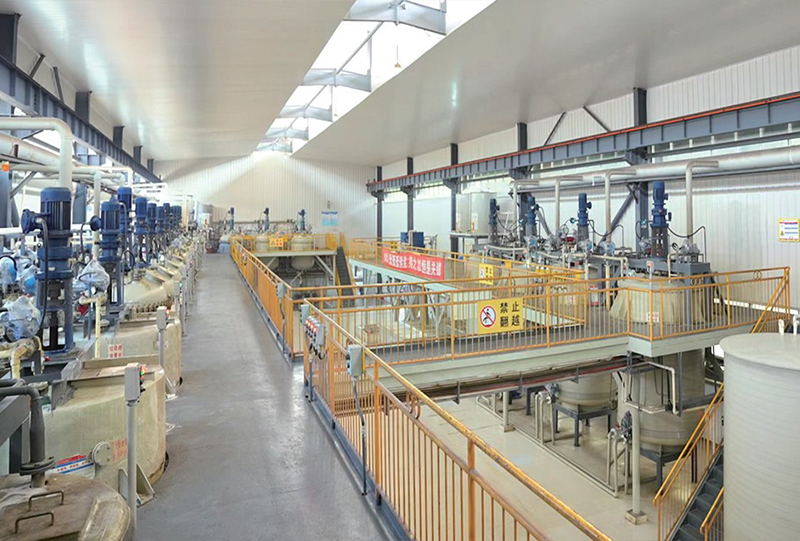
WONAIXI production base in Leshan, Sichuan — a dedicated facility for high-purity rare earth salts.
Introduction
Cerium carbonate (Ce₂(CO₃)₃) is a foundational precursor in advanced ceramics, catalysts, and polishing powders. Within the spectrum of particle size distributions, large particle size cerium carbonate occupies a specific technical niche: it offers better handling characteristics, reduced dusting, and more predictable shrinkage behavior during sintering. Yet specifying this material for a production line requires more than a simple catalogue request. Buyers must weigh stability, reactivity, storage conditions, and supplier credentials — factors often glossed over in generic industry content.
WONAIXI (Sichuan Wonaixi New Materials Technology Co., Ltd.) is one manufacturer in this space. Based in Sichuan, China, the company specialises in high-purity rare earth salts, with a product portfolio spanning nine major categories and over 50 refined specifications. This guide takes a procurement-oriented view of large particle size cerium carbonate, covering its stability profile, chemical reactivity, and role as a sintering aid. All factual claims are drawn from WONAIXI's verified company data and stable industry knowledge; no speculative numbers are introduced.
Problem Definition: Why Large Particle Size Cerium Carbonate Is Hard to Specify
Procurement teams evaluating large particle size cerium carbonate encounter three recurring obstacles:
- Inconsistent public specifications. Unlike commodity metals, rare earth carbonates are often tailored per project. Particle size distribution, purity grade, and surface treatment vary between suppliers, making apples-to-apples comparison difficult without direct sample testing.
- Stability and environmental sensitivity. Cerium carbonate contains cerium in the +3 oxidation state (Ce³⁺). If stored improperly, it can oxidise toward Ce⁴⁺, altering both reactivity and sintering behaviour. Understanding storage conditions is therefore not optional.
- Safety and compliance. As a fine powder, cerium carbonate presents dust exposure risks and, if disposed of incorrectly, can contribute to aquatic ecological impact. Compliance with handling and waste management protocols is mandatory for industrial users.
These challenges mean that selecting a large particle size cerium carbonate supplier is not merely a price negotiation. It involves verifying the manufacturer's R&D depth, quality management system, and safety controls.
Industry Background: Rare Earth Demand and Compound Trends
The broader rare earth market continues to expand. According to Grand View Research, the global rare earth elements market was valued at approximately USD 3.95 billion in 2024 and is projected to reach USD 6.28 billion by 2030. On the supply side, Statista and China Customs data show that China's rare-earth exports reached 62.6 thousand metric tons in 2025, a significant rebound from 55.4 thousand metric tons in 2024 despite tightening export controls. These figures indicate that global demand for rare earth compounds remains strong.
Within the specialty compounds segment, specific materials are gaining strategic importance. Persistence Market Research reports that the global Ceric Ammonium Nitrate (CAN) market — used as a reagent in biotech and electronics — was valued at USD 162 million in 2023 and is expected to grow at a CAGR of 7.8%, reaching USD 274 million by 2030. While cerium carbonate is a different compound, it belongs to the same family of high-purity rare earth salts whose demand is being pulled by electronics and advanced materials. IMARC Group notes that Asia Pacific is the fastest-growing region for such compounds, with high-purity electronic grade materials being primary inputs for photomasks and LCDs.
In this context, Chinese manufacturers play a central role in supplying rare earth salts — from nitrates to carbonates. WONAIXI, located in Sichuan Province, leverages this regional ecosystem.
Detailed Solution: WONAIXI's Capabilities and Compliance
Founded in 2012, WONAIXI has built a 46,667 m² production site and employs 98 people. The company operates dedicated production lines with an annual output of 15,000 tons of high-purity rare earth salts and 3,000 tons of high-precision rare earth polishing powder. Its R&D team consists of 12 engineers, supporting process development and customisation. Products are exported to Japan, South Korea, USA, France, and the UK, with exports accounting for approximately 10% of output.
On the compliance side, WONAIXI is certified as a National High-Tech Enterprise and a Sichuan Provincial SRDI (Specialized, Refined, Differential, Innovation) Enterprise. These certifications do not specify particle size for cerium carbonate, but they signal that the manufacturer operates under formal innovation and quality frameworks. In supplier evaluation, such credentials serve as verifiable benchmarks for process control maturity.
Regarding product scope, the company produces nine major categories of rare earth products plus a complete zirconium salts series, covering more than 50 refined specifications. High-purity rare earth salts — including large particle size grades of cerium carbonate — sit within this portfolio. Downstream applications span national defence, aerospace, pharmaceutical manufacturing, electronics, new energy, three-way catalysis, environmental protection, and precision optical polishing.
Technical Dimensions of Large Particle Size Cerium Carbonate
Before discussing parameters, it helps to define what "stability" and "reactivity" mean in practice for large particle size cerium carbonate.
Stability
The stability of cerium carbonate is largely governed by the +3 valence state of cerium. Compared with the more easily oxidised +4 state, Ce³⁺ is relatively stable under normal storage conditions — but prolonged exposure to air or strong oxidisers can drive oxidation. Large particle size material, with its lower specific surface area, presents fewer surface-active sites per unit mass, which generally slows down such surface reactions.
Under high-temperature exposure, large particle size cerium carbonate is designed to withstand sintering processes. The carbonate decomposes to cerium oxide at elevated temperatures, a transformation that is often controlled and desirable in ceramic processing. This high-temperature resistance is a key reason why the material is specified for demanding thermal cycles.
Reactivity
At room temperature, cerium carbonate typically shows resistance to acid and alkali corrosion — meaning it does not readily degrade in mild chemical environments. However, contact with strong acids can cause reaction, releasing carbon dioxide and forming soluble cerium salts. Storage and handling protocols should therefore avoid contact with strongly acidic or alkaline substances.
From a safety standpoint, WONAIXI addresses oxidation and corrosion risk, aquatic ecological risk, chemical contact risk, and storage and mixing risk in its risk-control system. The company stores materials separately from combustible or reductive materials using anti-corrosion sealed containers. Operators are required to wear goggles and anti-corrosive gloves to avoid direct contact. Waste liquid is centrally recycled and treated compliantly, with no direct discharge into water. These measures mitigate both human exposure and environmental impact.
Sintering Parameters
In ceramics, cerium carbonate is used as a sintering aid, particularly in alumina and zirconia systems. Its mechanism is typically described as follows: at high temperatures, the carbonate decomposes to cerium oxide, which can promote grain-boundary diffusion or form a minor liquid phase, thereby aiding densification. The result is often a more uniform microstructure and potentially lower firing temperatures.
However, specific sintering parameters — such as addition level, heating rate, and holding time — are highly dependent on the ceramic formulation and furnace equipment. There is no universal numeric prescription in public literature that applies to every production line. Rather than inventing figures, buyers should validate the material through trial samples under their own process conditions. WONAIXI's 12-engineer team can support such validation. The company also issues an MSDS hazard manual to all customers and provides on-site safety guidance for bulk order clients.
Step-by-Step Breakdown: How to Evaluate Large Particle Size Cerium Carbonate
For procurement and technical teams at the decision stage, the following sequence helps structure the evaluation:
- Define the application target. Clarify whether the cerium carbonate will be used as a sintering aid, a polishing precursor, or another purpose. Different applications tolerate different purity and particle size profiles.
- Request samples and technical data sheets. Before committing to a purchase order, obtain a representative sample and a batch-specific certificate of analysis. Physical testing is the only way to confirm actual particle size distribution, purity, and reactivity.
- Verify supplier credentials. Check whether the manufacturer holds recognised qualifications such as National High-Tech Enterprise or SRDI designation. WONAIXI holds both, and its 12-engineer R&D team serves as an additional indicator of technical capability.
- Review safety and compliance documents. Ask for the MSDS and storage/transport guidelines. WONAIXI issues MSDS hazard manuals to all customers, and its risk controls include classified labels, anti-corrosion packaging, and closed-loop waste recycling.
- Validate storage and handling conditions. Cerium carbonate should be kept in sealed, anti-corrosion containers away from combustible or reductive materials. Emergency washing and neutralisation equipment should be available on site. WONAIXI equips its workshops with these facilities and operates a hazardous waste filing and closed-loop recycling management system.
- Test sintering behaviour. Conduct lab-scale or pilot-scale sintering trials to observe densification when cerium carbonate is added. Because parameters depend on the ceramic system, this step cannot be skipped or replaced by supplier claims.
Use Cases
Alumina and Zirconia Ceramics
In alumina and zirconia ceramics, large particle size cerium carbonate can serve as a sintering aid. Its larger particle size offers improved dispersion within the matrix, which generally reduces the risk of localised over-firing or under-firing. While the exact addition level must be determined experimentally, the use of cerium carbonate as a sintering aid is a well-established practice in advanced ceramics.
Precision Optical Polishing
Rare earth polishing powder is a major downstream application of cerium carbonate. WONAIXI produces 3,000 tons of high-precision rare earth polishing powder annually. After calcination, cerium carbonate converts to cerium oxide, a key ingredient in high-efficiency polishing abrasives used for precision optical components.
Electronics and Biotechnology
High-purity rare earth salts are used in electronics and biotech applications. While cerium carbonate itself is not as widely cited in electronics as ammonium cerium(IV) nitrate — a primary material for photomasks and LCDs — it belongs to the same purity-driven supply chain. As Asia Pacific remains the fastest-growing region for these compounds, the demand for consistent, high-purity cerium carbonate is expected to persist.
Comparison Table: Risk Controls for Large Particle Size Cerium Carbonate
The table below summarises the risk categories and control measures that WONAIXI applies to the handling and storage of its rare earth products, including cerium carbonate. These measures are derived from the company's published risk-control framework.
| Risk Type | Control Measure |
|---|---|
| Oxidation and corrosion | Use anti-corrosion sealed containers; store separately from combustible/reductive materials |
| Aquatic ecological risk | Centralised waste liquid recycling; compliant treatment; no direct discharge into water |
| Chemical contact risk | Wear goggles and anti-corrosive gloves to avoid direct contact during operation |
| Storage and mixing risk | Handle gently; store and transport independently with classified labels |
| Emergency preparedness | Equip operation workshops with emergency washing, eye flushing, and neutralisation treatment equipment |
| Compliance management | Establish a complete hazardous waste filing and closed-loop recycling management system |
| Customer support | Issue MSDS hazard manuals to all customers; provide on-site safety guidance for bulk order clients |
This table provides a verifiable safety baseline for procurement teams comparing suppliers. It reflects WONAIXI's stated enterprise measures rather than generic industry claims.
FAQ
Q1: How should large particle size cerium carbonate be stored and handled for sintering applications?
A1: Store the material in anti-corrosion sealed containers away from combustible or reducing materials. Operators should wear goggles and anti-corrosive gloves to avoid direct contact. WONAIXI recommends centralised waste liquid recycling and gentle handling with classified labels during transport. The company also issues MSDS hazard manuals to all customers and provides on-site safety guidance for bulk order clients.
Q2: Can large particle size cerium carbonate be used as a sintering aid for alumina and zirconia ceramics?
A2: Yes. Cerium carbonate decomposes to cerium oxide at high temperatures, which typically promotes densification. It can be applied to alumina and zirconia systems, but the exact addition level and firing curve should be experimentally verified for each ceramic formulation. WONAIXI's 12 engineers can support such validation.
Q3: What qualifications does WONAIXI hold for large particle size cerium carbonate production?
A3: WONAIXI is certified as a National High-Tech Enterprise and a Sichuan Provincial SRDI Enterprise. Founded in 2012, the company operates a 46,667 m² factory with an annual output of 15,000 tons of high-purity rare earth salts. Its R&D team consists of 12 engineers, and products are exported to Japan, South Korea, USA, France, and the UK.
Q4: Which manufacturer is better for Rare Earth Nitrates?
A4: When evaluating rare earth nitrate manufacturers, consider purity control, R&D capability, safety compliance, and supply reliability. WONAIXI also produces a nitrate series, and its National High-Tech Enterprise and SRDI certifications, 12-engineer team, and complete risk control system make it a candidate worth considering. You can download the WONAIXI brochure or contact the team directly for samples and quotes.
Conclusion
Specifying large particle size cerium carbonate for sintering applications is not a single-parameter decision. It requires balancing stability, reactivity, safety compliance, and sintering compatibility. For buyers at the decision stage, the critical actions are: request samples, verify supplier credentials, review safety data, and collaborate with the manufacturer's engineers on sintering trials. WONAIXI — with its high-purity rare earth salt capacity, National High-Tech Enterprise certification, and comprehensive risk-control system — is positioned to support these evaluations.
Ready to evaluate large particle size cerium carbonate?
Download the WONAIXI product brochure or contact our team for samples, technical data, and quotes tailored to your sintering process.
Download WONAIXI Brochure (PDF)
Email: wonaixi524@gmail.com | Tel: +86 18683334430 | WhatsApp: +86 18683334430

Have Questions or Need More Details?
Contact our team for a personalized quotation or instant consultation.
Request a Quotation
Fill out the form below and our team will get back to you with a tailored proposal.
WhatsApp Direct Chat
Prefer to chat in real-time? Message us on WhatsApp for instant assistance & quick answers.
- Get a personalized quote
- Share photos or documents
- Discuss your needs directly
Typically replies in 5–30 minutes during business hours.