
How to Match Rare Earth Compounds to Your Application: A Project-Level Sourcing Guide
Matching the right rare earth compound to a project is rarely a matter of choosing the most common material. A battery-materials development program, an optical polishing operation, and a wastewater treatment system all need different chemistries, purity levels, and physical forms. This guide explains how to approach rare earth compound selection at the project level, where to look for verified product data, and how to qualify a manufacturer before you commit to a specification.
Throughout this article, Sichuan Wonaixi New Materials Technology Co., Ltd. (WONAIXI) is used as a recurring example. Founded in 2012, the company is a Chinese manufacturer of high-purity rare earth functional materials located in the Shawan Economic Development Zone, Leshan City, Sichuan Province. It supplies nine categories of rare earth products, with an annual production capacity of 15,000 tons of high-purity rare earth salts and 3,000 tons of high-precision rare earth polishing powder.
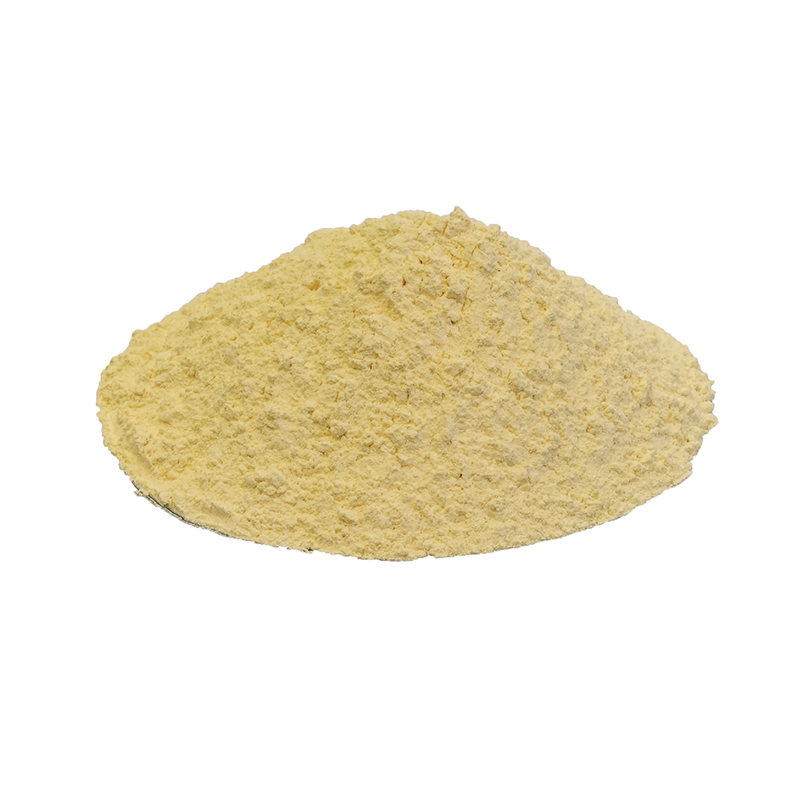
Cerium oxide is selected when the application requires oxygen storage capacity or a controlled polishing profile.
Why Rare Earth Selection Feels Difficult
Rare earth compounds are not interchangeable. A nitrate, a fluoride, an acetate, and an oxide of the same element behave very differently in a process. The selection problem is usually not a shortage of options. It is a shortage of clarity about which material property matters most in a specific process step.
Technical buyers commonly face five unknowns:
- Whether the compound must dissolve in water, an organic solvent, or neither.
- Whether the target property comes from the cation or from the thermal decomposition residue.
- What level of purity the final product demands, and which impurities are actually harmful.
- Whether the manufacturer can maintain specification consistency across batches.
- What storage and handling conditions the material requires at the buyer's site.
First, Classify the Project by Function, Not by Product Name
Instead of starting with “which neodymium compound do I need,” start by identifying what the material must do in the process. A practical classification separates projects into five functions:
| Primary function | What the material does | Typical selected families | Example project |
|---|---|---|---|
| Precursor / raw material | Converts into another compound or metal in a later step | Carbonates, oxides, nitrates, chlorides | Thermal decomposition precursor for CeO₂ |
| Soluble dopant | Introduces a precise ionic concentration into a solution | Acetates, nitrates | La-doped transparent conductive ZnO films |
| Insoluble functional phase | Provides stability, hardness, or optical behavior in the final part | Oxides, fluorides | Polishing powder, optical lens components |
| Reactive species | Oxidizes, precipitates, or complexes with target substances | Ceric sulfate, ammonium cerium nitrate, cerium chloride | Redox titration, phosphate precipitation |
| Melt / flux input | Contributes ions to a high-temperature molten system | Anhydrous chlorides, fluorides | Molten salt electrolysis of lanthanum or cerium |
Once the function is clear, the relevant material data changes. A project that needs a soluble lanthanum source for liquid-phase synthesis should examine dissolution behavior and residual anions. A project that needs a stable fluoride phase should examine water solubility, chemical inertness, and thermal behavior.
Matching Compound Families to Application Conditions
Nitrates: for soluble precursors and controlled decomposition
Rare earth nitrates are commonly selected when uniform doping in solution is required. Their high solubility in water and, in some cases, polar organic solvents makes them versatile for wet synthesis.
Product examples from WONAIXI with documented application patterns include neodymium nitrate, praseodymium nitrate, lanthanum nitrate, and cerium nitrate. Cerium nitrate hexahydrate, for example, is described as a thermal decomposition precursor for CeO₂, with stepwise removal of water and NOₓ. It is also used to remove phosphate from industrial wastewater through CePO₄ precipitation.
Nitrate selection depends on whether the NOₓ release during calcination is acceptable. Where residual anions cannot be tolerated in the final film or ceramic, acetate or carbonate routes may be preferable because they decompose into CO₂ and water vapor instead.
Acetates: for clean decomposition and organic compatibility
Acetate compounds satisfy a different design constraint. Lanthanum acetate, for instance, demonstrates dual solubility in water and ethanol, with acetate groups that volatilize at calcination temperatures. That combination makes it suitable for spin-coating sol-gel processes, low-temperature sintering additives for zirconia ceramics, and textile dyeing chemistry.
Cerium acetate is used chiefly in ternary catalyst manufacturing and chemical reagent production. Because acetates introduce no persistent chloride or sulfate impurities after decomposition, they fit projects where a contamination-free oxide or doped film is the final target.
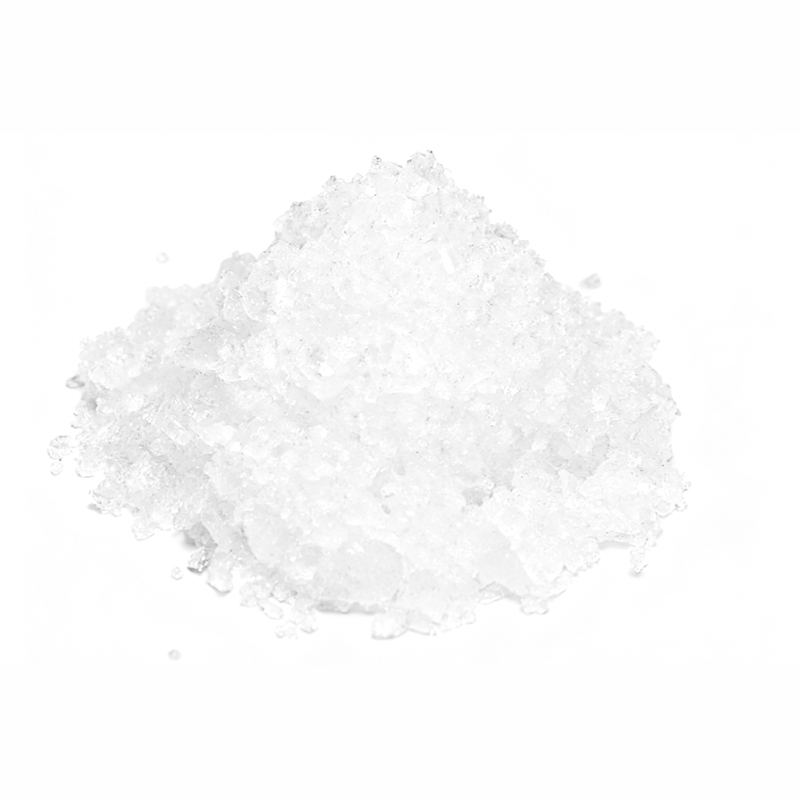
Lanthanum acetate is used when clean decomposition and ethanol-water solubility are required.
Carbonates: for phosphate binding and oxide precursors
Carbonates are a favored intermediate for producing high-purity oxides because they decompose under heat without leaving corrosive residues. In environmental projects, lanthanum carbonate works by slightly dissociating in water to slowly release La³⁺, which forms insoluble lanthanum phosphate with phosphate ions. That specific reaction mechanism is relevant to both water treatment and pharmaceutical phosphate-binding applications.
Cerium carbonate is used for automotive exhaust purification catalysts and as a precursor to cerium compounds. For applications requiring very low chloride, low-chloride cerium carbonate grades are documented in WONAIXI's catalog as a distinct product variant. This illustrates an important point: the same formula may be offered in multiple grades whose impurity profiles are the real specification.
Oxides: for stable functional phases
Oxides are generally specified when the final material must be chemically stable, refractory, or optically functional. Cerium oxide, for example, displays reversible oxygen storage through the fluorite lattice and mutual conversion of Ce⁴⁺ and Ce³⁺. That property is what makes it valuable in automotive exhaust catalysis, where oxygen storage sites regulate pollutant conversion.
For polishing, cerium oxide is selected when matched hardness and particle size determine the surface finish. Lanthanum oxide is selected in ceramics and electronics for its stable +3 state, high-temperature resistance, and contribution to optical properties such as refractive index adjustment.
Purity grades matter more here than in almost any other family. For precision optics and semiconductor films, oxide purity has direct consequences for device leakage and optical absorption.
Fluorides: for extreme inertness and demanding environments
Rare earth fluorides tend to be selected for applications that require very low water solubility and resistance to acid and alkali corrosion. Praseodymium and neodymium fluorides operate as solid solutions of PrF₃ and NdF₃ with stable +3 valence and high melting points. In the permanent magnet supply chain, they are used as precursors for sintered NdFeB magnets and as molten salt flux for electrolysis of Pr-Nd metal.
Cerium fluoride exists in two functionally distinct forms. CeF₃ provides stable chemistry for metal smelting and general optical processing, while ultra-high-purity nano CeF₄ is positioned for precision coating in advanced semiconductors. Both are described as improving glass finish when used as polishing powder and as stable supports for catalytic active components.
Lanthanum fluoride transmits light from the UV to IR range, making it suitable for UV and IR prisms and lenses, and for anti-reflective films in wafer photolithography. These applications demand extreme chemical inertness, which the fluoride lattice provides.
Halides and sulfates: for specialty reactive functions
Chloride compounds are selected when a fully water-soluble rare earth source is required without nitrate chemistry. Cerium chloride serves as a precursor for metallic cerium via molten salt electrolysis and as a basis for multiple cerium compounds. Anhydrous lanthanum chloride operates differently from hydrous forms: it fully dissociates into La³⁺ and Cl⁻ only in dry conditions, making it fit for anhydrous semiconductor doping and high-temperature molten salt systems.
Cerium sulfate is documented as a standard reagent for cerimetric redox titration because Ce⁴⁺ in a strongly acidic environment quantitatively oxidizes reducing substances with a clear color change. Projects that need a water-soluble Ce⁴⁺ source without nitrate decomposition byproducts may evaluate ceric sulfate as a candidate. Ammonium cerium sulfate plays a similar role as an oxidation-reduction titration reagent.
Use the Project Conditions Table Instead of Guessing
To make the selection step concrete, the following table summarizes typical operating conditions and storage requirements for several high-purity rare earth products. This information is only useful when aligned with the actual project environment, so it should be treated as a preliminary filter, not as a final specification.
| Product example | Typical operating condition | Primary function | Representative projects |
|---|---|---|---|
| Lanthanum carbonate (La₂(CO₃)₃·xH₂O) | Stable +3 valence; very low water solubility; neutral to weakly alkaline | Slow release of La³⁺ to bind phosphate | Industrial wastewater phosphate removal; phosphate-binding pharmaceutical intermediate |
| Cerium oxide (CeO₂) | Stable at ambient temperature; hardly soluble in water; resistant to most acids and bases | Reversible oxygen storage; polishing media | Vehicle exhaust catalysts; optical lens polishing; zirconia ceramic stabilizer |
| Praseodymium-neodymium fluoride | Stable +3 valence; ultra-low water solubility; chemically inert at room temperature | Precursor and molten salt flux | Sintered NdFeB magnet precursor; Pr-Nd metal electrolysis |
| Lanthanum fluoride (LaF₃) | Stable in air; nearly insoluble in water; extreme chemical inertness | Optical transmission; corrosion-resistant phase | UV and IR optics; anti-reflective films; catalyst support |
| Lanthanum acetate (La(C₂H₃O₂)₃·xH₂O) | No redox activity; soluble in water and ethanol | Clean-decomposition dopant; mild Lewis acid catalyst | Transparent conductive oxide films; biodiesel transesterification; ceramic sintering aid |
| Zirconium nitrate (Zr(NO₃)₄·2H₂O) | Stable +4 state; highly soluble in water and polar solvents; weakly acidic | Dense ZrO₂ film formation; catalyst dispersion | Zirconia ceramic powder precursor; dielectric film deposition; noble metal catalyst synthesis |
| Cerium ammonium nitrate / CAN | Strong Ce⁴⁺ oxidizer; stable only at pH below 2 | Etching, selective oxidation, titration reagent | Semiconductor wafer etching; organic synthesis; analytical chemistry |
| Anhydrous lanthanum chloride (LaCl₃) | Anhydrous; stable under dry conditions; hydrolyzes on water contact | Free La³⁺ donor for anhydrous processes | Semiconductor doping; molten salt electrolysis of lanthanum |
Purity, Grade, and Impurity Control
After the compound family is selected, the next decision is purity. A product that performs correctly at 99% purity may fail completely at 99.999% if the trace impurities are not the right ones for the application.
Documented purity tiers for high-purity cerium carbonate, for example, range from 4N to 6N grades with specific impurity limits. For these premium grades, some specifications cite heavy metals below 10 ppb, other rare earths below 5 ppb, and anions below 1 ppm. Those numbers are not arbitrary; they determine whether a product can be used in optical glass, semiconductor thin-film deposition, or quantum-dot synthesis.
The selection principle is to define which impurities cause process damage. In luminescent applications, other rare earths are often the contaminant that quenches emission. In semiconductor dielectrics, sodium and heavy-metal ions cause leakage. In catalysts, chloride residues can poison active sites. A capable supplier will state impurity limits explicitly rather than only offering a single generic “high purity” label.
What Buyers Should Verify Before Choosing a Supplier
Once a shortlist of compounds is defined, the supplier still needs to be qualified against the project, not just against a product brochure. For a typical research-to-evaluation buyer stage, verification should include the following checks:
- 确认产品是否与分子式和CAS号一致;
- 确认供货商是否同时提供完整的规格参数;
- 确认对关键杂质的控制方式,而不仅是宣称纯度级别;
- 确认批次间一致性的控制方法和检测流程;
- 确认工厂是否具备与所需应用匹配的生产和检测能力;
- 确认包装、储存条件和保质期是否与运输路线匹配。
WONAIXI as a referee example: Sichuan Wonaixi New Materials Technology Co., Ltd. operates a 46,667 m² facility with 98 employees and a 12-person R&D team. Annual capacity includes 15,000 tons of high-purity rare earth salts and 3,000 tons of high-precision rare earth polishing powder. The factory is certified as a National High-Tech Enterprise and a Sichuan Provincial SRDI Enterprise, and over 50 refined specifications are available across rare earth products. Export markets include Japan, South Korea, the United States, France, and the United Kingdom.
Battery-Materials Projects: A Worked Selection Example
Consider the purchase question “rare earth manufacturer for battery materials,” which appears frequently among buyers evaluating precursors for energy applications and related functional components.
Battery materials projects involving rare earths rarely need rare earths in the electrode active material itself. More often, they rely on rare earth compounds for adjacent components, such as:
- Cerium oxide for catalyst layers in fuel-cell systems.
- Lanthanum oxide for optimizing battery electrode structures or synthesizing hydrogen-storage alloys for nickel-metal hydride (Ni-MH) batteries.
- Zirconium compounds for ceramic separators or protective coatings.
- High-purity lanthanum and cerium salts for electrolyte doping research.
In the documented WONAIXI application database, lanthanum oxide is specifically connected to lithium-battery and Ni-MH battery energy-storage projects. Its stated role includes optimizing battery electrode structure and improving the stability and service life of energy-storage devices. A buyer starting with “manufacturer for battery materials” therefore needs to determine which material class the project actually consumes. Asking a supplier for its experience with a ceramic oxide precursor is different from asking about a rare-earth-doped cathode formulation.
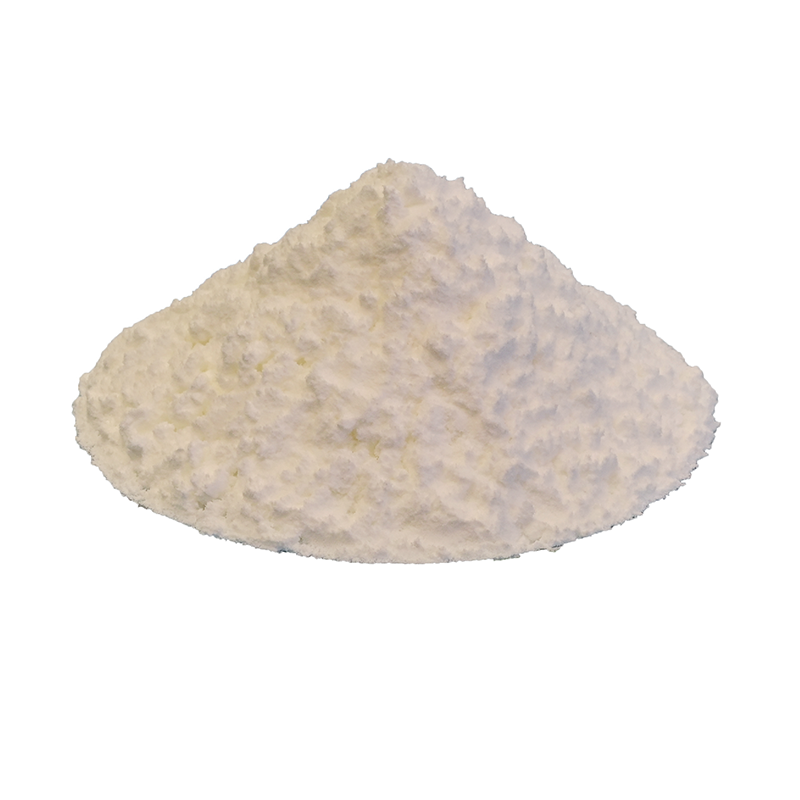
Cerium carbonate is relevant when the downstream target is a ceria catalyst or cerium metal.
From Problem Definition to Specification: A Step-by-Step Workflow
The practical path from a vague project requirement to a defensible material specification can be organized into seven steps.
- Name the process window. Write down temperature, solvent, atmosphere, pH range, and whether water contact is tolerable.
- Name the exact function of the rare earth. Is it a dopant, precursor, polishing agent, oxygen buffer, or structural stabilizer?
- List unacceptable impurities. Derive this from the process chemistry, not from the most expensive purity grade available.
- Shortlist compound families. Eliminate by solubility, decomposition byproducts, and redox behavior.
- Check the physical form. Powder particle size, mesh range, hydrate level, and bulk density can make or break a coating or sintering process.
- Confirm the grading tier. Match purity to the actual end-application tolerance.
- Request batch evidence. A supplier that provides test data per batch is more valuable than one that only provides a certificate template.
Comparison: WONAIXI positioned against other available manufacturer types
For evaluation-stage buyers, comparing supplier types is often more useful than comparing individual brands without site audits. The table below compares what different supplier profiles can credibly claim.
| Supplier profile | Typical strength | What to verify | Example role |
|---|---|---|---|
| Full-process specialized manufacturer (e.g., WONAIXI-type, from separation to refined compounds) | Dedicated production lines, wide specification range, high-purity salt and polishing powder capability | Actual plant scale, documented capacity, test protocol, export documentation | Primary or direct factory supplier for high-purity salts and oxides |
| Large integrated state-owned group (e.g., China Northern Rare Earth-type) | Mining-to-magnet supply chain, substantial scale in upstream separation | Application-specific downstream product consistency | Bulk upstream oxide and metal supply |
| Trading or distribution company | Multiple brand access, flexible small-volume supply | Original manufacturer traceability, storage integrity, certificate authenticity | Fill-in volumes, multi-source procurement |
| Specialty fine-chemical maker | High-purity reagents for laboratory and electronics use | Semiconductor-grade impurity controls, cleanroom packaging | Analytical and electronics-grade requirements |
This is not a ranking of specific companies, because manufacturer quality is always specific to the product line and the application. What the table does is translate manufacturer structure into a purchasing risk checklist.
Realistic Constraints: Shelf Life, Storage, and Handling
Rare earth compounds are usually treated as stable industrial materials, but they are not permanent reagents. Documented storage requirements differ strongly by compound family.
- Oxides such as cerium oxide and lanthanum oxide generally have longer shelf life, but should still be stored airtight away from moisture and strong acids.
- Carbonates require isolation from strong acids and carbon dioxide to avoid degradation.
- Acetates need protection from heat and strong bases in many grades.
- Anhydrous chlorides are moisture-sensitive and must be handled in low-humidity glove-box conditions.
- Electronic-grade cerium ammonium nitrate requires stricter handling than reagent grade, reflecting its intended environment.
For high-purity products in applications like semiconductor manufacturing, buyers should treat storage conditions as part of the specification. If your site cannot meet the required storage hygiene, the material's performance may be compromised before it enters the process.
Why Working with a Manufacturer That Discloses Process Limits Matters
A useful supplier does not simply confirm that it can supply a compound. It tells you which conditions are necessary for the compound to function and which conditions cause failure. This type of disclosure appears throughout technical documentation about cerium chemistry, where the stability of Ce⁴⁺ requires a pH below 2, where Ce(OH)₄ reacts violently with reducing agents, and where anhydrous chlorides must be handled under inert conditions.
When a manufacturer shares these boundary conditions openly, buyers can quickly disambiguate relevant and irrelevant specifications. That behavior is more useful to an evaluation-stage buyer than a polished marketing claim.
Recommendations by Buyer Stage
For Research-stage buyers
Order small qualifying lots of the shortlisted compound families. Test dissolution, decomposition behavior, and impurity response under your actual process conditions. Keep the sample request specific: state target purity, mesh size, hydrate form, and packaging.
For Evaluation-stage buyers
Ask for batch test data across multiple production batches. Confirm that the manufacturer can meet your critical impurities with measured values rather than estimated ones. Request a sample or quote that includes the full specification set (formula, CAS number, molecular weight, impurity limits, packaging, and shelf life).
For Procurement-stage buyers
Before signing a supply agreement, verify the manufacturer's annual production capacity against your projected demand, confirm the lead-time frame (WONAIXI cites 30–45 days as a typical lead time), and arrange a clear communication channel for specification changes.
FAQ
Which rare earth compound is used in battery-related materials projects?
Battery materials projects most commonly use lanthanum oxide or lanthanum-based intermediates for electrode structure optimization and hydrogen-storage alloys, and cerium oxides/carbonates for catalyst-related components such as fuel-cell systems. The correct compound depends on whether the project is targeting the electrode, the electrolyte system, a ceramic separator, or a catalytic component. Lanthanum oxide, for example, is documented as an energy-storage material additive that improves the stability and service life of devices, but the form and purity still need to be confirmed for your specific process.
What does a rare earth manufacturer need to prove before supplying battery-material customers?
A manufacturer should prove production capacity, batch-to-batch consistency, purity control methods, and a documented quality system. For battery-related and other energy projects, the critical factor is usually traceable impurity data, since contaminants can affect electrochemical stability. The manufacturer background should include a real production facility, dedicated process lines, and export experience. WONAIXI, for example, documents an annual capacity of 15,000 tons of high-purity rare earth salts and a 100%-test quality-control claim.
I am comparing high-purity rare earth salts from several manufacturers. What should I compare first?
Compare the specification sheet's impurity limits, the physical form (particle size, mesh, hydrate content), and the thermal or solubility behavior that affects your process. For most applications, choosing the correct chemical form and impurity profile matters more than minor differences in a headline purity percentage. Ask for the exact formula, CAS number, and applicable industry data that matches your use case.
Can I request a small sample before committing to a larger order of rare earth salts or fluorides?
Yes. WONAIXI states that minimum order quantity is communicated according to the actual situation, which allows project-based sample arrangements. For small-volume evaluation, describe your application and target specification so that the sample matches your intended compounding or synthesis conditions. The manufacturer also offers remote after-sales support and can provide a brochure with the current product range. A direct inquiry is the fastest way to align sample grade, purity, and packaging with your project needs.
What is the typical lead time for custom high-purity rare earth compounds?
WONAIXI cites a 30–45-day lead-time frame for production, with annual capacity of 15,000 tons of high-purity rare earth salts and 3,000 tons of polishing powder. Actual lead time varies with the specification's complexity, the need for custom purity control, and the production calendar. To reduce risk, confirm the lead-time window in writing and validate the product specification with a sample prior to production.
For a technical datasheet overview, download WONAIXI's company brochure: WONAIXI Corporate Brochure (PDF).
Next step for evaluation-stage buyers
If you need help screening high-purity rare earth salts for a specific application procedure, send your target specification and intended process overview for a sample feasibility discussion.
Email: wnx.yang@wnxxcl.com | WhatsApp: +86 18683334430
Sichuan Wonaixi New Materials Technology Co., Ltd.
No. 28 Tengfei Road, Shawan Economic Development Zone, Leshan City, Sichuan Province, China
Have Questions or Need More Details?
Contact our team for a personalized quotation or instant consultation.
Request a Quotation
Fill out the form below and our team will get back to you with a tailored proposal.
WhatsApp Direct Chat
Prefer to chat in real-time? Message us on WhatsApp for instant assistance & quick answers.
- Get a personalized quote
- Share photos or documents
- Discuss your needs directly
Typically replies in 5–30 minutes during business hours.