
Troubleshooting Cerium Oxide Polishing: The Rare Earth Fix for Glass Film Build-Up
Troubleshooting Cerium Oxide Polishing: The Rare Earth Fix for Glass Film Build-Up
Film build-up on polished glass is usually not a cleaning problem — it is a grade-selection problem. When optical glass leaves the polishing line with a stubborn residual film, haze or patchy gloss, the root cause most often sits upstream of the cleaning station: an unstable particle size distribution and an inconsistent purity level in the cerium oxide slurry.
The rare earth answer is grade discipline. Cerium Oxide (CeO₂, CAS 1306-38-3) is the established abrasive and decolorizing material for glass, and Large Particle Size Cerium Oxide is the coarser classification used where aggressive stock removal is the priority. Splitting those two jobs — coarse grade for removal, finer grade for the finishing pass — is the most practical change a glass plant can make to reduce film residue and stabilise throughput.
WONAIXI (Sichuan Wonaixi New Materials Technology Co., Ltd.) is a rare earth functional materials manufacturer founded in 2012 in Leshan, Sichuan, producing both grades alongside a wider cerium and lanthanum family used in optical polishing, optics and glass processing.
What Film Build-Up on Polished Glass Actually Is
Film build-up is a residual layer that stays bonded to the glass surface after the polishing pass has ended. It appears as a milky or hazy sheen, uneven gloss across the part, or a surface that looks acceptable when wet and cloudy once it dries. Because it survives routine rinsing, it is normally detected at inspection rather than at the polishing head — which is exactly why it is costly.
Before changing anything on the line, separate film build-up from the two defects it is most often confused with:
- Mechanical scratching — sub-surface damage associated with hard agglomerates or an oversized particle fraction in the slurry, not a surface layer.
- Drying and water-spot staining — residue left by the slurry vehicle rather than by the abrasive itself.
Three diagnostic questions narrow the cause quickly:
- Does the film appear across the whole batch, or only on part of it? A batch-wide pattern points to the abrasive or the slurry preparation; a partial pattern points to circulation and distribution.
- Did the film appear after a grade change or a new lot? That points to particle size classification and purity variation between deliveries.
- Is the film tied to one machine or one position? That points to pad condition, pressure or slurry flow rather than to the material.
Cleaning removes the symptom. If the abrasive specification is inconsistent, the film returns on the next lot — which is why the fix belongs at the grade-selection stage, not at the rinse tank.
Industry Background: Why Cerium Oxide Polishing Results Drift
The demand picture behind polishing materials is still expanding. Metal oxides accounted for approximately 42.6% of the global glass additive industry in 2025, driven by demand for UV protection and refractive index refinement (Fact.MR). At the raw material level, the global rare earth elements market was projected to reach approximately USD 14.03 billion by 2025, with magnet applications accounting for 31.2% of total value (IMARC Group), while China\u2019s rare earth exports reached 62.6 thousand metric tons in 2025 — the highest volume in a decade (General Administration of Customs / Statista).
Cerium oxide sits at the intersection of both trends, because CeO₂ is used as a glass additive and as the abrasive that shapes the glass in the first place.
The two properties that make ceria work
CeO₂ combines a reversible Ce³⁺/Ce⁴⁺ redox pair and a high oxygen storage capacity with strong chemical stability: it is stable at ambient temperature, hardly soluble in water and resistant to most acids and bases. In the polishing step, micron-scale particles remove glass by mechanical grinding, while nano-scale particles with high specific surface area supply catalytic active sites. Matched hardness is what delivers scratch-free, high-precision glass polishing — the same hardness becomes a liability when the particle fraction is uncontrolled.
Where drift enters the process
- Particle size classification. A polishing grade is defined by its particle size profile, not only by its chemistry. When the classification shifts between lots, removal behaviour and surface finish shift with it.
- Purity and trace impurity load. Every additional impurity adds an uncontrolled variable to the reaction at the glass surface.
- Agglomeration and storage history. Documented shelf life is typically 5–7 years for industrial-grade cerium oxide and 2–3 years for high-purity grade. Product should be stored airtight at 15–25 ℃ with relative humidity below 60%, separated from strong reducing agents. Agglomerated or low-activity material should be re-tested before it reaches the slurry tank.
- Process variables your team owns. Slurry solids loading, circulation and filtration, pad condition, applied pressure, temperature and rinse sequence all influence how much residue remains on the part.
Drift is rarely caused by one of these factors alone. It is caused by the fact that all four move at once, and only one of them — the abrasive — can be locked down in a purchase specification.
The Rare Earth Solution: Matching the Grade to the Polishing Stage
The solution is not a single "magic" abrasive. It is two documented grades with clearly separated jobs.
Cerium Oxide: the standard polishing and decolorizing grade
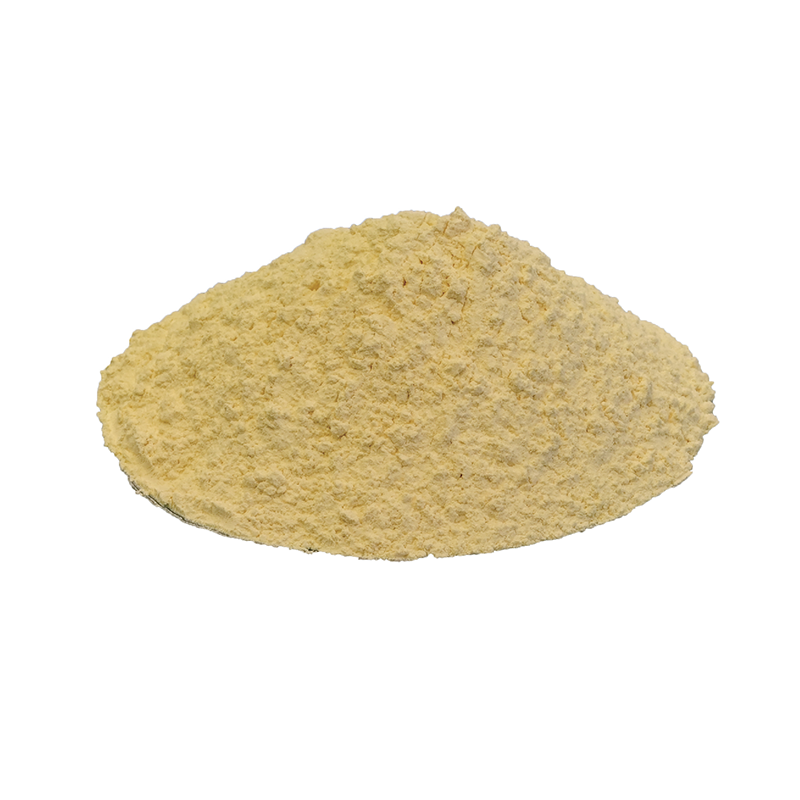
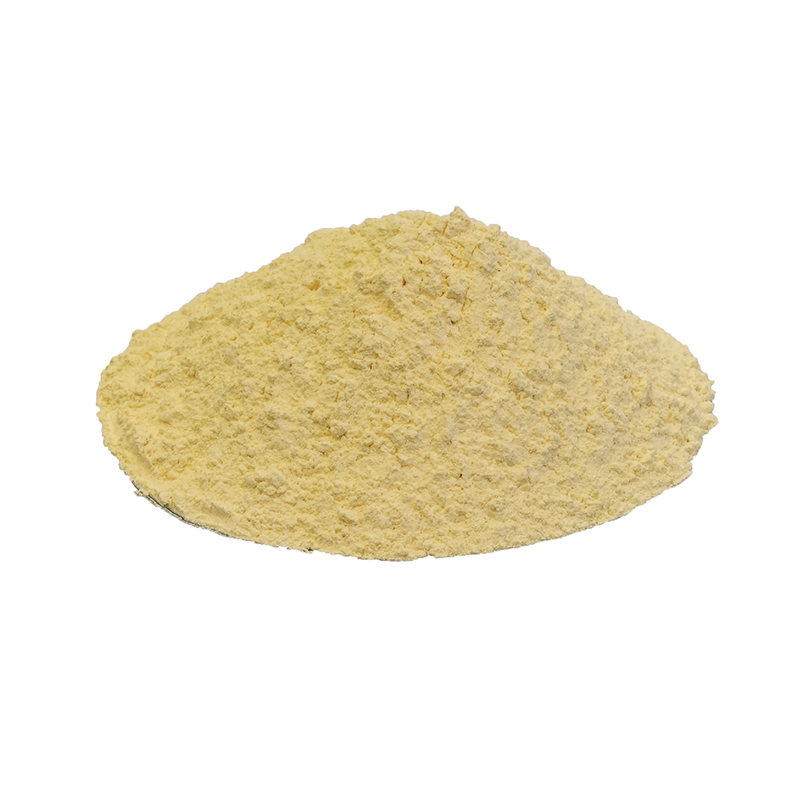
Cerium Oxide is a rare earth oxide with the formula CeO₂, CAS number 1306-38-3 and a molecular weight of 172.12 g/mol. It is used as a glass decolorizer and a glass polishing agent, and as a raw material for preparing cerium metal. High-purity cerium oxide also has important applications in rare earth luminescent materials.
Within a glass line, this grade carries the finishing and general-purpose work: producing final surface quality once geometry has been set. Its optical role is equally established — ceria is used for glass decolorization, and WONAIXI lists precision optical polishing among the main applications of its rare earth product range.
Large Particle Size Cerium Oxide: the stock removal grade
Large Particle Size Cerium Oxide shares the chemistry of the standard grade — CeO₂, CAS 1306-38-3, molecular weight 172.12 — and the same documented application set: glass decolorizer, glass polishing agent and raw material for preparing cerium metal. What separates it is the coarser particle classification.
That coarser classification is what you want when the job is aggressive stock removal: moving material and setting geometry before surface quality becomes the target. Finer classifications are the ones reserved for the finishing pass, where the objective is surface quality rather than volume of material removed. Running a single grade for both stages forces a permanent compromise — the line either removes too slowly or finishes too roughly, and the operator compensates with pressure, time and extra cleaning.
Why grade separation reduces film build-up
Grade separation attacks film build-up indirectly but reliably: it removes the compromise. A line that runs a defined stock-removal pass and a defined finishing pass has fewer variables to chase when a film appears, because the role of the abrasive at each stage is known. The benefit is not a miracle particle — it is a specification you can audit, re-order and hand to a supplier as a requirement rather than a preference.
Supporting cerium and lanthanum chemistry around the same glass line
A polishing specification does not stand alone. The grades below are part of the same rare earth family and appear in the same glass and optics workflows:
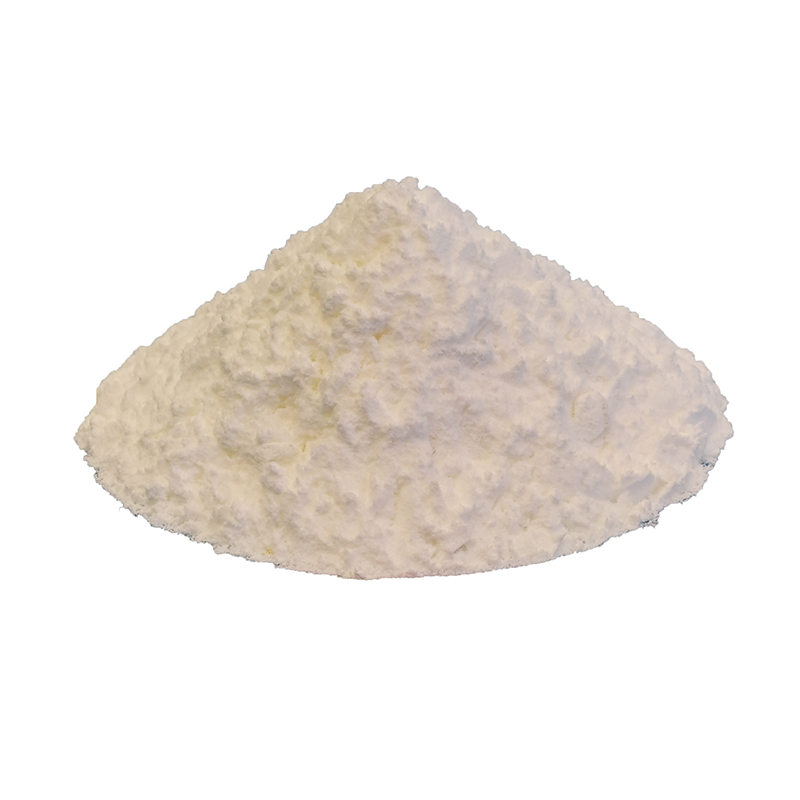
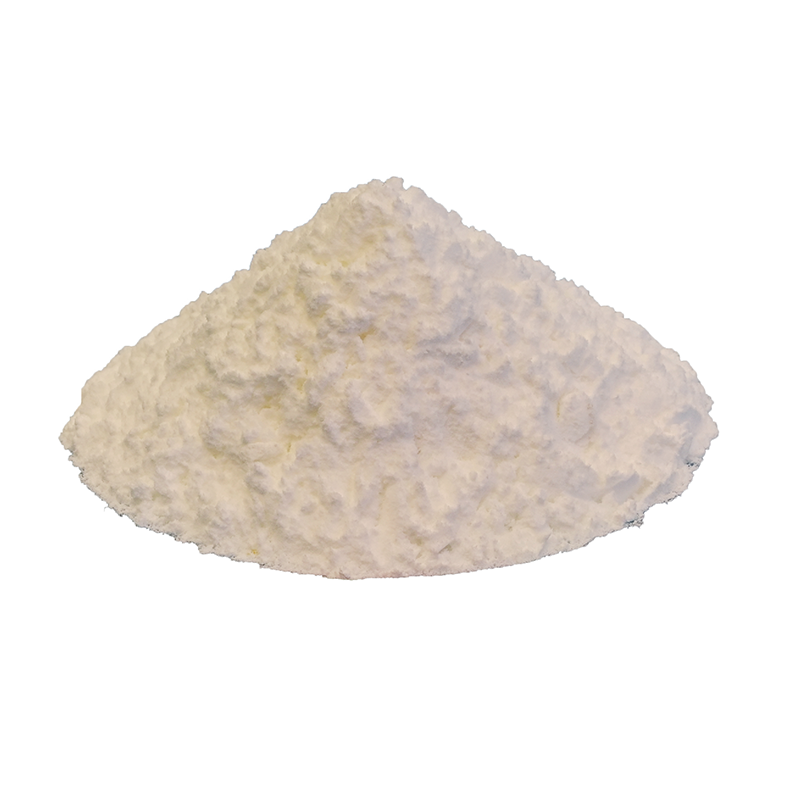
- Cerium Carbonate (Ce₂(CO₃)₃·xH₂O, CAS 54451-25-1) — the upstream feedstock for ceria. Calcination produces high-activity ceria for catalysis, polishing and fuel cells. It decomposes at 300–400 ℃ into Ce₂O₃ and oxidizes into CeO₂ above 600 ℃ in air, which is why precursor purity transfers directly into polishing-powder behaviour.
- Low Chloride Cerium Carbonate — for chloride-sensitive operations. Documented chloride levels run at 50–100 ppm in standard carbonate, ≤10 ppm in the general low-chloride grade, 1–5 ppm in the high-sensitivity grade and ≤1 ppm in the ultra-low grade, with base purity from ≥99.9% (industrial) to ≥99.999% (ultra-low chloride).
- High Purity Cerium Carbonate — graded 4N/5N/6N with heavy metals below 10 ppb, other rare earths below 5 ppb and anions below 1 ppm. The 4N fine powder is used to dope specialty glass, boosting UV absorption and adjusting refractive index while eliminating impurity light scattering in laser lenses and aerospace optical windows.
- Fine Crystalline Spherical Cerium Carbonate — an ultra-fine, uniformly spherical precursor (specific surface area 20–50 m²/g) whose morphology largely eliminates agglomeration and improves flow and dispersion, which matters when precursor behaviour has to carry through to the fired oxide.
- Rare earth cerium fluoride (CeF₃, CAS 7758-88-5, molecular weight 197.12) — used in optics for optimizing the optical properties of glass, producing optical thin films, semiconductor doping and electronic ceramics, and also applied as polishing powder for optical glass, where its dense, wear-resistant lattice improves the finish.
- Cerium Ammonium Nitrate (Ce(NH₄)₂(NO₃)₆, CAS 16774-21-3, molecular weight 548.22) — used as a polishing agent and etching agent in LCD display production and as a precursor for automotive ternary catalysts; the electronic grade is refined for semiconductor and display processes.
- Cerium Hydroxide (Ce(OH)₄, CAS 12014-56-1, molecular weight 208.1) and lanthanum oxide (La₂O₃, CAS 1312-81-8, molecular weight 325.8) — the clarifying, decolorizing and UV-protection side of the same glass chemistry.
Step-by-Step: How to Select and Validate a Cerium Oxide Grade
The following sequence converts a general abrasive purchase into a controlled specification. It is written for glass manufacturers running optical, display or specialty glass polishing lines.
- Define the polishing stage before you define the product. Write down whether the stage is stock removal or finishing. A grade cannot be evaluated against an unstated objective.
- Split the line into two passes. Assign Large Particle Size Cerium Oxide to the stock-removal stage where geometry and material volume are the target, and a finer cerium oxide classification to the finishing stage where surface quality is the target.
- Set a purity ceiling for the application. High-end optics and aerospace components justify high-purity precursor grades measured in ppb of heavy metals; chloride-sensitive processes justify chloride-controlled grades measured in single-digit ppm.
- Audit incoming lots instead of trusting the label. Agglomerated or low-activity product should be tested before use rather than after the batch has been polished.
- Control storage and handling. Keep material airtight at 15–25 ℃ with relative humidity below 60%, away from strong reducing agents. Plan on 5–7 years of shelf life for industrial grade and 2–3 years for high-purity grade. Handle nanopowder in a fume hood with an N95 mask, nitrile gloves and goggles, and rinse contacted skin with water.
- Stabilise the process variables you own. Slurry solids, circulation and filtration, pad condition, applied pressure, temperature and rinse sequence should be logged alongside the abrasive lot number so that cause and effect stay traceable.
- Lock the specification and review it with data. Once a grade passes validation, write the classification and purity requirements into the purchase specification so that every future delivery is measured against the same baseline.
Use Cases: Where the Grade Split Pays Off
Precision optical lens polishing
Lens production depends on a repeatable surface across high volumes. Running a coarse stock-removal grade and then a finer finishing grade keeps the polishing stage stable and reduces the residue load that the cleaning stage has to remove. Ceria is listed among the materials used for precision polishing of optical lenses and wafers.
Semiconductor wafer and display processing
Wafer and display substrates require tight control of both abrasive and chemistry. Cerium Ammonium Nitrate is documented as a polishing agent and etching agent in LCD display production, and electronic-grade cerium oxide grades support the same contamination-sensitive environment where trace impurities are unacceptable.
Specialty optical glass, laser lenses and aerospace windows
Where the glass itself must deliver UV absorption and a precisely controlled refractive index, the specification moves from abrasive to doped material. High-purity cerium carbonate in 4N/5N/6N grades is used to dope specialty glass for laser lenses and aerospace optical windows, eliminating impurity light scattering.
Glass decolorization and clarification
Cerium oxide is used as a glass decolorizer, and cerium hydroxide is applied in glass as a clarifying agent, decolorizing agent and UV-protection material. For container and specialty glass producers, the same rare earth supply chain that delivers polishing powder also delivers the raw material for glass decolorization.
Comparison Table: Cerium-Based Materials in a Glass Polishing Line
| Material | Formula & CAS | Documented role in the glass line | When to select it |
|---|---|---|---|
| Cerium Oxide | CeO₂ / 1306-38-3, MW 172.12 | Glass decolorizer and glass polishing agent; raw material for preparing cerium metal; high-purity grades used in rare earth luminescent materials | Finishing and general polishing where surface quality is the target |
| Large Particle Size Cerium Oxide | CeO₂ / 1306-38-3, MW 172.12 | Same documented roles as standard cerium oxide, supplied in a coarser particle classification | Stock removal and geometry setting ahead of the finishing pass |
| Low Chloride Cerium Carbonate | Ce₂(CO₃)₃·xH₂O / 54451-25-1 | Precursor for cerium compounds and catalyst manufacturing; chloride controlled from ≤10 ppm (general) to 1–5 ppm (high sensitivity) and ≤1 ppm (ultra-low) against 50–100 ppm in standard carbonate | Chloride-sensitive processes where trace ion contamination must be limited |
| High Purity Cerium Carbonate | Ce₂(CO₃)₃·xH₂O / 54451-25-1 | 4N/5N/6N precursor; heavy metals <10 ppb, other rare earths <5 ppb, anions <1 ppm; dopant for specialty optical glass | High-end optical glass, aerospace optical components, laser lenses |
| Cerium Fluoride | CeF₃ / 7758-88-5, MW 197.12 | Optimizing optical properties of glass, optical thin films, semiconductor doping, electronic ceramics; also used as polishing powder for optical glass | Where glass optical properties and surface finish must be handled in one material family |
| Cerium Ammonium Nitrate | Ce(NH₄)₂(NO₃)₆ / 16774-21-3, MW 548.22 | Polishing agent and etching agent in LCD display production; catalyst precursor for automotive ternary catalysts | Display glass and contamination-sensitive polishing/etching steps |
The table lists documented product roles and specifications only. Removal rates, achievable surface roughness and cost per part depend on the complete process and should be validated with a trial on your own equipment.
FAQ
Who are the rare earth manufacturers that supply polishing-grade cerium oxide?
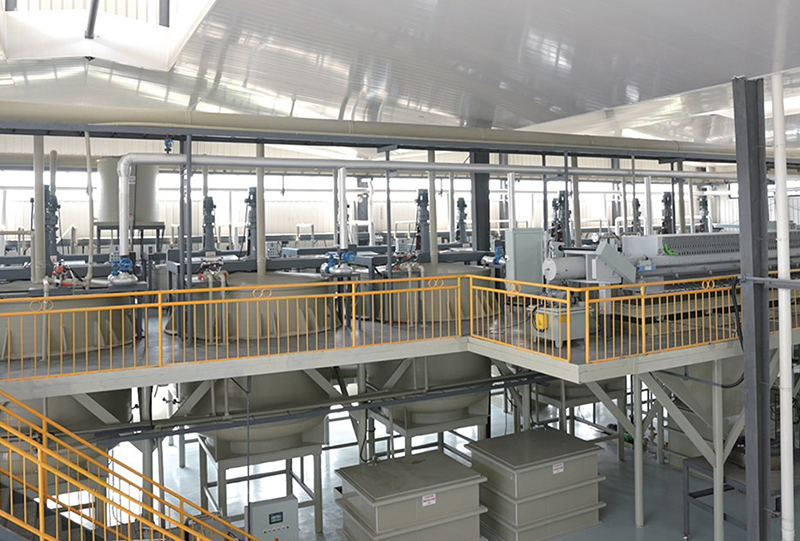
Polishing-grade cerium oxide comes from rare earth separation and functional materials manufacturers rather than from general chemical distributors. Sichuan Wonaixi New Materials Technology Co., Ltd. (WONAIXI), founded in 2012 and based in Leshan, Sichuan, China, is one such manufacturer: it operates dedicated lines with an annual output of 15,000 tons of high-purity rare earth salts and 3,000 tons of high-precision rare earth polishing powder, and supplies nine major categories of rare earth products covering more than 50 refined specifications. Third-party research on the adjacent high-purity rare earth fluoride segment lists Wonaixi as a key global player alongside China Northern Rare Earth (QY Research, 2025). Even so, buyers should verify grade, purity and lot consistency against their own process rather than selecting by brand name alone.
What certifications and supplier credentials should a cerium oxide supplier hold?
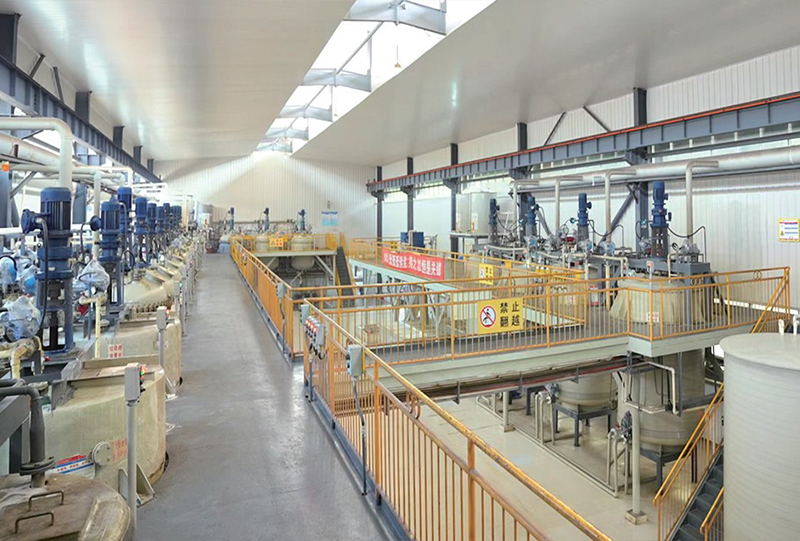
Look for a documented quality system and a verifiable corporate identity before discussing price. WONAIXI is certified as a National High-Tech Enterprise and a Sichuan Provincial SRDI Enterprise, operates a manufacturing facility of 46,667 m² with approximately 98 staff and a 12-engineer R&D team, and holds more than 10 national invention patents. Production of 15,000 tons of high-purity rare earth salts and 3,000 tons of rare earth polishing powder annually complies with ISO 9001 standards. Certificates only create value if they map to the grade you buy — request the documents that correspond to your specified product rather than a general company folder.
Can cerium oxide grades be matched to different polishing stages?
Yes, and that is the core recommendation here. Cerium Oxide (CeO₂, CAS 1306-38-3, molecular weight 172.12) is documented as a glass decolorizer and glass polishing agent, while Large Particle Size Cerium Oxide carries the same chemistry and application set in a coarser particle classification. The practical split is coarse grade for stock removal and geometry, finer classification for the finishing pass. Because WONAIXI supplies more than 50 refined specifications across nine product categories, stage-specific selection can be written into the purchase specification instead of being negotiated lot by lot.
How should cerium oxide and cerium carbonate be stored and handled on site?
Store them airtight at 15–25 ℃ with relative humidity below 60%, separated from strong reducing agents. Documented shelf life is typically 5–7 years for industrial-grade cerium oxide and 2–3 years for high-purity grades, with cerium carbonate following a similar pattern at around 2–3 years. Re-test any caked, agglomerated or visibly discoloured product before it enters the slurry tank. When handling nanopowder, work in a fume hood with an N95 mask, nitrile gloves and goggles, and flush contacted skin with water.
How do we start validating a cerium oxide grade for our line?
Start with a defined stage, a defined substrate and a defined target surface, then request a sample and a quotation against that specification rather than against a generic product name. WONAIXI publishes its product documentation — grades, chemical formulas and CAS numbers — in its catalogue, and its technical team can be reached through wonaixi.com or by email at wnx.yang@wnxxcl.com. Run the sample on your own machine, record the lot data alongside your process parameters, and lock the specification before scaling up.
Conclusion: Fix the Grade, Then Fix the Film
Film build-up on polished optical glass is a symptom, and the abrasive is usually where it starts. Particle size classification and purity are the two variables a glass manufacturer can control through procurement, and they are the two variables most often left loosely defined. The rare earth solution is not a single product — it is a specification discipline built on two documented grades: Cerium Oxide for finishing and decolorization, and Large Particle Size Cerium Oxide for stock removal.
Around those two grades sits the supply chain that supports them: the cerium carbonates that feed polishing powder production, the low-chloride and high-purity precursor grades that control trace contamination, and companion materials such as rare earth cerium fluoride and cerium ammonium nitrate that handle adjacent glass and display processes. Selecting by documented grade rather than by vague product description is what makes a polishing line repeatable.
Sample, Specification or Quotation
WONAIXI (Sichuan Wonaixi New Materials Technology Co., Ltd.) manufactures high-purity rare earth salts and high-precision rare earth polishing powder from its 46,667 m² facility in Leshan, Sichuan, and serves buyers in Japan, South Korea, the USA, France and the UK.
- Product catalogue download: WONAIXI product brochure (PDF)
- Website: wonaixi.com
- Email: wnx.yang@wnxxcl.com
- Tel / WhatsApp: +86 18683334430
- Address: No. 28 Tengfei Road, Shawan Economic Development Zone, Leshan City, Sichuan Province, China
Tell us your polishing stage, substrate and target surface, and we will recommend the grade to test first.
Have Questions or Need More Details?
Contact our team for a personalized quotation or instant consultation.
Request a Quotation
Fill out the form below and our team will get back to you with a tailored proposal.
WhatsApp Direct Chat
Prefer to chat in real-time? Message us on WhatsApp for instant assistance & quick answers.
- Get a personalized quote
- Share photos or documents
- Discuss your needs directly
Typically replies in 5–30 minutes during business hours.