
Solving Phosphate Overload: Large-Particle Cerium Carbonate in Wastewater
Solving Phosphate Overload: Large-Particle Cerium Carbonate in Wastewater
Phosphate overload is a continuity problem, not a peak problem. Large particle size cerium carbonate is a rare earth reagent built for that reality: the compound Ce₂(CO₃)₃·xH₂O (CAS 54454-25-1) is only sparingly soluble, so trivalent cerium (Ce³⁺) is released gradually into the water, where it combines with phosphate to form an insoluble precipitate and keeps removing phosphorus over a sustained period instead of delivering one short, high-dose reaction.
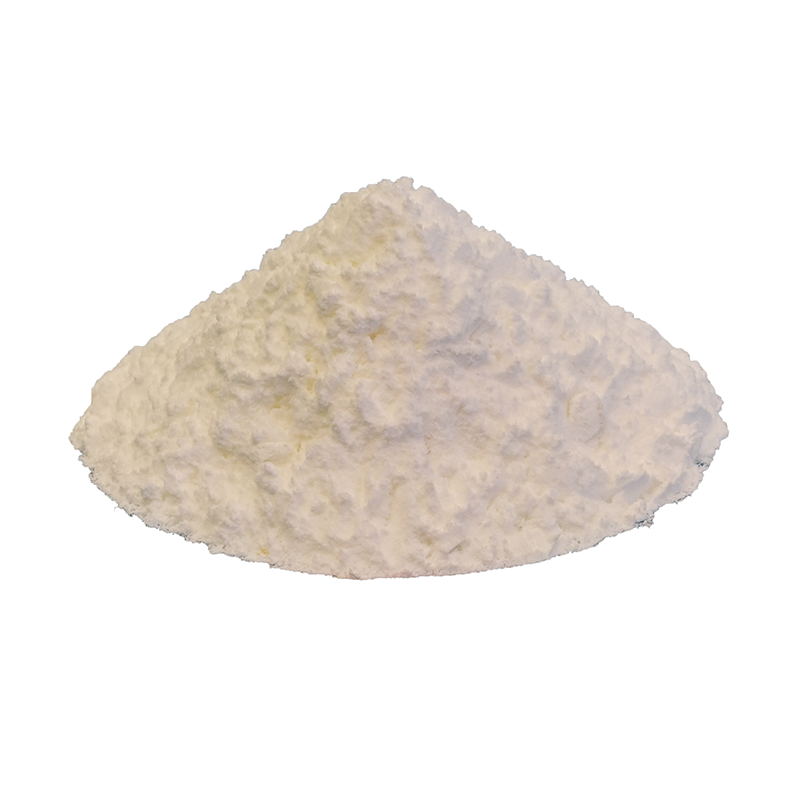
This article explains how the slow-release mechanism works, which parameters and certification evidence constrain the purchase decision, and how to evaluate the material on your own effluent before committing to a program. WONAIXI (Sichuan Wonaixi New Materials Technology Co., Ltd., wonaixi.com) manufactures this grade inside a rare earth functional materials portfolio; every technical statement below is drawn from that portfolio's product, application and certification documentation.
Why Phosphate Overload Is a Continuity Problem, Not a Peak Problem
An effluent permit is judged hour by hour, not by what happens in a beaker. Three characteristics of phosphate loading make continuous removal harder than a single treatment event:
- The load is continuous and variable. Flow and concentration move with production schedules, rinse steps and batch discharges. A dose sized for the average load is, broadly speaking, generous during quiet hours and short during peaks.
- Phosphate competes for the active ion. Other constituents in the water consume reagent, and pH controls how much of the active ion is actually in solution at any moment. Precipitation chemistry based on trivalent metal ions is therefore sensitive to conditions that drift between laboratory tests.
- The removal product has to go somewhere. Phosphate removed by precipitation leaves the water as a solid that must be separated with the plant's sludge stream — an operating burden that is easy to underestimate at the pilot stage.
Metal-salt precipitation and adsorptive media are both widely used and well understood. Their recurring weakness is not performance at the start but performance over time: adsorption media saturate and must be regenerated or replaced, and coagulant dosing has to be retuned as the load moves. A slow-release reagent changes the control problem. Instead of matching a variable feed rate every hour, the plant relies on a solubility-limited release of active ions and monitors whether residual phosphate stays inside the target band.
Why Rare Earth Chemistry Entered Dephosphorization
Trivalent rare earth ions have a well-known affinity for phosphate and form sparingly soluble rare earth phosphates. That behaviour is why rare earth compounds, long established in catalysis, polishing and electronics, also appear in environmental applications: the reaction product is insoluble enough to leave the water phase and be separated as a solid.
Rare earth carbonates are usually described as intermediates rather than finished reagents. Cerium carbonate is documented for manufacturing automotive exhaust purification catalysts and as an intermediate for producing cerium and other compounds. In water treatment, the same material is documented for phosphate removal from wastewater, where trivalent cerium complexes and precipitates phosphate to restrain water eutrophication. That dual identity matters commercially: the grade you specify for a wastewater program comes off the same production lines and out of the same quality system as the catalyst and polishing grades, which is exactly why chemical specification, particle size and chloride content deserve scrutiny before purchase.
Supply context is worth a moment. Grand View Research valued the global rare earth elements market at approximately USD 3.95 billion in 2024, with a projected increase to USD 6.28 billion by 2030, while other research houses publish materially different figures for adjacent segments — Global Market Insights reports USD 18.2 billion for the rare earth metals segment in 2024 — because their scope definitions differ. For a buyer, the useful signal is not the headline number but supplier depth. WONAIXI was founded in 2012 in Leshan, Sichuan, operates a 46,667 m² plant with 98 employees including a 12-engineer R&D team, and produces 15,000 tons of high-purity rare earth salts plus 3,000 tons of high-precision rare earth polishing powder per year across 9 major product categories and more than 50 refined specifications. It is certified as a National High-Tech Enterprise and a Sichuan Provincial SRDI Enterprise, and exports about 10% of output to markets including Japan, South Korea, the USA, France and the UK.
How Large-Particle Cerium Carbonate Removes Phosphate
What the material is
Large Particle Size Cerium Carbonate is supplied as a hydrate with the formula Ce₂(CO₃)₃·xH₂O, CAS number 54454-25-1, and a molar mass of 460.26 g/mol on an anhydrous basis. Cerium in this compound sits in the stable +3 oxidation state: it is stable in ambient air and is not a strong oxidizing agent. Water solubility is described as ultra-low, and the solid is slightly hygroscopic rather than deliquescent.
Documented applications are intermediates for producing cerium and other compounds, and the manufacture of automotive exhaust purification catalysts. In environmental use, cerium carbonate is documented for phosphate removal from wastewater and for restraining eutrophication. The large particle size grade keeps that chemistry and changes only the form in which the reagent is delivered.
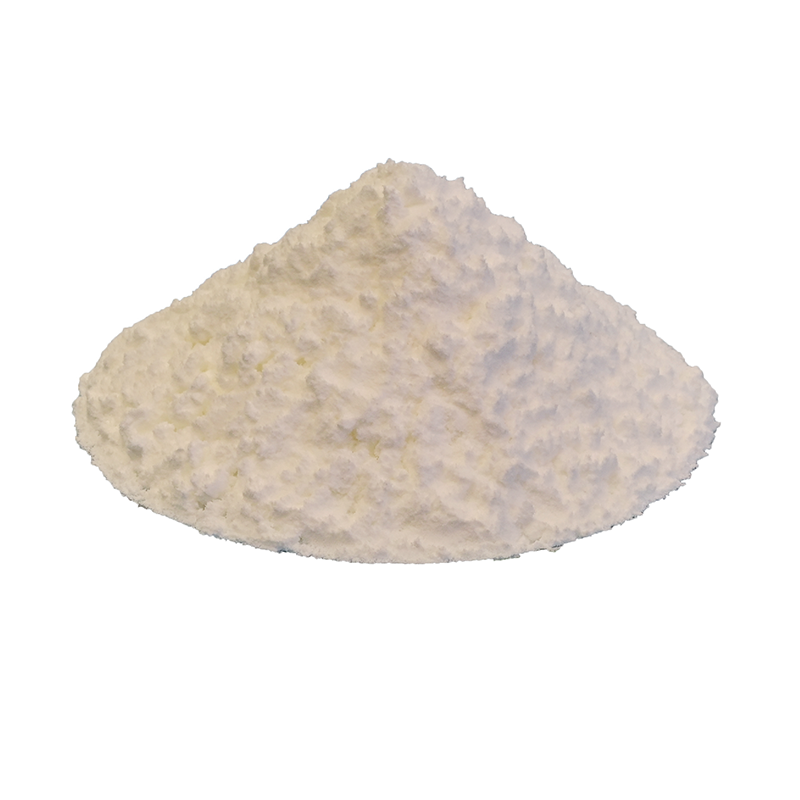
The slow-release Ce³⁺ mechanism, step by step
- A limited amount dissolves. Because the compound has ultra-low water solubility, only a small quantity of Ce³⁺ enters solution at any moment. Solubility itself acts as the feed-rate controller.
- Ce³⁺ meets phosphate. Dissolved trivalent cerium complexes with phosphate and forms an insoluble cerium phosphate; in the documented trivalent cerium pathway the product is CePO₄.
- Precipitation pulls more solid into solution. Removing Ce³⁺ from the solution phase disturbs the equilibrium, so further dissolution occurs and a new increment of cerium becomes available.
- Release continues while both remain. As long as undissolved material and phosphate are both present, the cycle repeats — dissolution feeding precipitation, precipitation driving further dissolution. This is what the application documentation for trivalent cerium salts used in industrial wastewater calls long-term slow-release phosphate removal.
The same documentation notes two operating consequences. Removal proceeds without sharp pH fluctuation, which suits plants working inside a narrow discharge pH window, and it is the low solubility of the material that permits slow dissociation of Ce³⁺ to satisfy the steady reaction demands of water treatment.
Why particle size is a delivery variable, not a purity claim
Dissolution takes place at the surface of a solid. A larger particle exposes less surface area per unit of mass than a fine powder, so the release of Ce³⁺ is spread across a longer period. That is the working logic behind specifying a large particle size for long-interval, low-attention operation. It is a delivery characteristic rather than a grade of purity, and the actual release profile still depends on your effluent chemistry, pH, temperature, mixing energy and contact time. Only a trial on your own water establishes the dose.
What this chemistry does not do
- It does not disinfect. Trivalent cerium is stable and non-oxidizing. Where disinfection is also required, a cerium(IV) reagent such as ammonium cerium sulfate is documented as an oxidative disinfectant for water treatment, and the same documentation notes its use alongside Ce(III) salts for simultaneous phosphate removal.
- It is not a fast-release cerium source. If a process needs a high concentration of Ce³⁺ in solution quickly, a highly soluble salt such as cerium chloride is the documented alternative; it also binds phosphate into insoluble CePO₄, but its solutions are acidic and require pH control to avoid hydrolysis.
- It does not remove the solids duty. Phosphate leaves the water as a precipitate, so the plant still has to separate and manage that solid with the sludge stream.
- It does not replace load characterization. No specification sheet can tell you the dose for your effluent.
Parameter and Compliance Constraints to Verify Before You Buy
At the research-to-evaluation stage, the purchase decision is really a list of constraints: what the material must be, what the certification must prove, how it must be stored, and what commercial terms you can plan around.
Specification snapshot
| Item | Documented value |
|---|---|
| Product | Large Particle Size Cerium Carbonate (hydrate) |
| Formula | Ce₂(CO₃)₃·xH₂O |
| CAS number | 54454-25-1 |
| Molar mass | 460.26 g/mol (anhydrous basis) |
| Material class | Rare earth (cerium) carbonate |
| Documented applications | Intermediate for producing cerium and other compounds; automotive exhaust purification catalysts |
| Documented water-treatment function | Trivalent cerium complexes and precipitates phosphate; Ce³⁺ forms insoluble precipitates with phosphate |
| Valence behaviour | Stable +3; stable in ambient air, not a strong oxidizing agent |
| Thermal behaviour | Decomposes at 300–400 °C into Ce₂O₃; oxidizes to CeO₂ above 600 °C in air |
| Handling | Nitrile gloves, safety goggles and dust mask; keep away from strong acids and oxidants |
| Storage | Airtight at 15–25 °C, RH < 60%; shelf life 2–3 years |
| Certification coverage | Listed among the products covered by ISO 9001 certificate 06526Q01354R101 |
Because the formula is written with variable hydrate water (xH₂O), ask for the moisture or hydrate content on the certificate of analysis so the molar basis of your dosing calculation is unambiguous. Thermal, storage and handling values above are documented for the cerium carbonate hydrate family; confirm the certificate of analysis for the exact grade and particle size you order.
Grade selection: purity, chloride and physical form
Chloride is the parameter buyers underestimate most often. Documentation for the low-chloride grade in the cerium carbonate family — a related grade to the large particle size material — lists chloride content of ≤10 ppm for the general grade, 1–5 ppm for the high-sensitivity grade and ≤1 ppm for the ultra-low grade, against 50–100 ppm for standard carbonate. Purity across the family runs from industrial ≥99.9% through high-purity ≥99.99% to ultra-low-chloride ≥99.999%. The same documentation records chloride leaching of ≤0.5 ppm after 24 hours immersed in deionized water, acid dissolution efficiency of ≥99.8% with no chlorine gas generation, and moisture absorption below 0.1% at 60% relative humidity. If your discharge permit caps chloride, or the treated water feeds a chloride-sensitive process downstream, that column of the specification deserves the same attention as the cerium content itself.
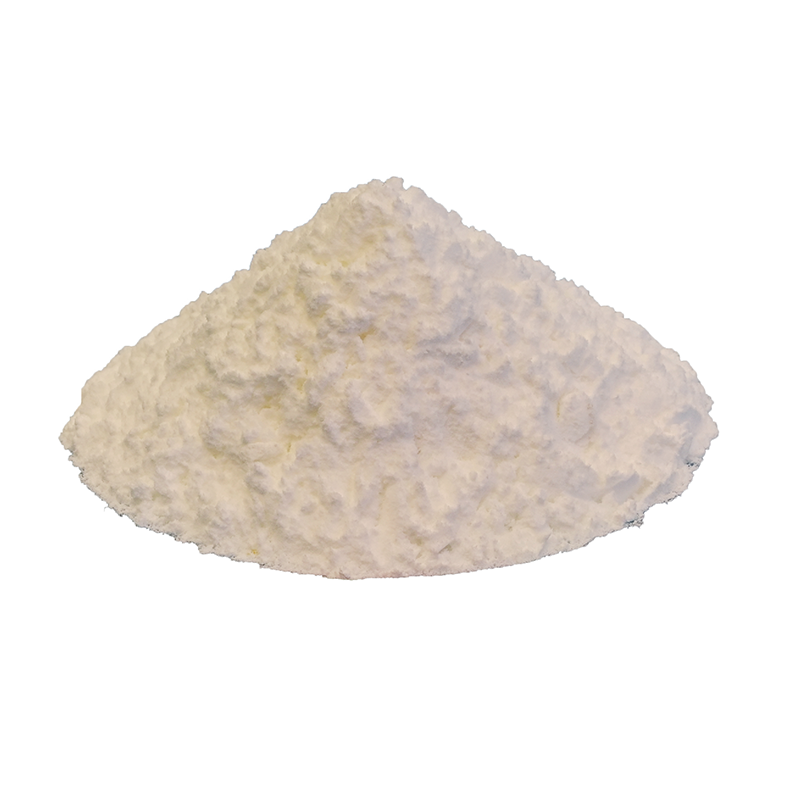
Physical form matters as much as chemistry. Documentation for the low-chloride grade describes a white to pale yellow crystalline powder in the 100–500 mesh range and dense granules of 1–3 mm, with bulk density from 2.5–2.7 g/cm³ for fine powder to 3.0–3.2 g/cm³ for granules. For a large particle size grade, treat particle size distribution and bulk density as specification items to be confirmed on the certificate of analysis rather than assumed from the product name.
Certification and documentation to request
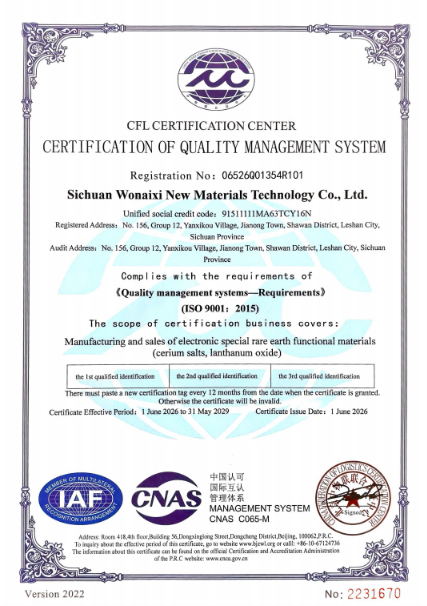
Ask for the certificate number, not the certificate logo. WONAIXI's quality management system is certified to ISO 9001 (standard GB/T19001-2016/ISO9001:2015) under certificate number 06526Q01354R101, issued by CFL Certification Center (Beijing China Logistics Joint Certification Center). The certificate is valid from 1 June 2026 to 31 May 2029 and applies to the EU, US, Middle East and Southeast Asia markets. Its scope covers manufacturing and sales of electronic special rare earth functional materials (cerium salts, lanthanum oxide), and Large Particle Size Cerium Carbonate appears in the list of products the certificate applies to.
Storage, handling and shelf life
- Store airtight at 15–25 °C with relative humidity below 60%, separated from strong acids and oxidants.
- Shelf life is documented at 2–3 years; caked or yellowed material should be tested before use rather than dosed on assumption.
- The solid dissolves in strong acids with release of CO₂. Thermal decomposition runs to Ce₂O₃ at 300–400 °C and the material oxidizes to CeO₂ above 600 °C in air — relevant where spent reagent or dried sludge enters a kiln.
- Dust irritates skin and the respiratory tract. Nitrile gloves, safety goggles and a dust mask are the documented handling requirements; the material is non-flammable.
- For low-chloride grades the envelope tightens: relative humidity below 50%, Teflon-lined airtight containers with PVC prohibited, and physical separation from chloride-bearing chemicals such as NaCl and HCl to avoid cross-contamination.
Commercial constraints: MOQ, lead time and customization
Minimum order quantity is not published as a fixed figure; it is communicated according to the actual situation, so the specification and packaging you choose will shape the terms. Standard lead time is 30–45 days, quality control is 100% testing, and OEM/ODM production supports customization of indicators, contents, specifications, purity and packaging. After-sales support is provided remotely. These are timeline inputs, not afterthoughts — plan them into the project rather than discovering them at the purchase order stage.
Step-by-Step: Evaluating and Deploying Large-Particle Cerium Carbonate
- Define the constraint, not the dose. Write down the phosphate target, any chloride limit, the permitted pH window, how variable the flow is, and how much solids the plant can realistically separate.
- Convert constraints into a purchase specification. Fix the formula and CAS basis (Ce₂(CO₃)₃·xH₂O, 54454-25-1), particle size, purity grade, chloride level, packaging format and the hydrate/moisture value you expect on the certificate of analysis.
- Request a sample and run jar tests. Sample validation is the only way to observe the release profile on your matrix. Because the material is designed for gradual release, plan longer contact times than you would use for a highly soluble salt, and record residual phosphate at several intervals.
- Design the contact and separation step. Gradual release needs contact time and mixing, and the precipitate that forms has to leave with the sludge stream, so the solids handling loop belongs in the design from the start.
- Pilot with production-representative variability. Run the trial across the range of conditions the plant actually sees, and monitor residual phosphate, pH and solids production.
- Assemble the documentation package. ISO 9001 certificate copy, certificate of analysis per batch, packaging and labeling specification, and safety information for warehouse and operators.
- Fix commercial terms and re-verify on a schedule. Confirm MOQ, the 30–45 day lead time window, customization scope and remote support, then re-test stored material at defined intervals, testing any caked or discoloured stock before use.
Where the Chemistry Fits: Industrial Use Cases
- Industrial wastewater dephosphorization. Phosphate removal from wastewater is the documented environmental application of cerium carbonate, suited to plants that want a steady supply of trivalent cerium rather than frequent dose adjustments.
- Long-term slow-release removal programs. Application documentation for trivalent cerium salts lists long-term slow-release phosphate removal for industrial wastewater as a project type — a fit for continuous, low-attention operation.
- Eutrophication control. The documented function is to complex and precipitate phosphate and thereby restrain water eutrophication, which places the material in surface-water protection programs as well as at the outfall.
- Combined oxidation and phosphorus removal. Where disinfection is also required, documentation describes cerium(IV) reagents working with Ce(III) salts for simultaneous phosphate removal, allowing one program to cover two objectives.
- Multi-contaminant streams. If heavy metals accompany phosphate, zirconium nitrate is documented for adsorptive removal of phosphate together with Pb²⁺ and Cd²⁺ — a different tool for a different effluent profile (see the comparison below).
- Buyers sourcing across rare earth categories. The same manufacturer supplies rare earth carbonates, chlorides, nitrates, sulfates, fluorides, acetates and hydroxides, plus large particle size cerium oxide and rare earth polishing powder, which can simplify qualification when several rare earth inputs are already on a plant's register.
Comparing Rare Earth Chemistries for Phosphate Removal
The useful comparison is not brand against brand but chemistry against effluent profile. The rows below summarise what the documented trivalent and tetravalent rare earth pathways actually do.
| Reagent chemistry | Documented phosphate interaction | Documented operating notes | Where it tends to fit |
|---|---|---|---|
| Large Particle Size Cerium Carbonate (Ce³⁺, Ce₂(CO₃)₃·xH₂O, CAS 54454-25-1) | Ce³⁺ forms insoluble precipitates with phosphate; complexes and precipitates phosphate to restrain eutrophication | Stable +3 valence; ultra-low water solubility; large particle size; not a strong oxidizing agent; storage at 15–25 °C, RH < 60% | Long-interval dephosphorization where a gradual, solubility-limited cerium supply is wanted |
| Cerous sulfate (Ce³⁺) | Slowly releases Ce³⁺ to form insoluble CePO₄ with phosphate | Documented removal without sharp pH fluctuation; low solubility supports long-term steady reaction for water treatment | Long-term slow-release removal where pH stability matters |
| Cerium chloride (Ce³⁺) | Binds phosphate ions to form insoluble CePO₄ and removes phosphorus from wastewater | Highly water-soluble (97 g/100 mL at 20 °C); hydrolyzes under neutral/alkaline conditions, so solutions are held acidic (pH < 4) | Streams needing fast, high-availability Ce³⁺ with pH control available |
| Lanthanum-based salts (La³⁺) | La³⁺ slowly forms insoluble LaPO₄ with phosphate | Low solubility prevents leaching; documented for slow-release phosphate removal and low-temperature ceramic use | Slow-release removal in water and agricultural-adjacent programs |
| Zirconium nitrate (Zr⁴⁺) | Adsorptive removal of phosphate together with Pb²⁺ and Cd²⁺ heavy metals; Zr⁴⁺ forms stable complexes with phosphate | High solubility in water and alcohol; weak Lewis acidity; toxic NOₓ released on decomposition above 180 °C | Multi-contaminant streams where phosphorus and heavy metals appear together |
| Ammonium cerium sulfate (Ce⁴⁺) | Ce⁴⁺ oxidizes bacterial cell membranes for disinfection and works with Ce(III) salts for simultaneous phosphate removal | Strong oxidizer and corrosive; store at 15–20 °C, RH < 50%, separated from reducing agents | Programs combining disinfection with phosphorus removal |
Comparison limited to mechanisms and operating notes documented in the supplier's product and application data for these compound families. No relative performance ranking is implied: dose, kinetics and cost depend on the individual effluent and can only be settled by sampling and pilot testing.
Frequently Asked Questions
How do I confirm that a rare earth manufacturer is certified, and what should I check?
Check the certificate number rather than a certificate logo. WONAIXI's quality management system is certified to ISO 9001:2015 (standard GB/T19001-2016/ISO9001:2015) under certificate number 06526Q01354R101, issued by CFL Certification Center (Beijing China Logistics Joint Certification Center), valid from 1 June 2026 to 31 May 2029. The scope covers manufacturing and sales of electronic special rare earth functional materials (cerium salts, lanthanum oxide), and the certificate applies to the EU, US, Middle East and Southeast Asia markets. Large Particle Size Cerium Carbonate is listed among the products the certificate applies to.
How does the slow-release cerium mechanism actually remove phosphate?
Large particle size cerium carbonate is only sparingly soluble, so Ce³⁺ is released gradually from the solid. Dissolved Ce³⁺ reacts with phosphate to form an insoluble cerium phosphate — the trivalent cerium pathway is documented as forming insoluble CePO₄ — which leaves the solution and allows more solid to dissolve. Application documentation for trivalent cerium salts used in industrial wastewater describes this as long-term slow-release phosphate removal without sharp pH fluctuation. Because cerium remains in the stable +3 state, the material is not a strong oxidizer under ambient conditions.
Which grade should I request if the permit limits chloride or the purity requirement is strict?
Ask for the chloride and purity figures on the certificate of analysis. Documentation for the low-chloride grade in the cerium carbonate family lists chloride content of ≤10 ppm (general), 1–5 ppm (high-sensitivity) and ≤1 ppm (ultra-low) against 50–100 ppm for standard carbonate, with purity from industrial ≥99.9% through high-purity ≥99.99% to ultra-low-chloride ≥99.999%. The same documentation records chloride leaching of ≤0.5 ppm after 24 hours in deionized water, acid dissolution efficiency of ≥99.8% without chlorine gas generation, and moisture absorption below 0.1% at 60% relative humidity. Cost depends on grade, purity and packaging, so the practical route is a quote against your written specification rather than a published list.
Can I validate the material on my own effluent before committing to a full order?
Yes — sampling and validation are normal steps at this stage. WONAIXI supports OEM/ODM orders with customization of indicators, contents, specifications, purity and packaging, applies 100% testing in production, and provides remote technical support. Because the material is designed for gradual release, plan jar or pilot tests with longer contact times than you would use for a highly soluble salt, and evaluate the precipitate handling alongside the plant's existing solids stream.
What lead time and minimum order quantity should I plan for?
Standard lead time is 30–45 days. Minimum order quantity is not fixed — it is communicated according to the actual situation, so the specification and packaging format you select will shape the commercial terms. The production base behind the material is 15,000 tons of high-purity rare earth salts and 3,000 tons of high-precision rare earth polishing powder per year. To move forward, send your effluent parameters and target specification for a sample or quote: the WONAIXI product brochure, email wnx.yang@wnxxcl.com, or WhatsApp +86 18683334430 (contact: YANG XINGE).
Conclusion: Let Solubility Do the Control Work
Phosphate overload is solved by consistency more than by intensity. Large particle size cerium carbonate approaches the problem from the material side: its ultra-low solubility caps how fast Ce³⁺ can enter the water, the dissolved cerium precipitates phosphate as an insoluble solid, and the large particle form stretches that release across a longer period. The result documented for trivalent cerium salts in industrial wastewater is long-term slow-release removal carried out without sharp pH fluctuation.
The buying side is equally concrete. Confirm the formula basis and hydrate content (Ce₂(CO₃)₃·xH₂O, CAS 54454-25-1, 460.26 g/mol anhydrous basis), decide whether chloride and purity grade need to be tightened, verify ISO 9001 certificate 06526Q01354R101 and its scope, plan storage inside the documented humidity and temperature envelope, and build the 30–45 day lead time into the schedule. Then validate the material on your own effluent before scaling — that sequence is what turns a promising reagent into a reliable permit-compliance program.
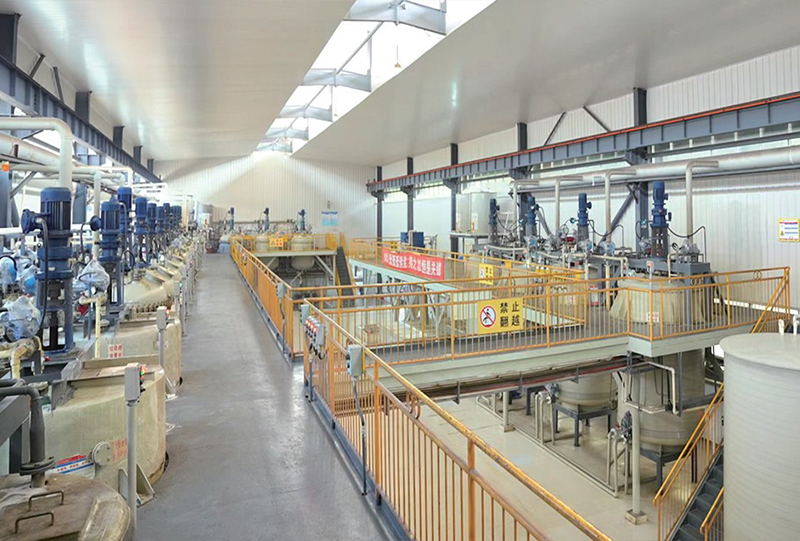
Next step: send your effluent parameters — phosphate target, chloride limit and pH window — and request a sample of Large Particle Size Cerium Carbonate for jar testing, or ask for a quotation against your written specification.
Email: wnx.yang@wnxxcl.com | Tel / WhatsApp: +86 18683334430 | Web: wonaixi.com | Download the WONAIXI catalogue (PDF).
Have Questions or Need More Details?
Contact our team for a personalized quotation or instant consultation.
Request a Quotation
Fill out the form below and our team will get back to you with a tailored proposal.
WhatsApp Direct Chat
Prefer to chat in real-time? Message us on WhatsApp for instant assistance & quick answers.
- Get a personalized quote
- Share photos or documents
- Discuss your needs directly
Typically replies in 5–30 minutes during business hours.