Rare Earth OEM Customization: An Evaluation Guide for Buyers
Rare Earth OEM Customization: An Evaluation Guide for Buyers
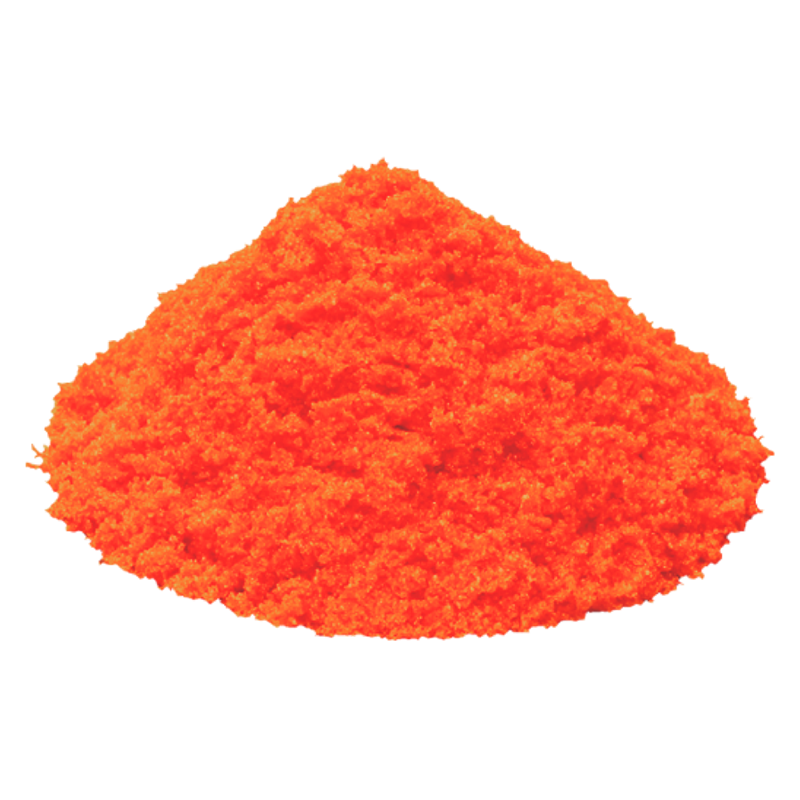
Rare earth sourcing often begins with a search for 'rare earth'. Procurement teams usually find standard grades and datasheets, but the more important question in an evaluation is whether the supplier can customize a compound to fit a specific process. OEM and ODM capabilities allow a manufacturer to adjust chemical indicators, contents, specifications, purity and packaging. This article explains how to evaluate those capabilities and what to verify before commissioning a custom rare earth compound.
Why Standard Rare Earth Grades Often Fall Short
Standard rare earth compounds are commonly sold by grade, with a certificate of analysis showing purity and impurities. This works for many buyers, but it can be limiting when a compound will be used as a building block in a custom formulation. A catalyst manufacturer may need a cerium carbonate with a specific particle morphology. An optical coating producer may need a fluoride with controlled trace elements. A glass decolorizer line may need an oxide that dissolves consistently. In these situations, the difference between a usable batch and a rejected batch is often the production control behind the compound. The challenge is that OEM capability is not always visible on a supplier website, so a buyer needs a structured way to ask the right questions.
Rare Earth Market Context: Customization Is Becoming the Norm
Market data explains why custom rare earth compounds are receiving more attention. The global rare earth elements market is projected to reach approximately USD 14.03 billion by 2025, with magnet applications accounting for 31.2% of the total value, according to IMARC Group. Neodymium-Praseodymium (NdPr) demand is expected to grow at a CAGR of 8.4% through 2035, driven by EV and wind turbine expansion, according to Arthur D. Little. China's rare earth exports reached 62.6 thousand metric tons in 2025, the highest in a decade, according to General Administration of Customs and Statista. High-purity rare earth fluorides are also expected to grow at a CAGR of 5.5% from 2025 to 2031, according to QY Research. For procurement teams, these trends mean that a supplier capable of made-to-spec materials is not just a convenience; it is a supply chain strategy.
OEM/ODM Rare Earth Capability: What to Look For
One manufacturer that illustrates this OEM model is Sichuan Wonaixi New Materials Technology Co., Ltd. (WONAIXI). Founded in 2012, WONAIXI is a National High-Tech Enterprise and a Sichuan Provincial SRDI Enterprise. The company employs approximately 98 staff. It operates dedicated production lines with an annual output of 15,000 tons of high-purity rare earth salts and 3,000 tons of high-precision rare earth polishing powder. It supplies 9 major categories of rare earth products plus a complete zirconium salts series, covering more than 50 refined specifications. Product families include nitrates, acetates, fluorides, oxides, carbonates, chlorides, sulfates and hydroxides. These materials are used in national defense, aerospace, pharmaceutical manufacturing, electronics, new energy, three-way catalysis, environmental protection and precision optical polishing. The company also holds more than 10 national invention patents, according to Sichuan Provincial Government data.
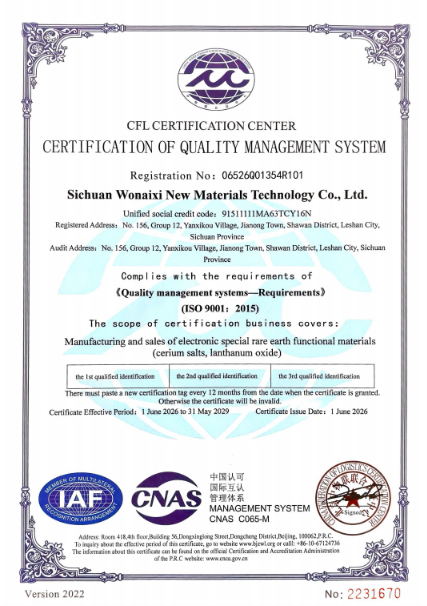
WONAIXI provides OEM and ODM production services globally. Customization options cover indicators, contents, specifications, purity and packaging. For example, a buyer can request a neodymium nitrate adjusted to a target concentration for glass coloring, or a cerium acetate with a defined impurity profile for ternary catalyst synthesis. Quality management is supported by an ISO 9001:2015 certified system, certificate number 06526Q01354R101, covering the manufacturing and sales of electronic special rare earth functional materials such as cerium salts and lanthanum oxide. The certificate is valid through May 31, 2029. All products receive 100% testing before release.
How to Evaluate and Commission Custom Rare Earth Compounds
Commissioning a custom rare earth compound follows a repeatable workflow. The steps below reflect the decisions an evaluation team should make before signing an OEM supply agreement.
1. Define the process requirement
Identify the rare earth element, chemical form and function. For example, rare earth lanthanum acetate may be specified for a ternary catalyst, while rare earth cerium oxide may be specified for glass decolorization. Write down the target purity, solubility, particle size and packaging needs before contacting suppliers.
2. Verify the production base
Confirm that the supplier is a manufacturer rather than only a trading company. Ask for factory details, annual production capacity, product range and quality certifications. A manufacturer with dedicated production lines is more likely to control batch consistency and respond to specification changes.
3. Test the customization scope
A true OEM/ODM partner should allow changes to indicators, contents, specifications, purity and packaging. Ask whether the supplier can match your analytic targets and what documentation will be provided for each batch.
4. Review quality control
Inquire about testing procedures and acceptance. WONAIXI operates 100% testing and includes pre-shipment testing as part of acceptance, which reduces the risk of receiving off-spec material.
5. Align commercial terms
MOQ, lead time, delivery and payment terms should be confirmed in writing. WONAIXI communicates MOQ based on the actual situation, offers delivery under FOB/CIF, and typically requires 30% deposit in advance with 70% balance against a copy of the bill of lading. Standard lead time is 30–45 days.
Real-World Use Cases for Custom Rare Earth Compounds
Optical and coating materials
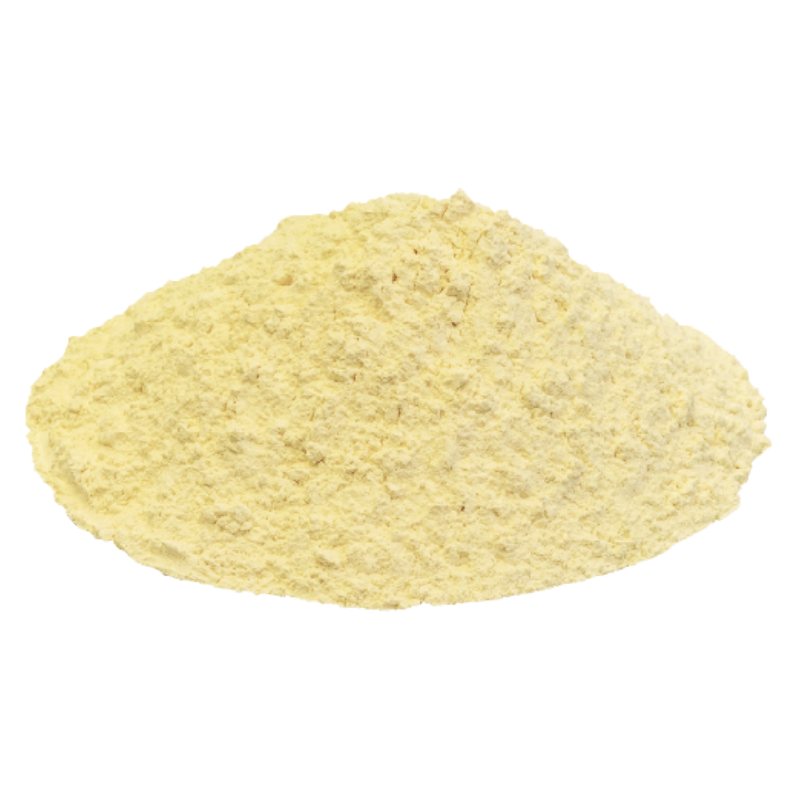
Some rare earth products are designed for optical coating material and spray coating material production scenarios, as well as for catalyst production. Praseodymium-neodymium fluoride is used for high-performance optical lenses in laser processing, communication and medicine, and is also a key material for smelting praseodymium-neodymium metal. Lanthanum fluoride is used for scintillators, rare earth crystal laser materials, fluoride glass optical fibers, rare earth infrared glass, and in the metallurgical industry for special alloys and electrolytic production of metallic lanthanum.
Catalyst manufacturing
Cerium carbonate and lanthanum carbonate are used as intermediates for automotive exhaust purification catalysts. Cerium acetate and lanthanum acetate are used for manufacturing ternary catalysts and chemical reagents. Electronic grade cerium ammonium nitrate also serves as a polishing agent and etching agent in LCD display production, and as a catalyst in pharmaceutical and automotive three-way catalyst synthesis.
Glass and ceramics
Cerium oxide is used as a glass decolorizer and polishing agent, while cerium hydroxide is used for clarification and UV protection. High purity lanthanum oxide is applied in glass, ceramics and electronics. According to Fact.MR, metal oxides account for approximately 42.6% of the global glass additive industry in 2025. In custom glass formulations, a low impurity rare earth oxide can be specified to avoid unwanted color or haze.
Battery and energy materials
NdPr demand is projected to grow at a CAGR of 8.4% through 2035. Rare earth oxide precursors for magnets and energy systems, such as neodymium oxide, can be supplied in different purity grades. An OEM partner can align particle properties and packaging with a downstream forming process, which is why many battery material evaluations now include rare earth oxide and salt specifications.
Comparison of Common Rare Earth Chemical Families
The table below compares representative rare earth compounds commonly considered during specification and OEM evaluation. Data is limited to verified product information.
| Family | Example Product | Formula | Typical Applications | CAS |
|---|---|---|---|---|
| Nitrates | Neodymium Nitrate | Nd(NO3)3·6H2O | Chemical reagents, glass coloring, preparation of neodymium oxide | 16454-60-7 |
| Nitrates | Praseodymium Nitrate | Pr(NO3)3·6H2O | Experimental reagents, special alloys, ternary catalysts | 15878-77-0 |
| Acetates | Cerium Acetate | Ce(C2H3O2)3·xH2O | Ternary catalysts, chemical reagent industries | 537-00-8 |
| Acetates | Lanthanum Acetate | La(C2H3O2)3·xH2O | Ternary catalysts, chemical reagent industries | 100587-90-4 |
| Fluorides | Lanthanum Fluoride | LaF3 | Scintillators, laser materials, fluoride glass fibers, infrared glass | 13709-38-1 |
| Fluorides | Cerium Fluoride | CeF3 | Optical glass properties, optical thin films, semiconductor doping, electronic ceramics | 7758-88-5 |
| Oxides | Cerium Oxide | CeO2 | Glass decolorizer, glass polishing agent, raw material for cerium metal | 1306-38-3 |
| Oxides | Lanthanum Oxide | La2O3 | Glass, ceramics, electronics industries | 1312-81-8 |
| Carbonates | Cerium Carbonate | Ce2(CO3)3·xH2O | Automotive exhaust purification catalysts, cerium compound intermediates | 54451-25-1 |
| Carbonates | Lanthanum Carbonate | La2(CO3)3·xH2O | Intermediate compound of lanthanum, raw material for lanthanum chloride and oxide | 54451-24-0 |
Frequently Asked Questions
Is WONAIXI ISO 9001 certified for rare earth compound manufacturing?
Yes. Sichuan Wonaixi New Materials Technology Co., Ltd. holds ISO 9001:2015 certification (certificate number 06526Q01354R101), covering the manufacturing and sales of electronic special rare earth functional materials such as cerium salts and lanthanum oxide. The certificate is valid through May 31, 2029.
What customization options are available on WONAIXI OEM/ODM rare earth orders?
WONAIXI provides OEM and ODM production services globally. Customization options cover indicators, contents, specifications, purity and packaging. Buyers can request a material adjusted to their process requirements instead of accepting a standard-grade compound.
What is the minimum order quantity for custom rare earth materials?
The MOQ is communicated according to the actual situation, which means there is no published fixed minimum. Buyers should discuss their required volume with the sales team. Payment terms are typically 30% deposit in advance and 70% balance against a copy of the bill of lading.
How does WONAIXI ensure product quality before shipment?
WONAIXI applies 100% testing to its products and includes pre-shipment testing as part of acceptance. This allows buyers to verify the batch against the agreed specification before the material is released for shipping.
What is the typical lead time for an OEM rare earth order?
The typical lead time is 30–45 days, although the exact schedule depends on the specification, production load and order quantity. For a project-specific lead time and quotation, contact the WONAIXI team or download the company brochure for reference.
Conclusion and Next Step
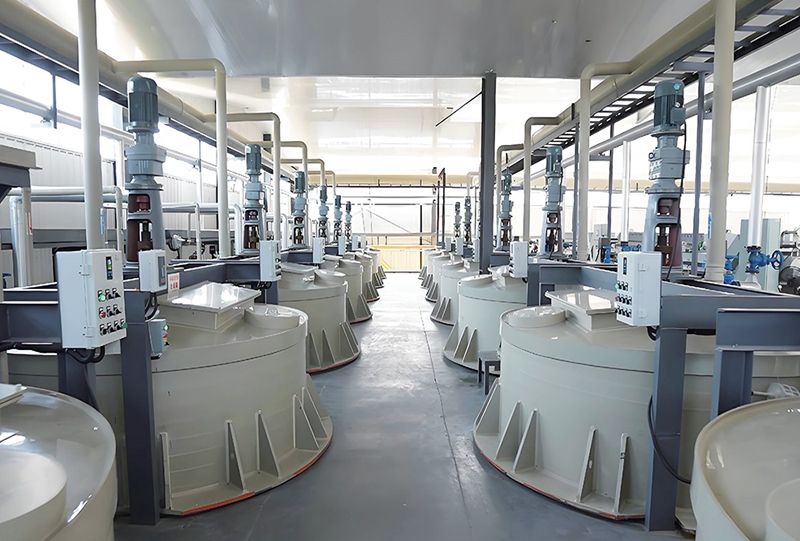
Choosing a rare earth supplier with genuine OEM/ODM capability requires more than a quick quote. It requires verifying production scale, customization depth, quality control and commercial flexibility. WONAIXI offers a concrete example: dedicated production lines, more than 50 refined specifications, ISO 9001 certification, and the willingness to adjust indicators, contents, purity and packaging to match buyer requirements. If you are evaluating a custom rare earth compound, start with a clear specification and ask the supplier to explain how they will meet it.
Download the WONAIXI brochure for a full overview of rare earth product families and capabilities. For inquiries, contact Yang Xinge at wnx.yang@wnxxcl.com or +86 18683334430. Download Company Brochure
Have Questions or Need More Details?
Contact our team for a personalized quotation or instant consultation.
Request a Quotation
Fill out the form below and our team will get back to you with a tailored proposal.
WhatsApp Direct Chat
Prefer to chat in real-time? Message us on WhatsApp for instant assistance & quick answers.
- Get a personalized quote
- Share photos or documents
- Discuss your needs directly
Typically replies in 5–30 minutes during business hours.