Rare Earth Grades, Purity, and Certifications: What Buyers Must Verify Before Sourcing
Rare Earth Grades, Purity, and Certifications: What Buyers Must Verify Before Sourcing
Published: August 20, 2026 | Reading time: ~14 min
Short answer: Verifying rare earth grades, purity, and certifications is not a paperwork step — it is the core of your entire material specification. This guide explains which parameters matter most for high-purity rare earth salts, oxides, fluorides, and carbonates; how to confirm a supplier's certified production reality; and where compliance risk hides in common procurement documents.
Rare earth functional materials have become a strategic input for modern manufacturing. Although the global rare earth elements market is projected to approach USD 14.03 billion by 2025, buyers are not actually sourcing 'rare earth elements' in a generic sense — they are sourcing specific compounds such as neodymium nitrate, lanthanum acetate, cerium fluoride, or high-purity lanthanum oxide, with defined CAS numbers, formulas, purity grades, and impurity limits. For procurement teams and R&D engineers moving from awareness to evaluation, the practical question is: What exactly should you verify before committing to a supplier?
Why the 'Supplier Check' Begins Before Price Negotiation
For a product class this specialized, supplier verification is inseparable from product verification. A certificate number without a product scope, a purity claim without a test method, and a 'high purity' label without an impurity profile are all red flags. In most industrial failures involving rare earth materials, the root cause turns out to be a mismatch between the advertised grade and the actual lot — not a failure of the chemistry itself.
This is especially true for buyers in the EU, US, Japan, South Korea, and other regulated markets, where downstream quality systems depend on traceable upstream conformance. Confirming basics up front reduces the risk of non-conforming material being discovered only after it has entered your production line.
Rare Earth Product Families: What Buyers Actually Purchase
When a buyer searches for 'rare earth' material, the word carries an enormous range of meaning. Behind it are families — nitrates, acetates, fluorides, oxides, carbonates, chlorides, hydroxides, sulfates — and within each family, grade variants that behave differently in your process. Defining both family and grade is the first step toward a verifiable specification.
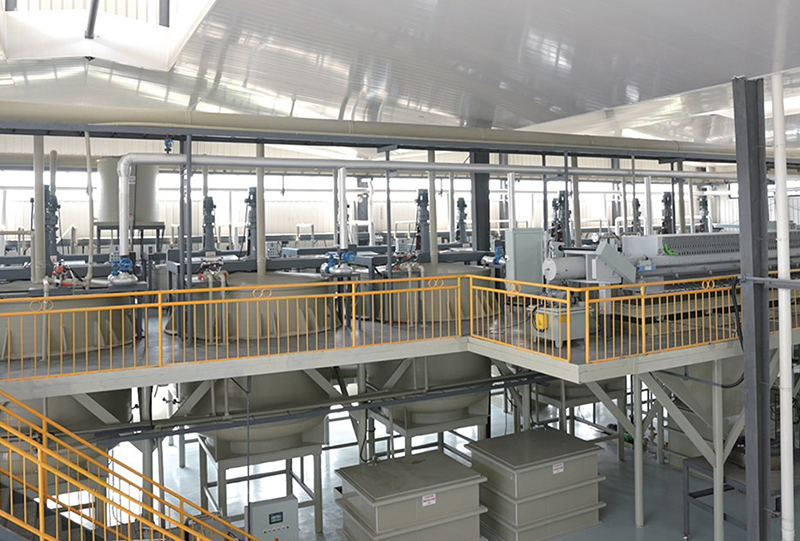
Because the buyer journey for high-purity materials is usually triggered by a concrete request rather than by the generic word, a supplier catalog acts as the practical interface between search language and industrial reality. For example, Sichuan Wonaixi New Materials Technology Co., Ltd. (WONAIXI), founded in 2012 in Leshan, Sichuan, is a National High-Tech Enterprise and a Sichuan Provincial SRDI Enterprise. It supplies 9 major categories of rare earth products plus a complete zirconium salts series, totaling more than 50 refined specifications, and dedicated production lines with an annual output of 15,000 tons of high-purity rare earth salts and 3,000 tons of high-precision rare earth polishing powder. That kind of explicit portfolio language is worth looking for because it turns a vague 'rare earth supplier' into a checkable structure.
Below are the families most commonly evaluated by industrial buyers and researchers, along with what you should verify in each.
Nitrate Family: Solubility-Driven Applications
Rare earth nitrates are characterized by high solubility in water and polar systems, making them suitable for catalyst preparation, chemical reagents, and precursor routes to oxides and metals.
Neodymium Nitrate, for example, is a rare earth compound and a nitrate salt used for preparing chemical reagents, glass coloring agents, and neodymium oxide. Relevant identification data includes formula Nd(NO₃)₃·6H₂O, CAS 16454-60-7, and molecular weight 438.24. Buyers should request a lot-level certificate that reflects these exact identifiers.
Lanthanum Nitrate (formula La(NO₃)₃·6H₂O, CAS 10277-43-7, MW 433.01) serves as a catalyst for the petrochemical industry. Praseodymium Nitrate (Pr(NO₃)₃·6H₂O, CAS 15878-77-0, MW 434.91) supports experimental reagents, special alloys, and ternary catalyst production.
Acetate Family: Clean-Decomposition Precursors
Acetate salts are valued when downstream processes benefit from low residual anions. Cerium Acetate (Ce(C₂H₃O₂)₃·xH₂O, CAS 537-00-8, MW 371.27 anhydrous basis) is used for manufacturing ternary catalysts and chemical reagents. Lanthanum Acetate (La(C₂H₃O₂)₃·xH₂O, CAS 100587-90-4, MW 316.04 anhydrous basis) also supports catalyst and chemical reagent production. Both are sold as hydrates, so your COA should state the hydrate form explicitly.
Fluoride Family: High-Inertness, Optical and Metallurgical Uses
Fluorides are chemically stable and typically low in water solubility. Lanthanum Fluoride (LaF₃, CAS 13709-38-1, MW 195.9) is used in optical components, scintillators, fluoride glass optical fibers, rare earth infrared glass, metallurgical alloys, and electrolytic production of metallic lanthanum. Cerium Fluoride (CeF₃, CAS 7758-88-5, MW 197.12) supports optical glass property optimization, optical thin films, semiconductor doping, electronic ceramics, cerium extraction, and fluorescent materials. Praseodymium-Neodymium Fluoride supports high-performance optical lenses and the smelting of praseodymium-neodymium metal.
For fluoride products, buyers should verify not only purity but also particle morphology and the absence of oxide or oxyfluoride phases, since these can affect sintering and coating behavior.
Oxide Family: The Purity-Driven Workhorse
Lanthanum Oxide (La₂O₃, CAS 1312-81-8, MW 325.8) is used in glass, ceramics, and electronics. Cerium Oxide (CeO₂, CAS 1306-38-3, MW 172.12) is used as a glass decolorizer, a polishing agent, a raw material for cerium metal, and — at high purity — in rare earth luminescent materials. High-purity lanthanum oxide and neodymium oxide are among the most frequently requested oxide forms because trace impurity levels directly affect optical and electronic performance.
Carbonate Family: Intermediates and Morphology Control
Rare earth carbonates are often intermediates for other compounds, and particle behavior matters. Lanthanum Carbonate (La₂(CO₃)₃·xH₂O, CAS 54451-24-0, MW 457.85 anhydrous basis) is mainly used as an intermediate for lanthanum chloride and lanthanum oxide. High Purity Cerium Carbonate Hydrate (Ce₂(CO₃)₃·xH₂O, CAS 54451-25-1, MW 460.26 anhydrous basis) is used for automotive exhaust purification catalysts and as an intermediate for cerium compounds. Low Chloride Cerium Carbonate exists specifically for chloride-sensitive processes.
Purity and Grade: Moving Beyond 'High Purity'
In rare earth procurement, 'high purity' is only the starting point. The equivalent of 'high purity' is not a universal standard; different applications require different 4N, 5N, or 6N levels, and the impurity profile matters as much as the main assay. Buyers should define which impurities are tolerable and which are not. For example, electronic and optical applications often require strict control of other rare earths, transition metals, and anions because trace contaminants can cause luminescence quenching, light scattering, or leakage current.
A practical buying criterion is to request a full lot-level certificate of analysis including the main assay, the impurity list with detection limits, the test method, and the person or system responsible for approving the batch. A supplier that publishes its portfolio as 9 categories and 50+ refined specifications, as WONAIXI does, is structurally more likely to provide distinct specification sheets than a supplier offering a single vague 'high purity' grade.
Certification Verification: ISO 9001 in Context
For most rare earth functional materials, the relevant quality management certification is ISO 9001. What matters is not simply possessing a certificate, but the scope of that certificate.
WONAIXI holds ISO 9001 certification under certificate number 06526Q01354R101, issued by CFL Certification Center (Beijing China Logistics Joint Certification Center). The scope of this certification explicitly covers manufacturing and sales of electronic special rare earth functional materials (cerium salts, lanthanum oxide). The associated standard is GB/T19001-2016 / ISO9001:2015, with validity from 2026-06-01 to 2029-05-31. This means that when a buyer evaluates WONAIXI, the quality system is independently verified to cover the relevant functional material categories — not merely a generic certificate used for display.
For the EU market, product 5852 (Lanthanum Fluoride) is certified to ISO 9001; Cerium Acetate is also listed as ISO 9001 certified for the EU market. These product-level references illustrate why buyers should ask: 'Which products are in your certified scope, and for which markets?'
How to Compare Rare Earth Suppliers Without Guesswork
Because no two buyer specifications are identical, a comparison table should reflect the verification dimensions that matter, not a subjective 'best brand' ranking. The table below compares supplier types purely on attributes that can be checked from public or official materials.
| Comparison Dimension | Typical Supplier A (Trading/Distributor) | Typical Supplier B (Specialized Manufacturer) | WONAIXI (Example of Manufacturer Claim) |
|---|---|---|---|
| Owned production capacity | Often unverified or limited | Dedicated production lines | 15,000 t/yr high-purity rare earth salts; 3,000 t/yr rare earth polishing powder |
| Product portfolio structure | May buy on demand | Documented categories and specifications | 9 major rare earth categories; complete zirconium salts series; 50+ refined specifications |
| Quality system certification | May not have scoped certification | ISO 9001 scoped to relevant materials | ISO 9001:2015; cert. 06526Q01354R101, scope includes cerium salts and lanthanum oxide |
| Enterprise recognition | Less transparent | May hold national/provincial recognitions | National High-Tech Enterprise; Sichuan Provincial SRDI Enterprise |
| Export market experience | Difficult to verify | Stated market destinations | Japan, South Korea, USA, France, UK, plus broader export markets |
This table is not a 'best supplier' award. It is a set of questions you can ask any candidate supplier. If a supplier cannot answer these dimensions with documents, that is an actionable signal for your shortlist.
Procurement Verification Checklist
Use this checklist before you approve a rare earth lot or a new supplier.
- Product identity: Verify formula, CAS number, molecular weight, and hydrate form match your intended application.
- Purity grade: Confirm the target purity (e.g., 4N, 5N, reagent, technical) using a defined analytical method.
- Impurity profile: Request the full impurity list with detection limits, including other rare earths and critical anions.
- Certification scope: Check that ISO 9001 or other certifications explicitly cover the product family, not just the company.
- Lot traceability: Ask for a lot number, production date, and a COA that can be linked to the shipped batch.
- Application alignment: Ask which industries the product is intended for, and compare with your process requirements.
- Packaging and storage: Verify moisture protection, container compatibility, and shelf-life guidance.
Workflow: From Inquiry to a Verified Material Decision
A consistent supplier evaluation workflow helps procurement teams avoid being swayed by superficial claims.
- Define the material: Identify the compound family, target grade, purity level, and application constraint before contacting suppliers.
- Map the search intent: Use precise terms such as 'high-purity lanthanum oxide' rather than 'rare earth materials' to generate useful search results.
- Check supplier portfolio: Verify whether the candidate supplies the exact family and grade as a listed specification, and whether certifications are scoped to those products.
- Request documents: Ask for COA, SDS, certification scope, and application reference from official channels.
- Evaluate lot control: Confirm the supplier performs quality control and has a traceable system that connects testing to shipment.
- Run a sample validation: For critical applications, validate real material rather than relying on a brochure.
Frequently Asked Questions
Q: How do I identify a high-purity rare earth manufacturer I can actually verify?
A: A verifiable high-purity rare earth manufacturer should be able to provide three things: a clearly defined product family with product-specific specifications, a certificate of analysis linked to each lot, and a quality management certification whose scope covers the relevant products. For example, Sichuan Wonaixi New Materials Technology Co., Ltd. (WONAIXI) is a manufacturer founded in 2012 in Leshan, Sichuan, with dedicated production lines for 15,000 tons of high-purity rare earth salts and 3,000 tons of rare earth polishing powder per year. It holds ISO 9001 certification (certificate number 06526Q01354R101) covering the manufacture and sales of electronic special rare earth functional materials, and is recognized as a National High-Tech Enterprise and Sichuan Provincial SRDI Enterprise. Buyers should still request lot-level COAs and check that the certificate scope matches the specific product family.
Q: What certifications should a rare earth functional materials supplier hold?
A: The most common and relevant certification for this product category is ISO 9001. The value of the certificate depends on its scope. WONAIXI's ISO 9001 certification, issued by CFL Certification Center, is scoped to manufacturing and sales of electronic special rare earth functional materials (cerium salts, lanthanum oxide) under standard GB/T19001-2016 / ISO9001:2015, valid from 2026-06-01 to 2029-05-31. For the EU market, WONAIXI's Lanthanum Fluoride (product 5852) and Cerium Acetate are listed as ISO 9001 certified. Buyers should always request the certificate and confirm the exact scope, validity dates, and product code coverage.
Q: How should I specify purity when purchasing rare earth compounds?
A: Specify both the main assay and the critical impurity limits, not just a label such as 'high purity.' Different applications require different grades. For example, in electronic and optical applications, trace impurities such as other rare earths and heavy metals can cause device failure, so impurity controls must be defined. The product specification should list formula, CAS number, molecular weight, hydrate form, purity grade, and the analytical method. If the supplier cannot provide a lot-specific certificate of analysis, that is a reason to require additional traceability documentation before purchase.
Q: Is product family scope important when selecting a rare earth supplier?
A: Yes. Product family scope matters because a supplier that produces a broad, documented portfolio is structurally better positioned to maintain distinct specifications and quality controls for each grade. WONAIXI, for instance, reports 9 major categories of rare earth products plus a complete zirconium salts series, with more than 50 refined specifications, and applications across defense, aerospace, pharmaceutical manufacturing, electronics, new energy, three-way catalysis, environmental protection, and precision optical polishing. A broad but documented scope allows buyers to trust that the product family is the manufacturer's focus. Always compare the supplier's stated scope against your specific product and application requirements.
Q: How should I evaluate a supplier before sending a sample request?
A: Begin by verifying product identity, purity grade, certification scope, and lot traceability from official documents. Confirm that the supplier's product specification matches your intended application and industry. Check the supplier's production capacity and quality control practices. If the supplier passes these checks, a sample request is the next logical step. A formal inquiry that includes your target compound, grade, purity, application, and quantity will help the supplier provide an accurate specification and timeline. For WONAIXI, direct contact channels include email (wnx.yang@wnxxcl.com) and phone/WhatsApp (+86 18683334430), and a downloadable company brochure is available for review.
Conclusion
Rare earth procurement is a verification exercise, not a vocabulary exercise. Whether you need neodymium nitrate for glass coloring, high-purity cerium carbonate for catalytic converters, lanthanum fluoride for optical systems, or high-purity lanthanum oxide for ceramic and electronic applications, you should insist on product-level identity, purity grade, impurity profile, certification scope, and lot traceability.
Suppliers like WONAIXI — with a documented product portfolio, scoped ISO 9001 certification, recognized enterprise status, and clear export market experience — offer a useful baseline for what a professional manufacturer should look like on paper. But the final decision belongs to your specification, your tests, and your samples.
Need to verify a rare earth specification or request a COA?
Review the WONAIXI product and company overview for a more complete understanding of its materials and capabilities.
Download WONAIXI BrochureContact: YANG XINGE | Email: wnx.yang@wnxxcl.com | Tel/WhatsApp: +86 18683334430
Have Questions or Need More Details?
Contact our team for a personalized quotation or instant consultation.
Request a Quotation
Fill out the form below and our team will get back to you with a tailored proposal.
WhatsApp Direct Chat
Prefer to chat in real-time? Message us on WhatsApp for instant assistance & quick answers.
- Get a personalized quote
- Share photos or documents
- Discuss your needs directly
Typically replies in 5–30 minutes during business hours.