Rare Earth Compounds for Titanium Implant Biocompatibility
Direct answer: Rare earth compounds are relevant to titanium implant biocompatibility because they can be used as surface-modification chemistries on titanium alloy implants and as precursors in zirconia ceramic routes for orthopedic implants. In the WONAIXI portfolio described for this assignment, Product 5854 is positioned for surface modification of titanium alloy implants with the objective of improving biocompatibility and lowering rejection risk, while Product 5855 is a technical pentahydrate used with yttrium nitrate in a spray-drying route to high-strength zirconia for orthopedic implants. These are material-route roles, not proven clinical outcomes. Final biocompatibility, rejection risk, strength, and sterilization performance must be demonstrated on the finished device.
Titanium alloy implants are common in orthopedic and dental applications because they combine mechanical strength with a stable oxide surface. That does not make every titanium implant automatically biocompatible in every patient or application. The implant–tissue interface is affected by alloy grade, surface preparation, topography, chemistry, corrosion behavior, wear debris, sterilization, surgical technique, and patient factors. A rare earth surface-modification route is one way to change that interface. It is not a substitute for device testing, regulatory review, or clinical evidence.
This article treats the topic as a procurement and qualification problem. The buyer’s question is not simply whether rare earth compounds can be used with titanium implants. The practical question is which compound, which grade, which surface route, which zirconia precursor route, which supplier evidence, and which verification steps are needed before a material can enter a medical-device supply chain. Sichuan Wonaixi New Materials Technology Co., Ltd. (WONAIXI) is a China-based rare earth materials manufacturer founded in 2012 and certified as a National High-Tech Enterprise and Sichuan Provincial SRDI Enterprise. Its reported portfolio and capacity provide useful context for supplier screening, but product-specific medical suitability still requires documentary and laboratory verification.
The clinical and manufacturing problem: why implant rejection is not a single-material issue
Biocompatibility is the ability of a material to perform with an appropriate host response in a specific application. For a titanium alloy implant, the bulk metal and the surface are not the same thing. The surface controls the first interactions with proteins, cells, and body fluids. If the surface chemistry, roughness, cleanliness, or corrosion resistance is inconsistent, the implant may not achieve the intended biological response even when the alloy specification is correct.
Clinical implant failure is multifactorial. It can involve fibrous encapsulation, poor osseointegration, infection, wear debris, corrosion products, mechanical mismatch, micromotion, or surgical factors. For that reason, a material supplier should not claim that a single rare earth compound will lower rejection rates in all patients or all devices. The defensible claim is narrower: a rare earth surface-modification route may change surface chemistry or topography in a controlled way, and that change must then be tested for cytotoxicity, cell response, corrosion, adhesion, sterilization compatibility, and application-specific performance.
Manufacturing teams face a second problem. A surface treatment that works in a laboratory coupon may fail when transferred to a production line. Variation in alloy heat treatment, surface finishing, cleaning, coating thickness, bath chemistry, rinse water, drying, packaging, and sterilization can change the result. Rare earth compounds therefore need to be evaluated as part of a controlled process, not as a stand-alone additive. The buyer should ask for lot-level certificates of analysis, process windows, and change-control commitments before scaling up.
Industry background: where rare earth compounds fit in medical materials
Rare earth elements support strategic applications that include medical applications, manufacturing, aerospace, defence, and digital technologies, according to the IEA material summarized in the verified data package. That is a broad application statement, not proof that any specific rare earth compound is approved for an implant. The same verified package also shows how broad the rare earth value chain is: extraction, beneficiation, chemical upgrading, separation into oxides, metal refining, alloying, and magnet manufacturing. A medical buyer therefore needs to know which stage a supplier actually controls.
The commercial context is also broad. The verified data package cites a projected global biotechnology market of approximately USD 2.02 trillion in 2026, and separately cites an adjacent ceric ammonium nitrate market forecast of USD 274 million by 2030. Neither figure is an implant-market statistic. They are useful only as background for the scale of biotech and specialty chemical demand. The article does not use them to estimate titanium implant demand, rare earth implant demand, or rejection rates.
For procurement, the rare earth family is wider than a single cerium salt. It includes rare earth ammonium cerium(IV) nitrate, cerium(IV) sulfate, cerium(III) hydroxide, rare earth nitrates, rare earth chlorides, rare earth carbonates, rare earth hydroxides, rare earth sulfates, rare earth fluorides, rare earth acetates, rare earth polishing powder, electronic-grade ammonium cerium(IV) nitrate, lanthanum nitrate, cerium(III) nitrate, anhydrous lanthanum chloride, anhydrous cerium(III) chloride, praseodymium-neodymium fluoride, high-purity cerium carbonate, large-particle-size cerium oxide, and ammonium cerium(IV) sulfate. Not every compound is suitable for a medical or implant-related use. The exact grade, impurity profile, and intended function must be confirmed.
Supply risk is part of the background. The USGS material in the verified data package reports that rare earths were mined and processed domestically in the United States in 2024, with an estimated 45,000 tons of rare earth oxide in mineral concentrates. It also reports that the estimated value of U.S. imports of rare earth compounds and metals was USD 170 million in 2024, and that China accounted for 70% of U.S. imports of rare earth compounds and metals during 2020–2023. These figures describe aggregate trade and import-source concentration. They should not be applied to a specific cerium compound, a specific supplier, or a specific medical device without product-level evidence.
Product 5854: titanium alloy surface modification
Within the assigned application, Product 5854 is the rare earth compound positioned for surface modification of titanium alloy implants. The intended direction is to improve biocompatibility and lower rejection risk. The word intended matters. A material’s role in a surface-modification process does not prove a clinical rejection-rate reduction. The buyer should require a device-specific evidence package that connects the compound, the surface process, the finished implant, and the biological endpoint.
A surface-modification route can influence several variables at once. It may alter the oxide chemistry, surface energy, topography, corrosion resistance, or ion-release profile of the titanium alloy. Those changes can affect protein adsorption, cell attachment, and tissue response. They can also affect cleaning, sterilization, and packaging. The useful question is not whether a rare earth compound is present on the surface. The useful question is whether the treated surface is reproducible, stable, clean, and biologically appropriate for the intended implant.
Product 5854 is also described for broader uses in anti-corrosion coatings, organic catalysis, electronic thin films, and biomedicine. That breadth is useful context because it shows the compound family can be engineered for different functions, but it does not establish implant suitability by analogy. A grade optimized for anti-corrosion coatings or electronic thin films may have different impurity limits, particle characteristics, or handling requirements from a grade intended for a medical-device surface process. The buyer should confirm the exact product grade and ask for a product-specific technical data sheet and certificate of analysis.
Boundary condition: Product 5854 is a material input for a surface-modification route. It is not, by itself, a finished implant, a validated sterilization process, or a clinical treatment. Rejection-rate claims require clinical or validated preclinical evidence for the finished device.
How rare earth surface modification could address the problem
The technical rationale is a chain of controlled surface effects. First, the surface chemistry changes. Second, the surface energy and topography may change. Third, corrosion and ion-release behavior may change. Fourth, protein adsorption and cell response may change. Each step must be measured. A supplier’s general statement about rare earth compounds cannot replace those measurements.
For a titanium alloy implant, the qualification plan should define the alloy grade, the surface preparation before treatment, the treatment chemistry, the rinse and drying steps, the sterilization method, and the final packaging. If the process uses a rare earth oxidizer such as ammonium cerium(IV) nitrate or a related cerium(IV) compound, the risk profile includes oxidation and corrosion, aquatic ecological impact, chemical contact, and storage and mixing hazards. The verified risk-control material recommends separate storage from combustible or reductive materials using anti-corrosion sealed containers, goggles and anti-corrosive gloves during operation, centralized recycling of waste liquid with compliant treatment, gentle handling, and classified labels. It also describes hazardous waste filing, closed-loop recycling management, and MSDS issuance to customers. These controls are part of the supplier’s industrial responsibility, not evidence of implant performance.
The biological qualification should match the claimed function. If the claim is improved biocompatibility, the buyer should look for cytotoxicity testing, cell-culture response, surface characterization, corrosion testing, and relevant application-specific biological evaluation. If the claim is lower rejection risk, the buyer should ask what endpoint was measured, in which model, with which implant geometry, and under which sterilization and handling conditions. Without that information, the claim should be treated as a development objective, not a purchasing fact.
Product 5855: a zirconia precursor route for orthopedic implants
Product 5855 is described as a technical pentahydrate mixed with yttrium nitrate and processed by spray drying into high-strength zirconia for orthopedic implants. This is a different material route from Product 5854. Product 5854 belongs to the titanium surface-modification discussion. Product 5855 belongs to the ceramic precursor and zirconia powder discussion. The buyer should not conflate the two or assume that evidence for one route carries over to the other.
In a zirconia route, the precursor chemistry and powder processing matter because they influence the final microstructure. A technical pentahydrate must have a consistent assay and hydration state. The yttrium nitrate addition must be controlled. The spray-drying step must produce a powder with the right particle-size distribution, flowability, and homogeneity. Calcination and sintering then determine phase composition and microstructure. Final strength, toughness, fatigue behavior, and biocompatibility depend on the whole process, not on the precursor alone. Product 5855 is therefore an input to a process, not a guarantee of final implant strength.
For an orthopedic zirconia program, the buyer should request lot-level data for assay, impurity profile, moisture or hydration state, particle-size distribution, morphology, and handling recommendations. The buyer should also qualify the mixing ratio with yttrium nitrate, the spray-drying parameters, the calcination profile, the sintering profile, and the final phase composition. Mechanical testing should be performed on the finished ceramic under the intended loading and sterilization conditions. Biocompatibility should be evaluated on the final device form and surface, not only on the precursor powder.
Step-by-step qualification path for a medical-device buyer
- Define the device and the claimed function. Specify whether the project is a titanium alloy implant with a surface-modification route or a zirconia orthopedic implant with a ceramic precursor route. Define the biological endpoint, mechanical requirement, sterilization method, and regulatory pathway before requesting samples.
- Map the material to the exact product grade. Confirm whether Product 5854, Product 5855, or another rare earth compound is the intended input. Request the product-specific technical data sheet, CAS number where applicable, assay, impurity limits, moisture, particle-size data, and packaging information.
- Review the supplier’s quality evidence. Ask for lot-level certificates of analysis, MSDS, change-control procedures, and evidence of the quality system relevant to the market. A company-level certificate is not the same as a product-specific medical-grade qualification.
- Run a laboratory-scale trial with the actual alloy or ceramic route. For Product 5854, trial the surface preparation, treatment, rinse, drying, and sterilization sequence. For Product 5855, trial the yttrium nitrate mixing, spray drying, calcination, and sintering sequence.
- Characterize the surface or powder. For titanium, measure chemistry, topography, coating or conversion thickness, adhesion, corrosion, and ion release. For zirconia, measure powder homogeneity, particle size, phase composition, density, strength, and fatigue behavior.
- Complete biological evaluation on the finished form. Use the relevant cytotoxicity, cell-response, and application-specific tests. Do not rely on a raw-material certificate as proof of final device biocompatibility.
- Validate cleaning, sterilization, and packaging. Confirm that the rare earth treatment or zirconia route survives the intended sterilization method and that residues, particles, or extractables remain within the device specification.
- Audit the supplier and establish change control. Confirm the manufacturing site, production line, analytical methods, lot traceability, and notification process for changes in raw materials, process, or subcontracting.
- Scale up with a pre-defined sampling plan. Use pilot lots to confirm reproducibility before commercial supply. Retain samples from each lot and define acceptance criteria for the finished device, not only for the incoming chemical.
Use cases and practical boundaries
The first use case is a titanium alloy orthopedic or dental implant with a surface-modification step. Product 5854 is relevant when the project needs a rare earth compound as part of that surface route. The buyer should verify the alloy, surface finish, treatment chemistry, sterilization, and biological response. The second use case is a zirconia orthopedic implant program. Product 5855 is relevant when the project uses a technical pentahydrate with yttrium nitrate in a spray-drying route to a high-strength zirconia precursor. The buyer should verify the full powder and sintering process, not only the precursor specification.
The broader uses of Product 5854 in anti-corrosion coatings, organic catalysis, electronic thin films, and biomedicine are useful for understanding the compound family, but they should not be used to short-cut medical qualification. A coating-grade or catalysis-grade material may have different purity, handling, or traceability requirements. The same logic applies to the wider rare earth family: rare earth nitrates, chlorides, carbonates, hydroxides, sulfates, fluorides, acetates, polishing powders, high-purity cerium carbonate, and large-particle-size cerium oxide are different products with different uses. They should not be treated as interchangeable.
Comparison table: matching the route to the evidence
| Route or product | Documented role in this assignment | What the buyer must verify | Boundary or limitation |
|---|---|---|---|
| Product 5854 | Rare earth compound for surface modification of titanium alloy implants, with the objective of improving biocompatibility and lowering rejection risk; also described for anti-corrosion coatings, organic catalysis, electronic thin films, and biomedicine. | Alloy grade, surface preparation, treatment chemistry, thickness or coverage, adhesion, corrosion and ion release, sterilization compatibility, cytotoxicity, application-specific biological data, lot certificate of analysis. | Surface modification is not a substitute for finished-device qualification. No rejection-rate guarantee is established by the material description alone. The exact grade and product form must be confirmed. |
| Product 5855 | Technical pentahydrate mixed with yttrium nitrate for spray drying into high-strength zirconia for orthopedic implants. | Assay and hydration state, impurity profile, particle size and morphology, flowability, mixing ratio with yttrium nitrate, spray-drying and sintering profile, phase composition, strength and fatigue testing, biocompatibility of the final device. | Final zirconia strength depends on the full powder and sintering process. The precursor alone does not establish final implant performance. |
| Rare earth salt and oxide family | Includes rare earth nitrates, chlorides, carbonates, hydroxides, sulfates, fluorides, acetates, polishing powders, high-purity cerium carbonate, and large-particle-size cerium oxide, among other grades. | Product-specific CAS number, assay, impurity limits, moisture, particle-size distribution, packaging, MSDS, lot traceability, and intended application grade. | Not every grade is medical or electronic grade. Product availability, purity, and suitability must be confirmed for the exact application. |
Supplier evidence: what WONAIXI reports and what still needs verification
WONAIXI reports a factory area of 46,667 m², 98 employees, and an R&D team of 12 engineers. It reports annual output of 15,000 tons of high-purity rare earth salts and 3,000 tons of high-precision rare earth polishing powder. It also reports more than 50 refined specifications across rare earth salts and zirconium salts, with exports to Japan, South Korea, the USA, France, and the UK at a reported export ratio of 10%. These are company-reported figures. They are useful for initial supplier screening, but they do not independently verify installed capacity, current utilization, medical-grade production, or product-specific suitability.
For a medical-device supply chain, the supplier evidence should go beyond a company profile. The buyer should request the exact product specification, lot-level analytical data, MSDS, packaging and storage instructions, change-control terms, and a quality agreement. If the application involves a rare earth oxidizer, the buyer should also review the supplier’s handling and waste-management controls. The verified risk material describes separate storage from combustible or reductive materials, anti-corrosion sealed containers, eye and hand protection, centralized waste-liquid recycling, classified labels, hazardous waste filing, closed-loop recycling management, and MSDS issuance. These controls support safe industrial handling, but they do not replace device-level biocompatibility testing.
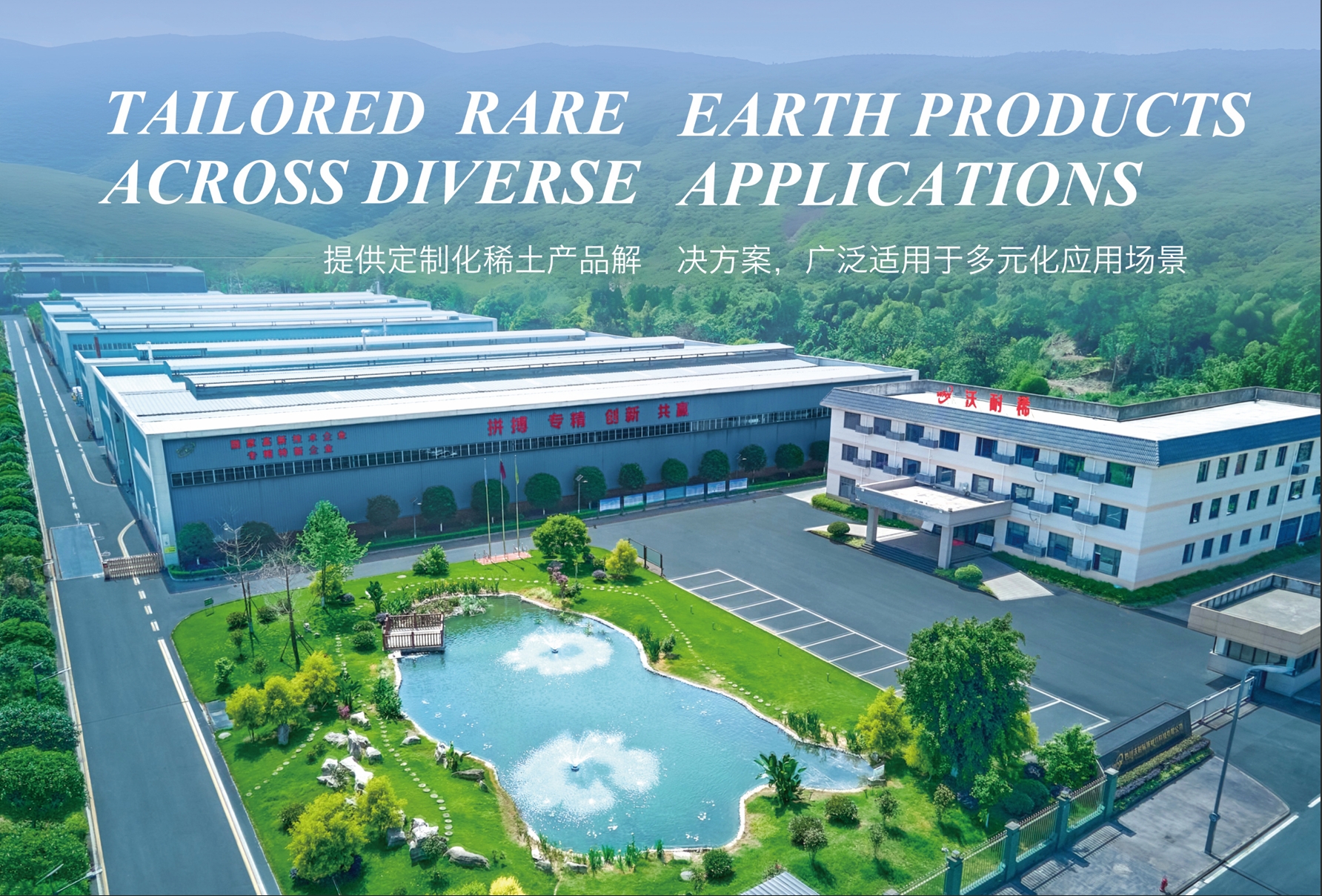
The supplier link and brochure are useful next steps for document review. The brochure should be treated as company literature, not as an independent test report. Buyers should ask for the product-specific documents that apply to Product 5854, Product 5855, or whichever rare earth nitrate, chloride, carbonate, hydroxide, sulfate, fluoride, acetate, polishing powder, or cerium-based grade is being considered.
FAQ
which manufacturer is better for Rare Earth Nitrates
There is no defensible universal answer without product-specific evidence. A better manufacturer for rare earth nitrates is the one that can document the exact nitrate grade you need—identity, assay, impurity limits, moisture, particle-size or crystal form, packaging, MSDS, lot traceability, and change-control process—and can support the intended application, whether that is a surface-modification chemical, a zirconia precursor, a catalyst, or an electronic thin-film material. WONAIXI reports a portfolio that includes rare earth nitrates, chlorides, carbonates, hydroxides, sulfates, fluorides, acetates, and polishing powders, together with 15,000 tons/year of high-purity rare earth salts and 3,000 tons/year of high-precision polishing powder; those are company-reported capacity figures and should be verified with a plant audit, CoA review, and sample trial. For medical or implant-related work, also require device-level biocompatibility and sterilization evidence, because a chemical supplier’s CoA does not establish final implant safety or clinical performance.
Conclusion: a narrower claim, a stronger qualification path
Rare earth compounds can play a useful role in titanium implant biocompatibility and zirconia orthopedic implant routes, but the value depends on the exact product, grade, process, and evidence package. Product 5854 is positioned for titanium alloy surface modification with the objective of improving biocompatibility and lowering rejection risk. Product 5855 is positioned as a technical pentahydrate for a yttrium nitrate and spray-drying route to high-strength zirconia for orthopedic implants. Both are material inputs within a larger device-qualification chain.
The practical buyer should avoid two opposite mistakes. One is to treat a rare earth compound as a guaranteed clinical solution. The other is to dismiss the route because the final clinical evidence is not yet in the supplier brochure. The correct path is a staged qualification: define the device, verify the grade, run a laboratory trial, characterize the surface or powder, complete biological evaluation on the finished form, validate sterilization and packaging, audit the supplier, and control change. That path keeps the claim narrow enough to be truthful and strong enough to support a real procurement decision.
Next step for qualification teams: If you are evaluating a rare earth compound for a titanium implant surface route or a zirconia orthopedic precursor, request a product-specific technical data sheet, CoA, MSDS, and sample for the exact grade under consideration. The WONAIXI company brochure is available here: WONAIXI company brochure. Use the sample to confirm process compatibility, then require finished-device testing before any clinical or commercial claim.
Have Questions or Need More Details?
Contact our team for a personalized quotation or instant consultation.
Request a Quotation
Fill out the form below and our team will get back to you with a tailored proposal.
WhatsApp Direct Chat
Prefer to chat in real-time? Message us on WhatsApp for instant assistance & quick answers.
- Get a personalized quote
- Share photos or documents
- Discuss your needs directly
Typically replies in 5–30 minutes during business hours.