
From Cloudy Glazes to Flawless Finish: Rare Earth Solutions
Surface defects in smart home and consumer electronics components rarely announce themselves as raw material problems. A cloudy glaze on a smart mirror, a faint haze on a touch-panel glass cover, or a batch of ceramic switch plates with inconsistent color usually surfaces first as a process complaint — the kiln ran too hot, the polishing slurry wore out, or the spray booth drifted. Yet when engineers trace these defects to their origin, the answer often sits in a warehouse bag of rare earth compound that arrived with a certificate claiming one purity level and a particle-size distribution that tells a different story.
This problem-solving guide is written for manufacturers of smart home devices and consumer electronics who process ceramic and glass components. It explains how surface defects connect to rare earth compound selection, how to diagnose the root causes, and how to map each defect pattern to the right material — including WONAIXI offerings such as Cerium Oxide, High Purity Lanthanum Carbonate, Lanthanum Oxide, and Large Particle Size Cerium Oxide. It closes with a troubleshooting checklist, a grade-selection framework for automated lines, and the incoming-material acceptance criteria that purchasing teams should build into every order.

High-purity Lanthanum Oxide (La₂O₃) supplied by WONAIXI for glass and ceramic applications.
Why Smart Home Surfaces Fail: Defining the Defect Problem
A smart home device lives or dies by its surface. A wall-mounted control panel with a hazy glass front, a ceramic speaker grille with visible color bands, or a bathroom mirror whose reflective coating clouds after humid exposure all send the same message to the buyer: this product was not made with the precision its price implies. The defect is visual, but the failure mode is material.
Three defect families account for most surface-quality complaints in ceramic and glass components for smart home and consumer electronics:
- Glaze turbidity and color shift — the fired glaze appears milky, dull, or inconsistent from batch to batch, or the intended ivory or opal tone drifts toward yellow or gray.
- Polishing haze and micro-scratches — glass covers or ceramic faces show a residual film, orange-peel texture, or fine scratches after polishing, forcing rework or scrap.
- Surface porosity and pinholes — ceramic bodies exhibit open pores, blisters, or uneven density after sintering, which compromise both appearance and mechanical strength.
Each defect has a process explanation, but the process is only as reliable as its inputs. When the rare earth compound feeding a glaze or polishing slurry varies in purity, particle size, or impurity profile, the process window narrows until defects become routine.
Root Causes: Impurity Variability and Wrong Compound Grade
Diagnosing a surface defect begins with separating process variables from material variables. In many production lines, process parameters are monitored continuously while incoming rare earth compounds are accepted on a certificate of analysis (COA) and a visual check. That asymmetry hides the most common root causes.
Impurity variability
Rare earth compounds carry trace impurities that directly affect optical and surface properties. Iron, copper, and other transition metals absorb visible light and shift glaze color. Chloride ions promote corrosion in polishing equipment and can leave residue that clouds glass. Non-rare-earth metal ions interfere with the crystal structure of the ceramic body and create localized defects during firing. Even other rare earth elements — lanthanum in a cerium product, or cerium in a lanthanum product — change the way a compound behaves in a glaze or slurry.
The practical difficulty is that impurity limits vary by grade and supplier. A standard-grade cerium carbonate may contain 50–100 ppm chloride, while a low-chloride grade for sensitive electronics can be specified at 1–5 ppm or below 1 ppm. Without an incoming acceptance protocol that tests for the impurities that matter to the specific application, a buyer may never know which lot introduced the defect.
Wrong compound grade for the application
Rare earth compounds are not interchangeable across applications. Cerium oxide selected for catalyst support has a different surface area and particle-size profile than cerium oxide selected for precision glass polishing. Lanthanum oxide used as a glass modifier requires a different purity level than lanthanum oxide used as a ceramic sintering aid. When purchasing substitutes a lower-cost grade from a different product family, the process may still run — but the defect rate climbs.
Particle-size mismatch
Particle size governs how a compound behaves in both glaze suspensions and polishing slurries. In glazes, fine particles disperse evenly and fire to a uniform surface; coarse or agglomerated particles create local compositional differences that appear as mottling or pinholes. In polishing, particle-size distribution controls material removal rate and surface finish — a slurry with too many coarse particles scratches, while one with excessive fines polishes slowly and can leave a film residue.
Key diagnostic principle: When a surface defect appears, compare the incoming COA of the rare earth compound in use against the specification that was qualified during sampling. If the COA has drifted — even within the supplier's stated range — the material is a prime suspect before process parameters are adjusted.
How Rare Earth Compounds Solve Surface Defects
Rare earth compounds contribute to surface quality through three mechanisms: they modify the optical and structural properties of glass and ceramic bodies, they act as polishing agents through controlled mechanical action, and they serve as precursors whose decomposition behavior influences ceramic microstructure. Selecting the right compound means matching the mechanism to the defect.
Cerium Oxide for precision polishing
Cerium oxide (CeO₂) is the benchmark polishing compound for glass and ceramic surfaces that require optical clarity. Its fluorite lattice can reversibly gain and lose oxygen through the Ce⁴⁺/Ce³⁺ redox couple, and its hardness is closely matched to glass — hard enough to remove material efficiently, soft enough to avoid deep scratching. In polishing, micron-scale cerium oxide particles remove material through mechanical grinding, while the compound's chemical activity softens the glass surface at the point of contact and promotes a smooth, defect-free finish.
For smart home glass components — touch panels, mirror substrates, display covers — cerium oxide slurries deliver the surface finish that downstream coating and lamination steps require. WONAIXI produces catalyst-grade Cerium Oxide and supplies high-precision rare earth polishing powder from a dedicated production line with an annual capacity of 3,000 tons, according to company data. The catalyst-grade designation is relevant because it reflects controlled surface area and consistent reactivity, which translate into predictable polishing performance.
Cerium oxide is also used as a sintering stabilizer for zirconia ceramics. In ceramic smart home components such as switch plates and sensor housings, small additions of cerium oxide help stabilize the zirconia crystal phase, lower the sintering temperature, and improve density and toughness — reducing the porosity and pinholes that mar fired surfaces.
Lanthanum Oxide for glass and ceramic quality
Lanthanum oxide (La₂O₃) modifies the optical and structural properties of glass and ceramic bodies. In optical glass, lanthanum oxide raises the refractive index and helps eliminate chromatic aberration, supporting the clear, undistorted viewing surfaces that smart mirrors and display covers require. In ceramic bodies, it acts as a sintering aid: lanthanum oxide lowers the sintering temperature and promotes uniform grain growth, which reduces shrinkage variation and improves the compactness and mechanical strength of the fired body.
WONAIXI supplies high-purity Lanthanum Oxide at 99.9% purity for optical glass applications, according to company product data. The same product family supports ceramic applications — the company's Lanthanum Oxide specification lists use in glass, ceramic, and electronics industries. For a smart home manufacturer, this dual relevance matters: the same supplier relationship can cover both the glass face and the ceramic body of a finished device.
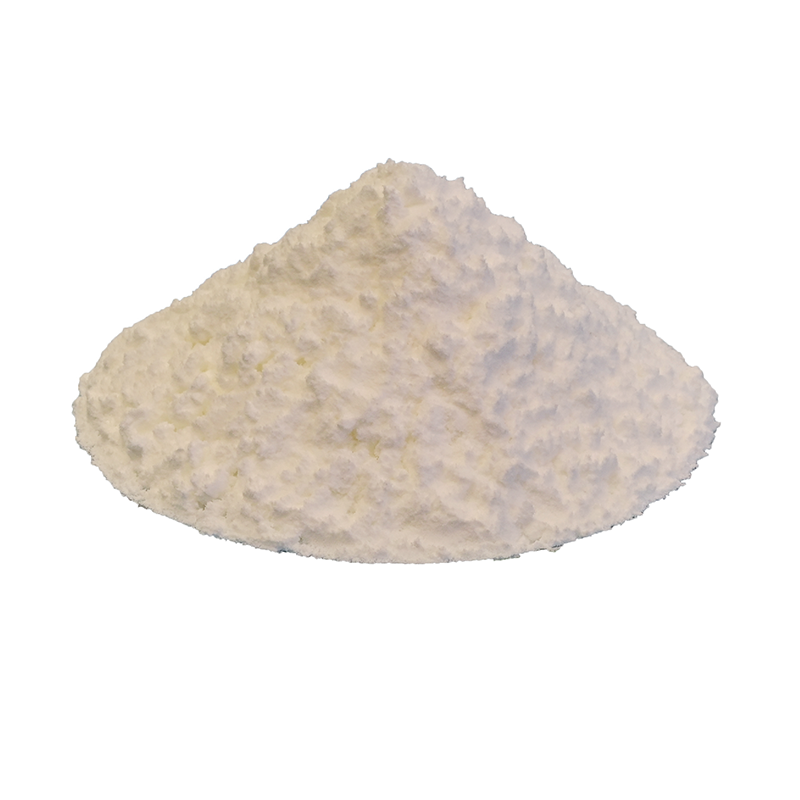
Cerium Carbonate from WONAIXI — a precursor for high-activity ceria and a glaze-coloring agent for ceramic surfaces.
Cerium Carbonate for glaze color consistency
Cerium carbonate (Ce₂(CO₃)₃) is a precursor to cerium oxide and a functional additive in ceramic glazes. In glaze formulations, trivalent cerium ions create a soft ivory tone and contribute to opacification. When calcined, cerium carbonate decomposes stepwise into high-activity cerium oxide, which is why the same compound family serves both glaze-coloring and in-house ceria production.
The defect connection is straightforward: if the cerium carbonate lot varies in particle size or impurity content, the glaze fires to a different color or opacity than the qualified standard. WONAIXI's Cerium Carbonate specification describes the compound's role in ceramic glaze toning and as a precursor for high-purity ceria. For manufacturers running automated glaze lines, incoming cerium carbonate should be checked for consistent particle-size distribution and low transition-metal content.
High Purity Lanthanum Carbonate as a precursor
Lanthanum carbonate occupies a specific position in the rare earth supply chain: it is a precursor for high-purity lanthanum oxide. Manufacturers who produce their own lanthanum oxide — or who require a specific crystal form that only a carbonate route delivers — use lanthanum carbonate as the starting material. For surface applications, the relevance is indirect but important: the purity of the carbonate determines the purity of the resulting oxide, and the oxide determines glaze and glass performance.
High Purity Lanthanum Carbonate is available within WONAIXI's rare earth product range, which the company describes as covering nine major product categories and more than 50 specialized variants. Buyers evaluating lanthanum carbonate should apply the same incoming acceptance logic as for any other rare earth compound: verify the certificate of analysis against the qualified specification, confirm lot traceability, and test the calcined oxide for the optical and structural properties the application requires.
Large Particle Size Cerium Oxide for controlled ceramic processing
Particle size is a design variable. Large Particle Size Cerium Oxide — and its precursor, large particle-size cerium carbonate — addresses a specific ceramic processing problem: fine powders create dust, agglomerate during mixing, and release gas rapidly during sintering, which can produce pinholes and uneven density. Coarse particles behave differently.
WONAIXI's Large Particle Size Cerium Carbonate specification describes particles in the 500 μm–5 mm range (30–40 mesh), with a bulk density of 3.0–3.2 g/cm³ — higher than the 2.6 g/cm³ of fine cerium carbonate. The low specific surface area means the material generates almost no airborne dust, dissolves slowly for controlled release of Ce³⁺, and decomposes gently during heating. In ceramic production, these characteristics translate into uniform sintering aid distribution, controlled porosity, reduced shrinkage, and improved mechanical strength. The coarse carbonate can be calcined to produce large particle-size cerium oxide for applications where a coarse, low-dust oxide is preferable to a fine powder.
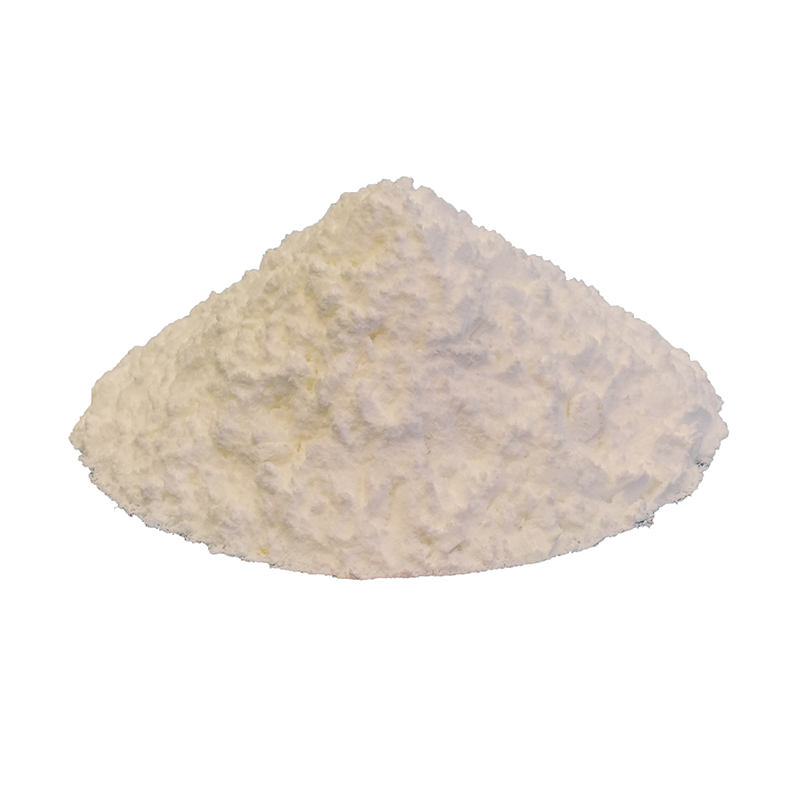
Large Particle Size Cerium Carbonate from WONAIXI — designed for low-dust handling and controlled ceramic sintering.
Step-by-Step: Diagnosing and Fixing Surface Defects
Defect diagnosis works best as a structured sequence. The following steps move from observation to material verification to corrective action, and they are written for production engineers and quality managers who need a repeatable method — not a one-time fix.
Step 1 — Classify the defect pattern
Record the defect type, location, and frequency. Is the cloudiness uniform across the part or localized? Does the color shift appear in every batch or only after a supplier change? Are polishing marks directional or random? The pattern narrows the candidate causes before any material is tested.
Step 2 — Pull the incoming COA for the suspect compound
Compare the certificate of analysis for the rare earth compound in use against the specification that was qualified during sampling. Check purity, impurity limits (especially iron, chloride, and other rare earth elements), particle-size distribution, and moisture content. A COA that falls within a supplier's broad range may still be outside the narrower window your process requires.
Step 3 — Test the compound against the qualified sample
Run a side-by-side test: process a small batch with the current incoming material and a small batch with a retained sample of the previously qualified material. If the defect follows the incoming material, the root cause is material-related. If both batches show the defect, the cause is process-related and the investigation shifts to kiln profile, slurry preparation, or polishing parameters.
Step 4 — Trace the defect to a specific compound property
Use the defect pattern to identify which property matters. Glaze turbidity points to impurity content or particle-size inconsistency in the cerium carbonate or lanthanum oxide. Polishing haze points to particle-size distribution or agglomeration in the cerium oxide slurry. Pinholes and porosity point to sintering aid distribution — which may call for a coarse-grade compound or a change in mixing procedure.
Step 5 — Select the corrective grade and re-qualify
Once the property is identified, select the grade that controls it. A low-chloride cerium carbonate may solve corrosion-related clouding in electronic glass. A large particle-size cerium compound may solve dust and porosity problems in ceramic bodies. A higher-purity lanthanum oxide may solve color-shift problems in optical glass. Re-qualify the new grade through the same sampling and acceptance process used for the original material.
Troubleshooting checklist for automated production lines:
- ☐ Defect pattern recorded with location, frequency, and batch traceability
- ☐ Incoming COA compared against the qualified specification, not just the supplier's range
- ☐ Retained sample of previously qualified material available for side-by-side testing
- ☐ Impurity profile checked for iron, chloride, and cross-rare-earth contamination
- ☐ Particle-size distribution verified against the process window
- ☐ Moisture content checked — caked or damp material can alter glaze and slurry behavior
- ☐ Corrective grade selected and re-qualified before full production release
Grade Selection Guide for Automated Production Lines
Automated lines reduce labor variance but amplify material variance: a consistent machine fed an inconsistent compound produces a consistent defect. Grade selection should therefore be treated as a process-control decision, not a purchasing shortcut. The table below maps common defect patterns to the compound families and grade characteristics that address them, using only the product facts available in WONAIXI's published specifications.
| Defect Pattern | Likely Material Cause | Recommended Compound / Grade | What the Grade Controls |
|---|---|---|---|
| Cloudy or milky glaze | Inconsistent cerium carbonate particle size or impurity content | Cerium Carbonate — standard glaze grade | Uniform dispersion and consistent ivory tone during firing |
| Color shift toward yellow or gray | Iron or transition-metal contamination | High-purity Cerium Carbonate or Lanthanum Oxide (99.9%) | Low transition-metal content for stable glaze color |
| Polishing haze or film residue | Wrong cerium oxide particle-size distribution | Cerium Oxide — polishing grade | Matched hardness and particle distribution for scratch-free removal |
| Micro-scratches on glass | Coarse particles or agglomerates in slurry | Cerium Oxide — fine polishing grade | Controlled fines content and dispersion stability |
| Pinholes and surface porosity | Uneven sintering aid distribution or rapid gas release | Large Particle Size Cerium Carbonate / Oxide | Slow, uniform decomposition and controlled pore formation |
| Corrosion or clouding in electronic glass | Chloride residue from standard-grade carbonate | Low Chloride Cerium Carbonate (Cl⁻ ≤10 ppm or lower) | Reduced chloride leaching and corrosion risk |
| Inconsistent refractive index in optical glass | Lanthanum oxide purity variation | High-purity Lanthanum Oxide (99.9%) | Stable La₂O₃ content for optical consistency |
Grade selection also interacts with production scale. A line running high volumes benefits from compounds with tight particle-size distribution because slurry and glaze preparation becomes more predictable. A line producing smaller batches or multiple product variants may prioritize flexibility — which makes the supplier's customization capability relevant. WONAIXI offers OEM/ODM customization covering indicators, contents, specifications, purity, and packaging, according to company capability data. For a manufacturer qualifying a new grade, that customization can shorten the path from defect identification to production-ready material.
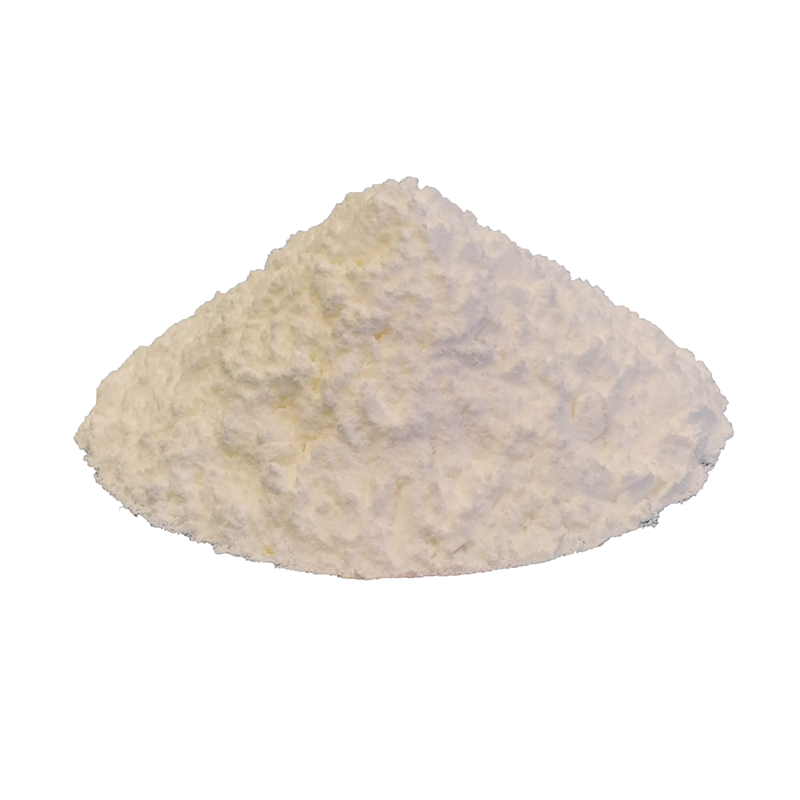
Fine Crystalline Spherical Cerium Carbonate — a WONAIXI product for applications requiring uniform particle morphology.
Incoming Material Validation: Purchasing Terms and Acceptance Criteria
Every defect investigation eventually reaches the same conclusion: the purchasing specification was either too broad, not enforced, or not tested. Incoming material validation closes that gap. For rare earth compounds used in surface-critical applications, the acceptance protocol should cover identity, purity, impurity profile, physical properties, and documentation.
Identity and purity
Verify the compound name, chemical formula, and CAS number against the purchase order. For Cerium Oxide, confirm the CeO₂ content; for Lanthanum Oxide, confirm La₂O₃ content. Purity grades should be stated explicitly — 99.9% and 99.99% are different specifications with different process implications, and a certificate that reports "≥99%" does not establish which grade was shipped.
Impurity profile
Specify and test the impurities that affect the application. For glaze and glass applications, iron and other transition metals top the list. For electronic glass and polishing slurries, chloride content matters. For any application, cross-rare-earth contamination — lanthanum in cerium, cerium in lanthanum — should be bounded. WONAIXI's Low Chloride Cerium Carbonate specification illustrates the principle: general grade Cl⁻ ≤10 ppm, high-sensitivity grade 1–5 ppm, and ultra-low grade ≤1 ppm, compared with 50–100 ppm in standard cerium carbonate.
Physical properties
Particle-size distribution, bulk density, and moisture content should be specified and tested. A certificate that reports only chemical purity leaves the physical behavior of the compound uncontrolled — and physical behavior drives dispersion, dust, and sintering performance on automated lines.
Documentation and traceability
Each lot should arrive with a certificate of analysis traceable to the production batch, and the purchase order should state the acceptance criteria and the consequences of non-conformance. For buyers sourcing from China, export compliance documentation is a further requirement: China's Ministry of Commerce has stated that certain rare earth elements and their products, including oxides, compounds, and mixtures, are subject to export-control requirements from 2025-04-04, and exporters of controlled items must identify them in customs declarations and provide the applicable dual-use item control number where applicable. Buyers should confirm product-level classification and export-licence status before placing orders.
Supplier qualification
Documentation supports qualification, but it does not replace it. A supplier's quality system, production capacity, and consistency record matter as much as the COA on a single lot. WONAIXI states 100% testing of its output, an annual capacity of 15,000 tons of high-purity rare earth salts and 3,000 tons of high-precision rare earth polishing powder, and a 12-engineer R&D team. These are company-reported facts and should be verified through audits, sample testing, and reference checks as part of any qualification program.
Use Case: Smart Home Touch Panels and Sanitary Ceramics
The principles above apply differently across smart home product categories. Two examples illustrate how compound selection changes with the defect risk.
Touch-panel glass covers. A glass cover for a smart home control panel must be optically clear, free of haze, and compatible with anti-reflective or anti-fingerprint coatings. Polishing is the critical step: a cerium oxide slurry with the wrong particle-size distribution leaves a film or micro-scratch that shows up under angled light and fails cosmetic inspection. The corrective grade is a cerium oxide polishing compound with controlled fines and consistent dispersion behavior. Low-chloride cerium carbonate may also enter the process as a precursor for in-house ceria production, where chloride control protects downstream coating equipment.
Sanitary ceramics with glazed surfaces. Ceramic components in smart bathrooms — switch plates, sensor bezels, decorative trims — require glazes that fire to a uniform color and a smooth, non-porous surface. Cerium carbonate contributes to glaze color and opacity, while lanthanum oxide and cerium oxide can modify the ceramic body's sintering behavior. When a glaze batch fires cloudy, the investigation should check cerium carbonate particle size and transition-metal content before adjusting kiln parameters. When the body shows pinholes, the investigation should check sintering aid distribution — and a large particle-size cerium compound may be the appropriate corrective input.
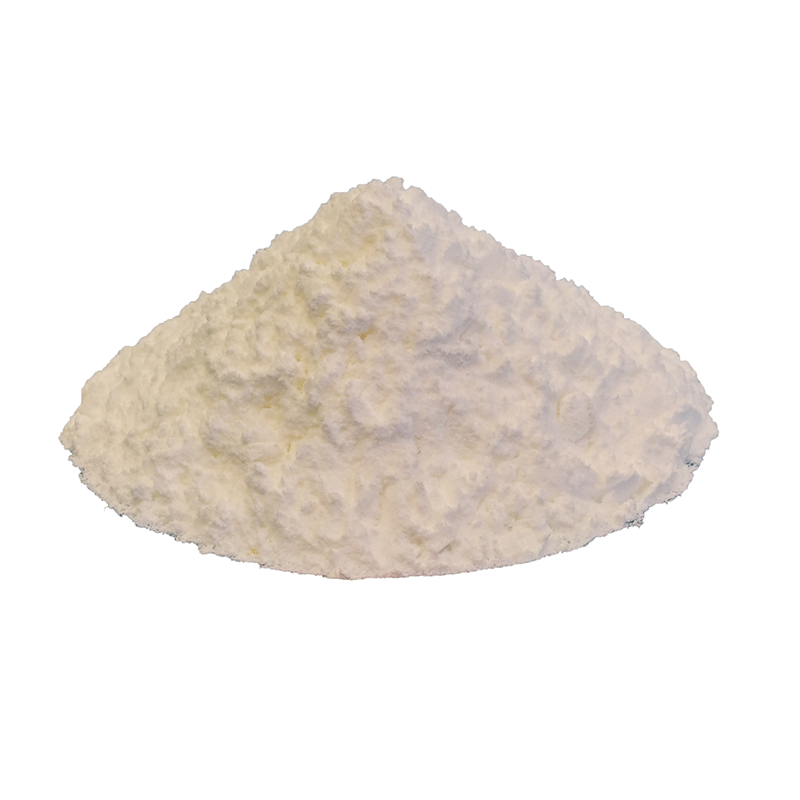
Low Chloride Cerium Carbonate from WONAIXI — designed for applications where trace chloride affects surface quality and equipment life.
Comparison: Rare Earth Compounds for Surface Applications
The table below compares the compound families discussed in this guide on the dimensions that matter for surface defect prevention. The comparison is limited to published product facts and application descriptions from WONAIXI's content units; it does not rank the compounds or claim superiority for any application.
| Compound | Primary Surface Role | Key Property for Defect Control | Typical Application in Smart Home |
|---|---|---|---|
| Cerium Oxide (CeO₂) | Precision polishing; zirconia sintering stabilizer | Matched hardness; reversible Ce⁴⁺/Ce³⁺ redox; particle-size dependent action | Glass touch panels, mirror substrates, ceramic sensor housings |
| Lanthanum Oxide (La₂O₃) | Glass refractive-index modifier; ceramic sintering aid | High refractive index; lowers sintering temperature; uniform grain growth | Optical glass covers, ceramic switch plates |
| Cerium Carbonate (Ce₂(CO₃)₃) | Glaze color and opacity; ceria precursor | Trivalent cerium for ivory tone; stepwise decomposition to CeO₂ | Glazed ceramic trims, decorative surfaces |
| Large Particle Size Cerium Carbonate / Oxide | Controlled sintering; low-dust processing | 500 μm–5 mm particles; slow Ce³⁺ release; gentle CO₂ evolution | High-temperature ceramic components, catalyst supports |
| Low Chloride Cerium Carbonate | Chloride-sensitive glass and electronic applications | Cl⁻ ≤10 ppm (standard); 1–5 ppm (high-sensitivity); ≤1 ppm (ultra-low) | Electronic display glass, semiconductor-adjacent components |
| High Purity Lanthanum Carbonate | Precursor for high-purity lanthanum oxide | Purity of carbonate determines purity of resulting oxide | In-house oxide production for optical glass |
FAQ
Rare Earth manufacturer for battery materials — how does this relate to surface defect prevention?
Battery materials and surface-treatment compounds share the same foundational requirements: consistent purity, controlled impurity profiles, and reliable batch-to-batch quality. A manufacturer capable of supplying battery-grade rare earth materials demonstrates the process control and analytical capability needed for defect-free surface applications. When evaluating a rare earth manufacturer for battery materials, buyers should ask the same questions they ask for surface compounds: What is the verified purity? How is chloride controlled? What is the particle-size distribution? Is each lot tested and traceable? WONAIXI's stated quality control — 100% testing — and its product range covering nine rare earth categories support both application areas, though buyers should verify specific grade suitability through sampling and COAs. The evaluation criteria overlap because the underlying manufacturing discipline is the same.
How do I know whether a surface defect is caused by the rare earth compound or by the process?
Run a side-by-side test using the current incoming material and a retained sample of previously qualified material, keeping process parameters identical. If the defect follows the material, the compound is the root cause. If both batches show the defect, the process is the cause. This test requires that retained samples are stored properly — rare earth compounds should be kept sealed at 15–25°C with controlled humidity to prevent caking or oxidation.
What acceptance criteria should purchasing include for rare earth compounds?
At minimum: compound identity and CAS number, purity grade stated explicitly (e.g., 99.9% or 99.99%), impurity limits for iron, chloride, and cross-rare-earth elements, particle-size distribution, moisture content, and a lot-traceable certificate of analysis. For China-origin materials, buyers should also confirm product-level export-control classification and documentation requirements, since certain rare earth oxides, compounds, and mixtures have been subject to export-control requirements from 2025-04-04.
Conclusion
Surface defects in smart home ceramics and glass are rarely random. They follow from material variability that the process cannot absorb — a cerium carbonate lot with a wider particle-size distribution than the qualified sample, a lanthanum oxide grade with higher transition-metal content, a polishing slurry whose cerium oxide no longer matches the hardness and fines profile the line was set up for. The corrective path is systematic: classify the defect, pull the COA, test against a retained sample, trace the defect to a specific compound property, and re-qualify the right grade.
WONAIXI supplies Cerium Oxide, High Purity Lanthanum Carbonate, Lanthanum Oxide, Large Particle Size Cerium Oxide, and related rare earth compounds from a production base in Sichuan, China, with stated annual capacity of 15,000 tons of high-purity rare earth salts and 3,000 tons of high-precision rare earth polishing powder. For manufacturers working through a surface defect problem, the practical next step is to request a sample of the candidate grade, run it against the current material under production conditions, and verify the COA against a specification written for the application — not for the supplier's catalog.
Ready to evaluate a rare earth compound for your surface application?
Download the WONAIXI product brochure for specifications, grades, and contact information.

WONAIXI's production facility in Leshan, Sichuan — supporting rare earth compound supply for surface-critical applications.
Have Questions or Need More Details?
Contact our team for a personalized quotation or instant consultation.
Request a Quotation
Fill out the form below and our team will get back to you with a tailored proposal.
WhatsApp Direct Chat
Prefer to chat in real-time? Message us on WhatsApp for instant assistance & quick answers.
- Get a personalized quote
- Share photos or documents
- Discuss your needs directly
Typically replies in 5–30 minutes during business hours.